High-Index, Polycarbonate or Standard Lenses: How to Choose a Lens Material
Standard plastic, polycarbonate, Trivex and high-index lenses compared: impact resistance, thickness, weight and clarity, what the index numbers mean, and which material suits children and strong prescriptions.
By Michel Geha, O.O.D.
You choose a lens material based on your prescription and how you use your glasses. Standard plastic suits low prescriptions; polycarbonate and Trivex resist impact, for sports and children; high-index plastics make thinner, lighter lenses for strong prescriptions, according to the American Academy of Ophthalmology.
What are eyeglass lenses made of?
There are four main families: standard plastic, polycarbonate, Trivex and high-index plastics. The American Academy of Ophthalmology (AAO) makes it the second decision when buying glasses, after the lens type, and points out that the material makes a big difference.
Each material has its strengths: light weight, impact resistance, thinness or image clarity. None is ideal for everyone; the right choice depends on your prescription, the frame and what you do in your glasses.

What is a standard plastic lens?
It is the basic organic lens. According to the AAO, plastic lenses are lighter and more flexible than glass, and safer because they are less likely to shatter. It adds that they have a built-in ability to block ultraviolet (UV) light.
The lens maker HOYA presents its 1.50 index plastic as an economical, durable material suited to simple, low-power prescriptions. With a stronger prescription the lens gets thicker, and other materials become worth a look.

Why choose polycarbonate?
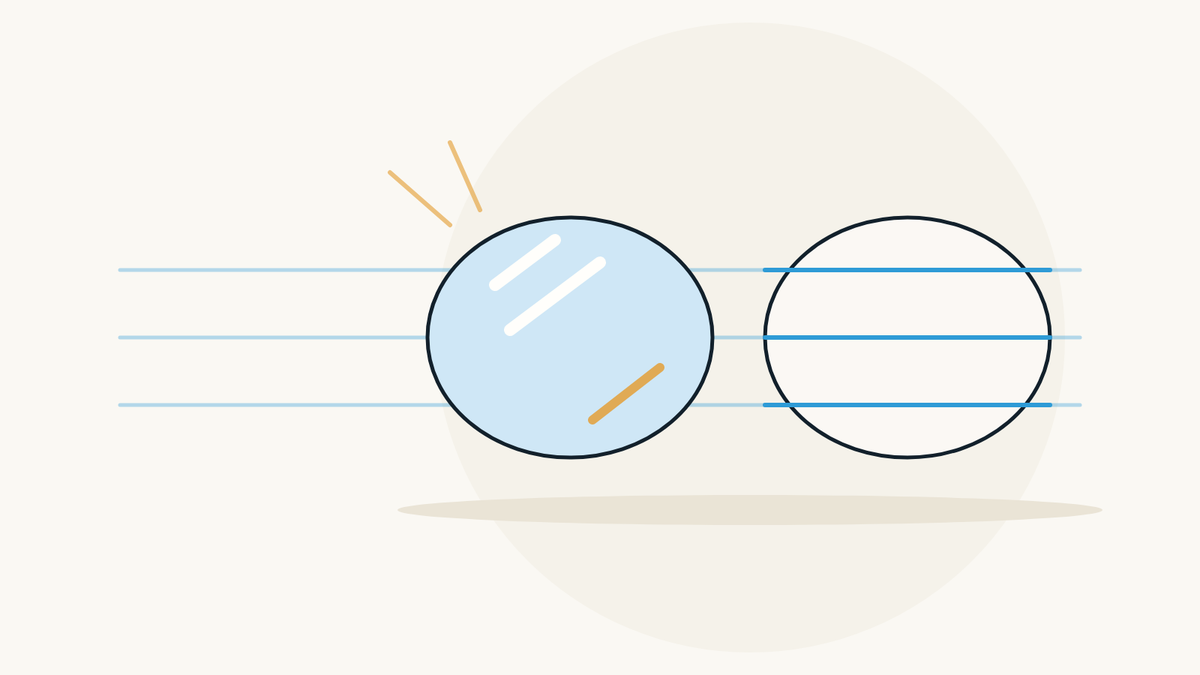
For its impact resistance. According to the AAO, polycarbonate is highly impact resistant, and doctors often recommend it for sports and other activities, because these lenses can often prevent eye injuries.
The Canadian Association of Optometrists (CAO) adds that polycarbonate and Trivex also provide UV protection. The AAO also suggests it for people who spend a lot of time outdoors or want lenses that are hard to break. For sports with contact lenses, see our article contact lenses for sports and travel.

What is Trivex?
It is a newer plastic that is also impact resistant. According to the AAO, Trivex glasses meet the same safety standards as polycarbonate, and their advantage is that they are less distorting.
In its guide to reading glasses, the AAO also describes Trivex as lightweight. For an active person who notices image distortion at the sides of the lens, it is an option to compare with polycarbonate.

What is a high-index lens?
It is a thinner, lighter plastic lens made for strong prescriptions. The AAO explains that high-index lenses are for people who need a lot of correction and that, because they are thin, they reduce the "coke bottle" look of thick lenses.
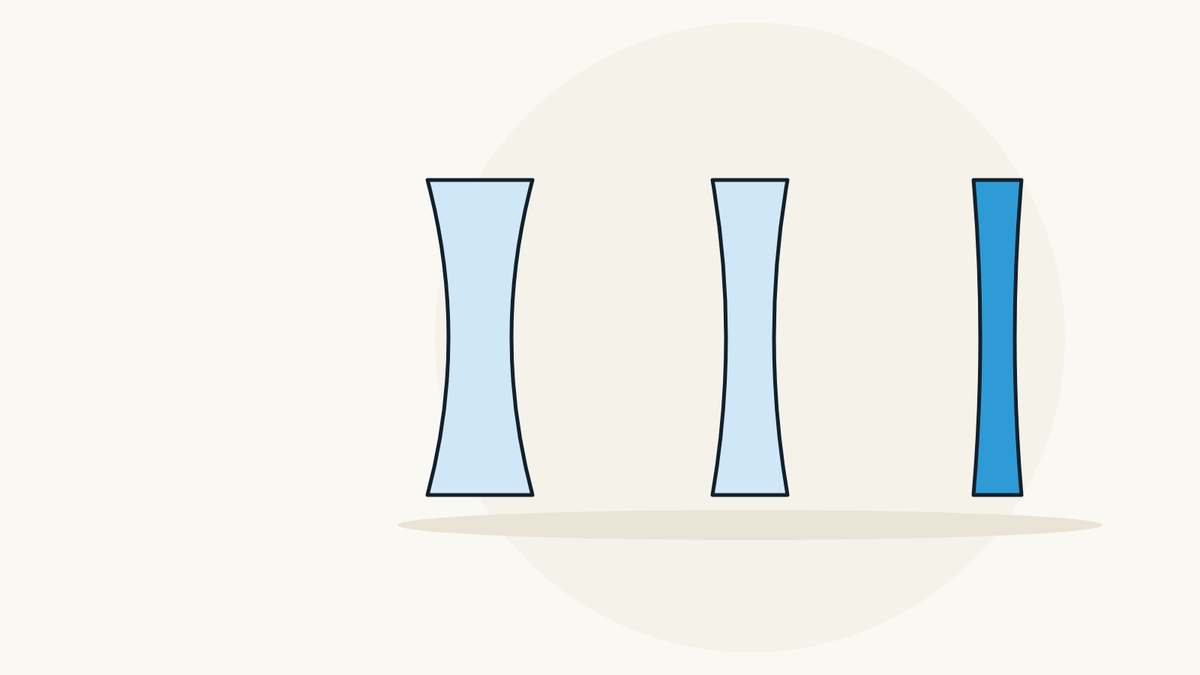
The refractive index measures how strongly the material bends light. The higher it is, the less material is needed for the same correction, which makes the lens thinner, especially at the edges for strong nearsightedness.

What do 1.50, 1.60, 1.67 and 1.74 mean?
They are the refractive indexes of the materials. The lens maker HOYA, for example, groups its materials this way: 1.50 for standard plastic, 1.60 and 1.67 for high-index, and 1.74 for ultra-high index, which it presents as its thinnest organic material.
The index is not part of your prescription: it is a manufacturing choice made with your optician. HOYA positions 1.50 for low prescriptions, and the AAO describes high-index for strong corrections, where the thinner lens shows. Our article how to read your glasses prescription explains how to find the power of your lenses.

Are glass lenses still made?
Yes, but according to the AAO most eyeglass lenses are now plastic, where they used to be made only of glass.
The main reasons are safety and comfort: the AAO points out that plastic is lighter than glass and less likely to shatter.

Which lens material is right for children's glasses?
An impact-resistant one. The CAO writes that the first priority in choosing lenses for a child is safety, and that polycarbonate and Trivex are highly impact resistant while also providing UV protection.
Depending on the prescription, the CAO also mentions aspheric surfaces or high-index materials to keep the lenses thin and light, and recommends a very good quality scratch-resistant coating on all lenses. At PrimeVision, children's eye exams are offered from age 4; see our page on children's eye exams.

Do plastic lenses scratch easily?
Most do. The AAO notes that most plastic lenses, including polycarbonate and Trivex, scratch easily, and that an anti-scratch coating is a good way to make your glasses last longer.
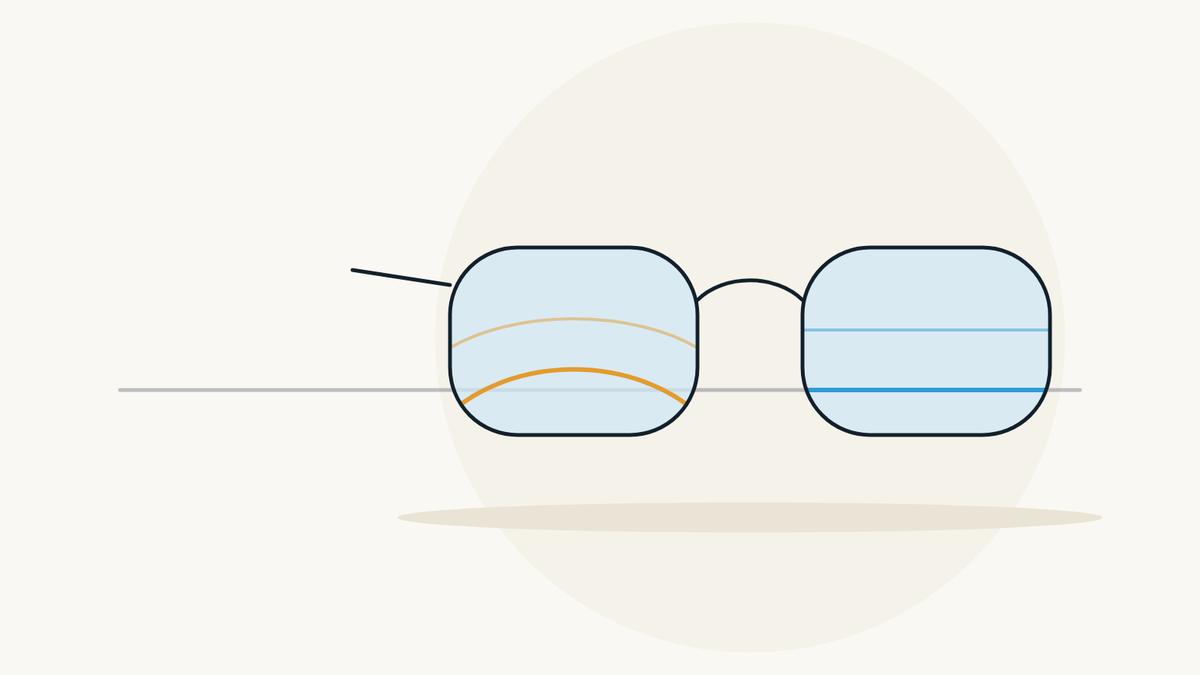
For high-index lenses, the AAO adds that they are more prone to glare, so anti-reflective coating helps. To keep lenses in good shape, clean them with mild soapy water and dry them with a microfibre cloth, the Community Eye Health journal advises.

How do you choose a lens material?
Start from your prescription and your activities. A strong prescription points to high-index; sports, the outdoors or children's glasses point to polycarbonate or Trivex; a low prescription can do very well with standard plastic.
The frame matters too: the AAO notes that larger lenses leave more room for strong prescriptions and multifocal lenses, and that a lens that is too small can cause distortion. The AAO concludes that your optician should help you make choices that fit your needs and your budget. If you are deciding between lens types as well, read single vision, bifocal or progressive lenses.

Where can you choose eyeglass lenses in Montréal?
At PrimeVision, 9520 Boulevard de l'Acadie, Suite 222, in Montréal (Ahuntsic), optometrists and a licensed optician work under one roof. The adult eye exam includes vision and prescription tests, a check of the health of both retinas and OCT imaging. In the shop, the licensed optician, Michel Geha, O.O.D., helps choose the lens material based on the prescription, the frame and how the glasses will be used, among more than 4,000 frames across a wide range of prices. RAMQ covers eye exams for children under 18 and adults 65+.
To see the lens and frame options, visit our page on prescription glasses in Montréal. If you are changing material or prescription, our article on adjusting to new glasses explains what to expect.

Sources
- Eyeglasses: How to Choose Glasses for Vision Correction, American Academy of Ophthalmology, June 14, 2023.
- Tips for Choosing the Right Reading Glasses, American Academy of Ophthalmology, October 30, 2017.
- Glasses for Children, Canadian Association of Optometrists, updated March 14, 2023.
- Lens Materials, HOYA Vision Care, accessed October 30, 2026 (manufacturer page).
- Kennan L. Talking to patients about their new spectacles, Community Eye Health, 2024;37(122):20-21.
Find our eye care articles useful? Add PrimeVision as a preferred source in Google.
This article is general information and does not replace an eye exam.