How to Read Your Glasses Prescription: SPH, CYL, Axis and ADD
How to read a glasses prescription line by line: OD and OS, sphere (SPH) for nearsightedness or farsightedness, cylinder and axis for astigmatism, ADD for reading, prism and pupillary distance, with a worked example.
By Michel Geha, O.O.D.

A glasses prescription is read one eye at a time: OD for the right eye, OS for the left. The sphere (SPH) corrects nearsightedness (minus sign) or farsightedness (plus sign), the cylinder (CYL) and axis describe astigmatism, and ADD is the extra power for seeing up close. All lens powers are measured in dioptres.
What do OD, OS and OU mean on a prescription?
OD means the right eye, OS the left eye, and OU both eyes. According to the Canadian Association of Optometrists (CAO), these abbreviations come from Latin: oculus dexter, oculus sinister and oculus uterque.
The CAO notes that each optometrist has their own way of writing a prescription. Yours may not look like a sample you find online, but it carries the same information, starting with your name, then a line of numbers for each eye.

What does SPH (sphere) mean?
The sphere, written SPH, is the lens power needed to correct your vision. According to the CAO and the American Academy of Ophthalmology (AAO), a minus sign (-) means nearsightedness: you see better up close and need correction for distance. A plus sign (+) means farsightedness.
Lens power is measured in dioptres (D). To learn more about these two conditions, read our articles on myopia and hyperopia.

Does a higher number mean a stronger prescription?
Yes: the further the number is from zero, on either side, the stronger the prescription. The AAO suggests picturing a number line with zero in the middle, which means no correction.
For example, according to the AAO, a sphere of -9.00 D means 9 dioptres of nearsightedness. A sphere of +2.00 D corrects 2 dioptres of farsightedness. The sign tells you the type of correction, the number tells you how strong it is.

What do CYL and AXIS mean?
CYL and AXIS describe astigmatism. According to the AAO, the cylinder (CYL) shows how much astigmatism you have, meaning a cornea with one curve steeper than the other, shaped more like a football than a basketball.
The axis, written in degrees from 1 to 180, shows which way the astigmatism lines up. The CAO notes that the cylinder only appears if you have astigmatism: otherwise those boxes are blank. Our article on astigmatism covers its symptoms and corrections.

What is ADD on a glasses prescription?
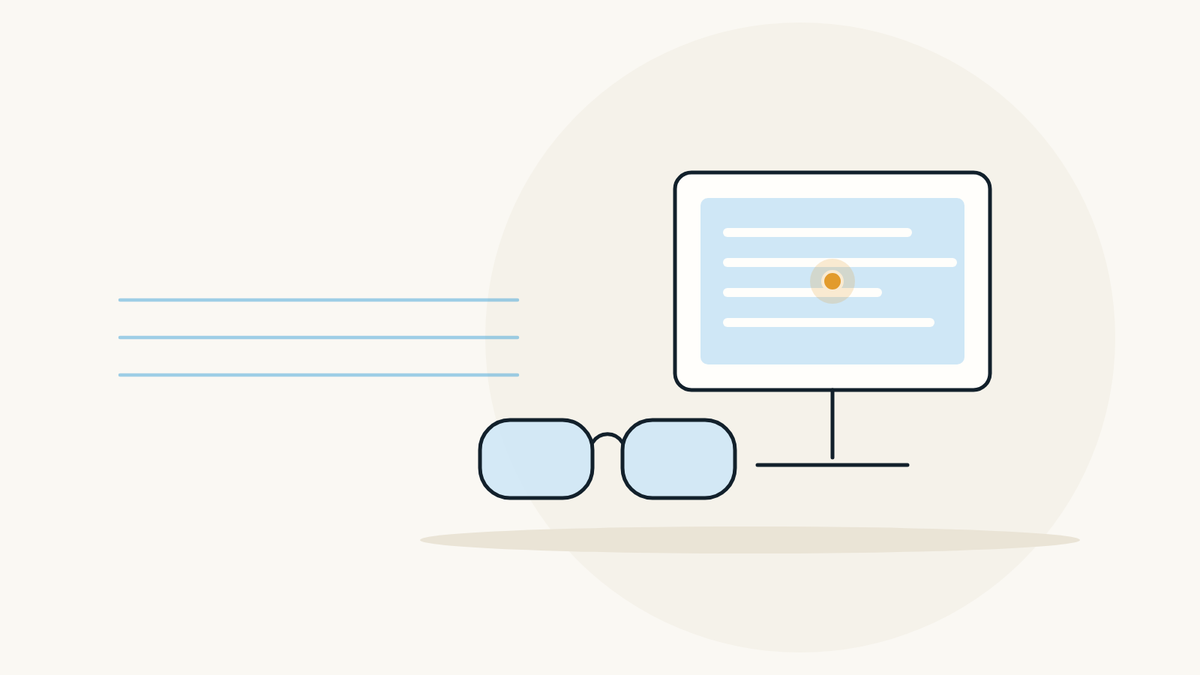
ADD is the extra lens power for seeing up close. According to the CAO, a different prescription for near vision can be written in two ways: a second full line (SPH, CYL, AXIS) or an ADD value that is added to the distance prescription.
The AAO gives the example of people over 40 who do not want a second pair for reading: they choose bifocals, where the lower half of the lens gives them reading vision. ADD is also used for progressive lenses. Our article on getting used to progressive lenses explains what comes next.

What is prism on a prescription?
Prism is a correction built into the lens to help the two eyes work together. The CAO says a small share of prescriptions include it, to help the eyes coordinate or as part of rehabilitation. The AAO adds that it is used for some people with double vision, fusing the two images into one.
Prism is measured in prism dioptres. It is followed by the direction of its base, meaning its thickest edge: BU (base up), BD (base down), BI (base in, toward the nose) and BO (base out, toward the ear), according to the CAO.

What is pupillary distance (PD)?
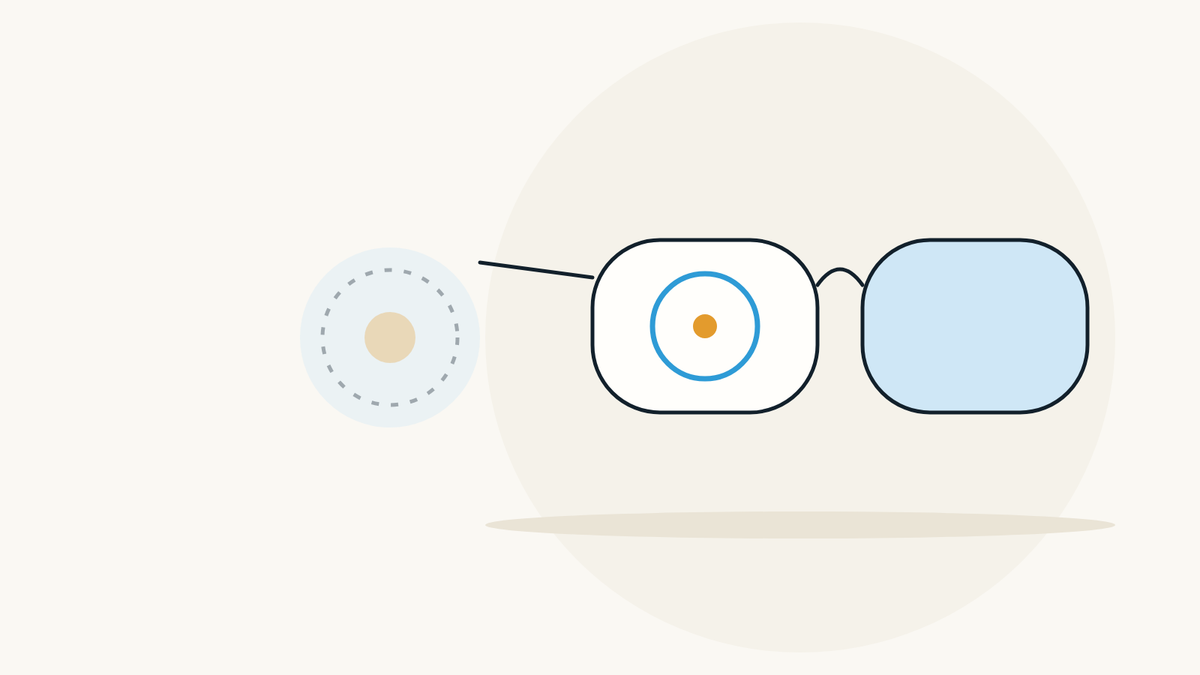
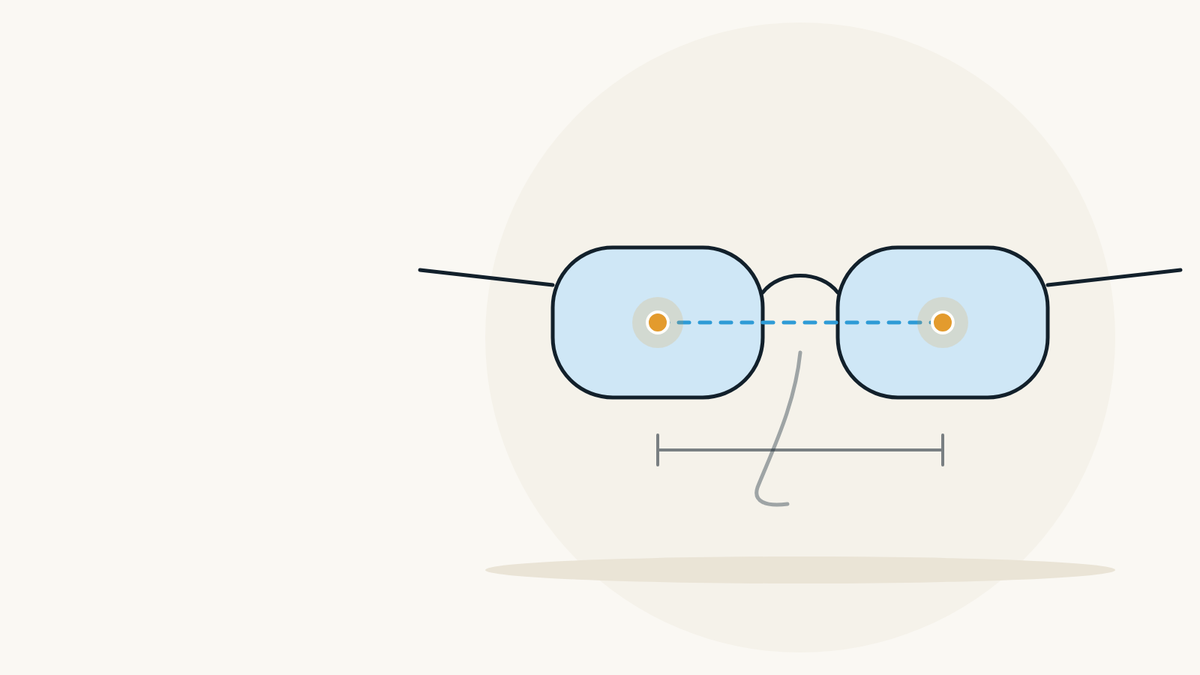
Pupillary distance is the distance from the centre of one pupil to the centre of the other. The CAO explains it is measured with the eyes looking at the distance the prescription is meant for. Note that on a prescription, PD can also stand for prism dioptres.
According to the CAO, pupillary distance may or may not be written on your prescription. It is used to place the optical centre of each lens in front of each eye when the glasses are made.

Why are the numbers different for each eye?
Because each eye has its own vision. According to the CAO, it is not unusual for the right eye's numbers to be quite different from the left eye's: in fact, that is the norm.
The prescription may also carry other notes, the CAO adds, about the lens design or coatings your optometrist recommends for comfortable vision. If a note is unclear, ask the clinic before you order your glasses.

How do you read a sample prescription, column by column?
Take a made-up line, written only as an example: OD -2.00 -0.75 x 180. The first number, -2.00, is the sphere: 2 dioptres of nearsightedness. The second, -0.75, is the cylinder: a mild astigmatism. The last one, 180, is the axis of that astigmatism, in degrees.
If the prescription also says "ADD +2.00", that power is added to the sphere for near vision. None of these numbers is "good" or "bad": they describe the correction your eye needs.

Can I use my glasses prescription for contact lenses?
No. According to the AAO, because contact lenses sit directly on the eye, their prescription is different from a glasses prescription. It includes measurements specific to the size and brand of the lenses, and it requires a contact lens fitting first to check that they suit you.
Our article on the contact lens prescription explains its own numbers, such as base curve and diameter.

Where can you get a prescription and glasses in Montréal?
At PrimeVision, 9520 Boulevard de l'Acadie, Suite 222, in Montréal (Ahuntsic), optometrists and a licensed optician work under one roof. The adult eye exam includes vision and prescription tests, a check of the health of both retinas and OCT imaging; automated vision measurement is done with a Nidek Tonoref III. With your prescription in hand, the licensed optician, Michel Geha, O.O.D., helps you choose from more than 4,000 frames in store, across a wide range of prices. RAMQ covers eye exams for children under 18 and adults 65+.
To see frame and lens options, visit our prescription glasses in Montréal page. If you wonder whether your prescription has changed, our article on signs you need new glasses can help.

Sources
- How to Read Your Eyeglass Prescription, Canadian Association of Optometrists, updated March 18, 2023.
- How to Read an Eyeglasses Prescription, American Academy of Ophthalmology, April 18, 2023.
Find our eye care articles useful? Add PrimeVision as a preferred source in Google.
This article is general information and does not replace an eye exam.