Single Vision, Bifocal or Progressive Lenses: What Is the Difference?
Single vision lenses correct one distance, bifocals two with a visible line, trifocals three, and progressives every distance with no line. How they differ day to day, who needs them, computer glasses and how long adapting takes.
By Michel Geha, O.O.D.

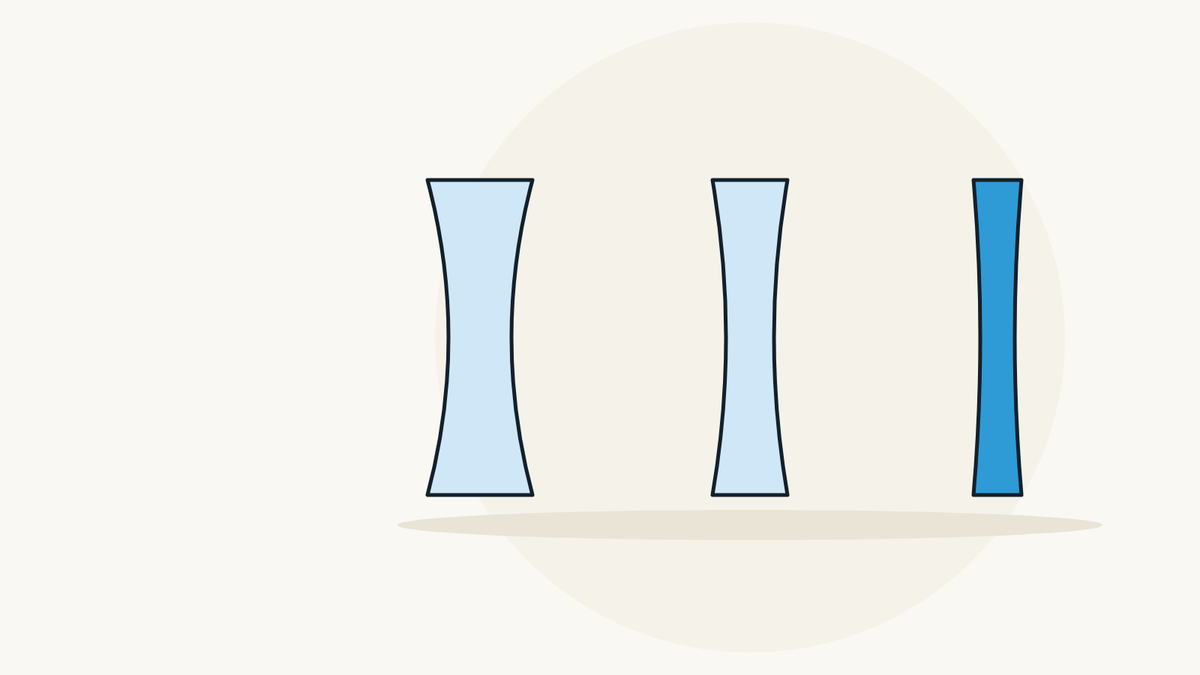
A single vision lens corrects one distance, either far or near. A bifocal lens combines two zones, one for distance and one for near, separated by a visible line. A progressive lens changes gradually from far to near with no line, and also covers the middle distance, such as a computer screen.
What is a single vision lens?
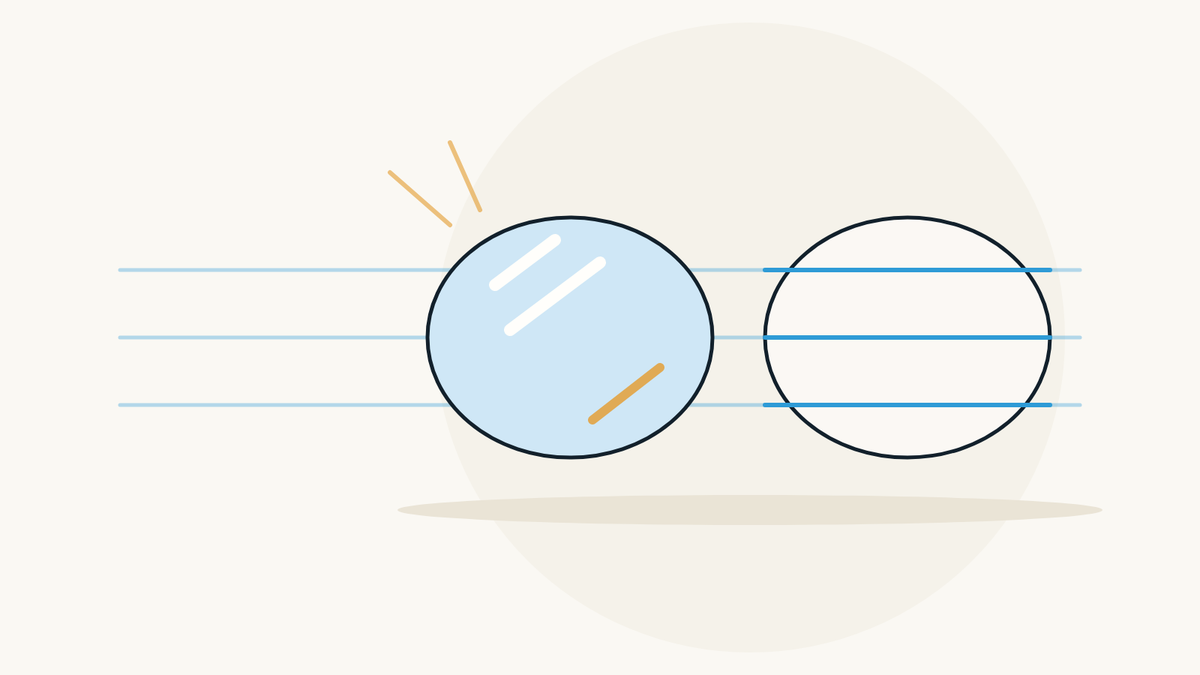
A single vision lens has one power across its whole surface. It corrects one distance: distance vision for nearsightedness, farsightedness or astigmatism, or near vision, like a pair of reading glasses.
The American Academy of Ophthalmology (AAO) describes people who wear single vision glasses for distance along with reading glasses for close work. Bifocals and progressives exist precisely so you do not have to switch pairs.

What is a bifocal lens?
A bifocal lens corrects two distances, far and near, in the same lens. According to the AAO, its two power zones are separated by a visible line. The lower part is for reading, and the rest of the lens is for distance.
The reading zone, called the segment, can have a straight top (a "flat-top" or FT bifocal) or be round. Its width, in millimetres, sets how wide the reading area is.

What about trifocals?
A trifocal adds a third zone for the middle distance. According to the AAO, it has three areas, for close-up, mid-range and far, separated by visible lines.
The AAO explains that we think of vision in three ranges: near for reading, intermediate for a computer or a card game, and far for driving. A bifocal covers two, a trifocal all three, but vision is often blurry between its three zones, like the gaps between steps on a staircase.

How does a progressive lens work?
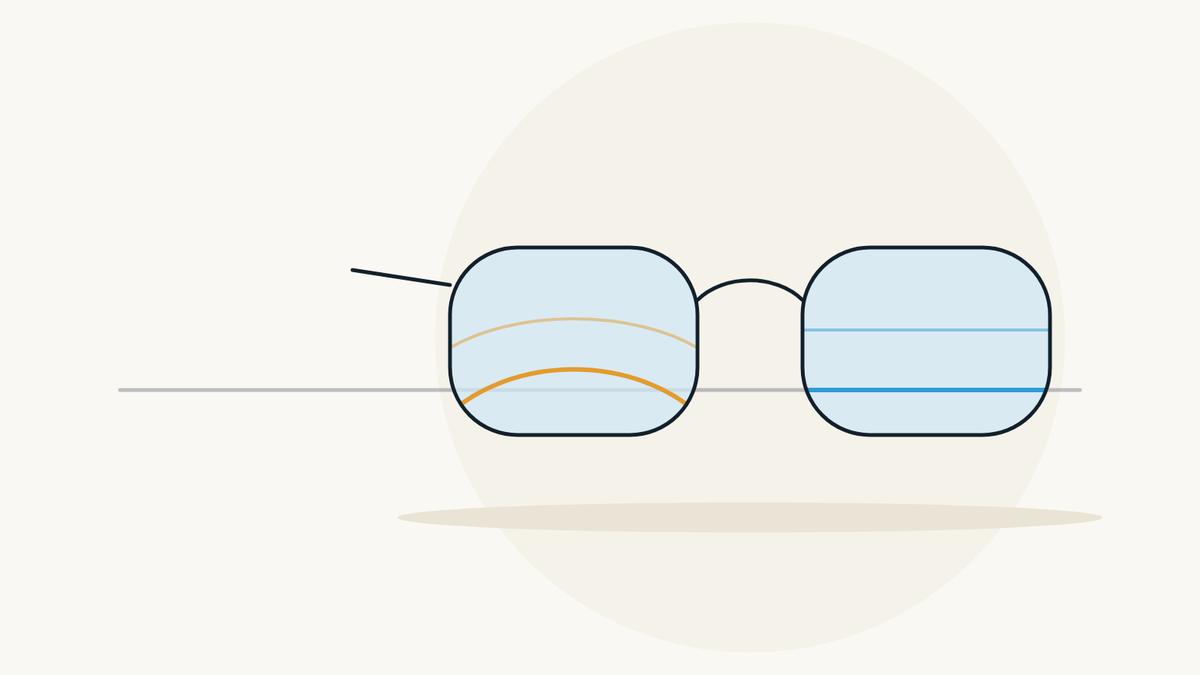
A progressive lens increases in power gradually from top to bottom, with no line. According to the AAO, you look through the top of the lens to see far away, the middle for in-between distances and the bottom for close-up.
The AAO compares it to a ramp rather than steps: it gives clear vision at all three distances and in between them. It suits people who already wore distance glasses and now need help reading. Our progressive glasses guide has more detail.

What is the difference between bifocals and progressives day to day?
The line is the main difference. With bifocals or trifocals, the AAO describes an "image jump": as your eyes cross the line, objects suddenly change in clarity and seem to shift position. Progressives avoid this jump thanks to their smooth transition.
In exchange, the AAO notes that progressives can cause distortion at the sides when you move your eyes from left to right, and they take some learning, since no line guides your gaze. Many people still prefer progressives because they have no line, according to the AAO.

Who needs bifocal or progressive lenses?
Mainly people with presbyopia, the trouble seeing up close that comes with age. According to the Canadian Association of Optometrists (CAO), it usually becomes noticeable between 40 and 45, when the lens of the eye loses its elasticity, and progresses until the late 40s or early 50s.
The CAO lists several ways to correct it: reading glasses, bifocal, trifocal or progressive lenses, and contact lenses. The National Eye Institute points out that many people have another refractive error on top of presbyopia, such as nearsightedness or astigmatism.

How long does it take to get used to progressive lenses?
From a week to a couple of months, according to the AAO. To shorten that time, it advises having the lenses fitted by a professional and wearing them as often as possible.
Its tips for the first days: point your nose at what you want to see and move your chin up or down until it is clear. When walking, look through the top of the lens: on stairs, looking through the bottom can make your feet look bigger. If you get eye strain or a headache, take a break. Our article on getting used to progressive lenses goes further.

What about computer glasses?
They are lenses designed for screen distance. According to the AAO, computer glasses are a kind of progressive that gives more of the lens to intermediate distances, such as a screen about 20 to 26 inches (50 to 65 cm) from your face.
The AAO says they can reduce eye strain and make it easier to switch focus for people who do a lot of computer work. Talk to your optometrist if screens take up a large part of your day.

Do you have to wear your glasses all the time?
It depends on your needs. According to the CAO, if presbyopia is your only vision problem, you may only need glasses for close work like reading or using a computer.
If you often switch between distances, the CAO notes that wearing your glasses all the time may be more practical, and that multifocal or progressive lenses may then suit you better. The CAO adds that between 40 and 55, eyewear usually needs updating every two to three years.

How do you choose between single vision, bifocal and progressive?
The choice depends on the distances you need every day and on your prescription. One distance: a single vision lens. Far and near, with a visible line that does not bother you: a bifocal. Every distance with no line: a progressive.
According to the CAO, your optometrist finds the type of lens that will help you see clearly. To read the numbers that follow, our article on how to read your glasses prescription explains the ADD value, the one that gives the reading power.

Where can you get bifocal or progressive lenses in Montréal?
At PrimeVision, 9520 Boulevard de l'Acadie, Suite 222, in Montréal (Ahuntsic), optometrists and a licensed optician work under one roof. The adult eye exam includes vision and prescription tests, a check of the health of both retinas and OCT imaging. In the shop, the licensed optician, Michel Geha, O.O.D., orders single vision, progressive and bifocal lenses; for bifocals, the clinic works with flat-top segments 28 or 35 mm wide (FT-28, FT-35) and round segments of 24 or 28 mm. The shop has more than 4,000 frames across a wide range of prices. RAMQ covers eye exams for children under 18 and adults 65+.
To see lens options, visit our prescription glasses in Montréal page. If you wonder whether your current glasses are still enough, read our article on signs you need new glasses.

Sources
- Pros and Cons of Progressive Lenses, American Academy of Ophthalmology, April 4, 2023.
- What is the difference between no-line bifocals, progressive bifocals and trifocals?, American Academy of Ophthalmology, November 3, 2021.
- What Is Presbyopia?, American Academy of Ophthalmology, May 21, 2026.
- How to Read an Eyeglasses Prescription, American Academy of Ophthalmology, April 18, 2023.
- Presbyopia, Canadian Association of Optometrists, updated April 4, 2024.
- Presbyopia, National Eye Institute, updated December 4, 2024.
Find our eye care articles useful? Add PrimeVision as a preferred source in Google.
This article is general information and does not replace an eye exam.