Styes and Chalazia: What to Do and When to Get Checked
The difference between a stye and a chalazion, their symptoms and causes, how to use a warm compress, why not to squeeze them, makeup and contact lenses in the meantime, how long they last, the treatments and when to get checked.
By Michel Geha, O.O.D.
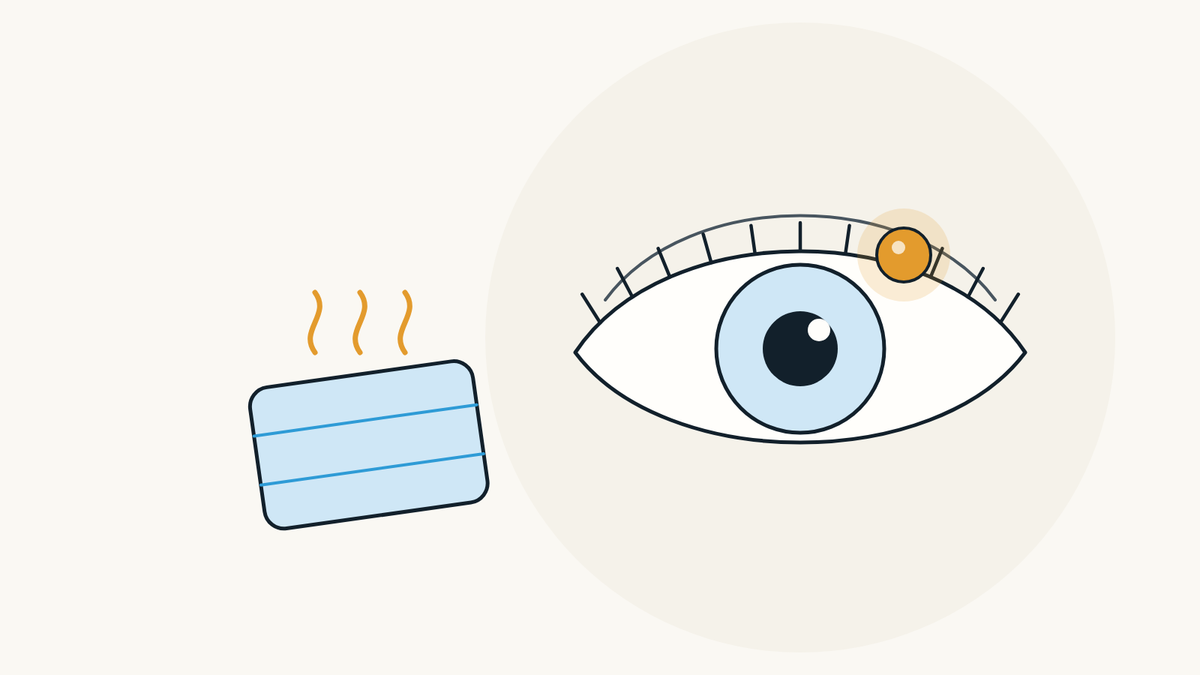
A stye is a small, red, painful bump at the edge of the eyelid, most often caused by an infection. A chalazion is a bump with little or no pain, farther back in the eyelid, caused by a clogged oil gland. Both often clear up with warm compresses; do not squeeze them.
Stye or chalazion: what is the difference?
Mainly the pain and the location. According to the American Academy of Ophthalmology (AAO), a stye is very painful and often appears at the edge of the eyelid, usually because of an infected eyelash root. A chalazion is not usually painful and forms farther back on the eyelid, because of a clogged oil gland.
The AAO admits it can be hard to tell them apart. StatPearls, a medical reference from the US National Library of Medicine, adds that a chalazion usually sits deeper in the lid than a stye.

What is a stye?
It is a small painful lump that grows from the base of an eyelash or under the eyelid. The AAO notes that most styes are caused by a bacterial infection, and the Mayo Clinic names staphylococcus as a common cause.
There are two kinds. An external stye starts at the base of an eyelash, often in the hair follicle, and can look like a pimple. An internal stye forms inside the eyelid, most often in an oil-producing gland.

What is a chalazion?
It is a swollen bump on the eyelid that appears when one of the eyelid's oil glands clogs up. According to the AAO, it can start as an internal stye. At first you may not notice it, because there is little or no pain.
StatPearls describes it as sterile inflammation, meaning there is no infection. As it grows, the eyelid can turn red and swollen, and sometimes tender to the touch.

What are the symptoms of a stye or a chalazion?
A bump on the eyelid, in both cases. For a stye, the AAO describes a very painful red bump at the edge of the eyelid, sometimes with a small pus spot in the centre, a feeling that something is in your eye, tearing, light sensitivity and crust along the lid margin.
A chalazion may cause no symptoms at all. As it grows, the bump can turn red and swollen. If it gets large enough to press on the eye, it can blur your vision, and more rarely make the whole eyelid swell.

Who is more at risk, and what causes them?
Anyone can get one. The AAO says the risk is higher if you have blepharitis (inflammation of the eyelid edge), have had a stye or chalazion before, have a skin condition such as rosacea or seborrheic dermatitis, or have diabetes.
The Mayo Clinic adds some habits: touching your eyes with unwashed hands, putting in contact lenses without disinfecting them or washing your hands, sleeping in eye makeup and using old or expired cosmetics. If you wear contacts, review the good habits in our article on makeup and contact lenses.

How do you treat a stye or a chalazion at home?
With a warm compress. The AAO advises soaking a clean washcloth in hot water and holding it on the eyelid for 10 to 15 minutes, 3 to 5 times a day, rewarming it often without burning your skin. For a chalazion, the warmth helps the clogged gland open and drain.
A gentle massage around the bump with a clean finger can also help the gland clear. The Mayo Clinic also suggests gently washing the eyelid with mild soap and water.

Can you squeeze or pop a stye?
No. The AAO and the Mayo Clinic both say it: squeezing or popping a stye or chalazion can spread the infection into the eyelid.
Keep your hands away from your eyes too, and wash them before you touch the eyelid or put on the compress.

Makeup and contact lenses: what to do in the meantime?
Set them aside until it heals. The AAO advises against eye makeup and contact lenses while you have a stye or chalazion, and the Mayo Clinic notes that contact lenses can be contaminated with the bacteria involved.
Wear your glasses in the meantime. To avoid another stye, the Mayo Clinic advises throwing out old makeup, not sharing it and never sleeping in it. If your eye turns red while you wear contacts, read our article on red eye with contact lenses.

How long does a stye or a chalazion last?
A stye often clears on its own in about a week. According to StatPearls, it usually resolves by itself within a week, and the Mayo Clinic says most begin to go down within a few days.
A chalazion can last longer: most go away within a month with simple care such as compresses, according to StatPearls. The Mayo Clinic also notes that styes often come back.

What treatments are there if the bump does not go away?
A doctor can offer other treatments. According to the AAO, an ophthalmologist may prescribe an antibiotic for an infected stye, give a steroid shot for a very swollen chalazion, or drain a stye or chalazion that affects vision or does not go away, in the office under local anesthesia.
The Mayo Clinic also mentions antibiotic drops or cream, and pills if the infection spreads beyond the eyelid. When a stye or chalazion keeps coming back, the AAO says the ophthalmologist may take a tiny tissue sample to check that a more serious problem is not the cause.

When should you get it checked?
When the bump does not improve or other signs appear. The Mayo Clinic advises seeing a professional if a stye does not start to improve after 48 hours of home care, or if redness and swelling involve the whole eyelid or spread to the cheek or other parts of the face.
StatPearls adds vision changes and fever, and notes that without treatment the infection can spread to the tissues around the eye. A chalazion that keeps coming back in the same spot should also be examined. To know what to do when an eye problem cannot wait, see our urgent eye care page.

Where can you get a stye or chalazion checked in Montréal?
At PrimeVision, 9520 Boulevard de l'Acadie, Suite 222, in Montréal (Ahuntsic), optometrists and a licensed optician work under one roof. An optometrist can examine a bump on the eyelid and check that the eye itself is healthy. If treatment by an ophthalmologist is needed, the clinic writes the referral, sends it directly and gives you a copy; the wait depends on the hospital or clinic that receives it. RAMQ covers eye exams for children under 18 and adults 65+, and we see children from age 4.
To book, go through our page on eye exams with an optometrist: book online, the times shown are the open ones. If your eyes are also dry or irritated, our article on dry eye treatment may help.

Sources
- What Is the Difference Between a Stye and a Chalazion? Causes, Symptoms, Treatment, American Academy of Ophthalmology, March 24, 2025.
- Stye (sty): symptoms and causes, Mayo Clinic, September 20, 2025.
- Stye (sty): diagnosis and treatment, Mayo Clinic.
- Chalazion, StatPearls, Jordan GA and Beier K, updated July 31, 2023.
- Hordeolum (Stye), StatPearls, Gurnani B, Guier CP and Patel BC, updated December 11, 2024.
Find our eye care articles useful? Add PrimeVision as a preferred source in Google.
This article is general information and does not replace an eye exam.