Dry Eye Treatment: Why It Matters and What Actually Helps
Burning, grittiness or blurry vision: dry eye is often chronic, and drops alone don't always fix it. Here is why, and what the research supports.
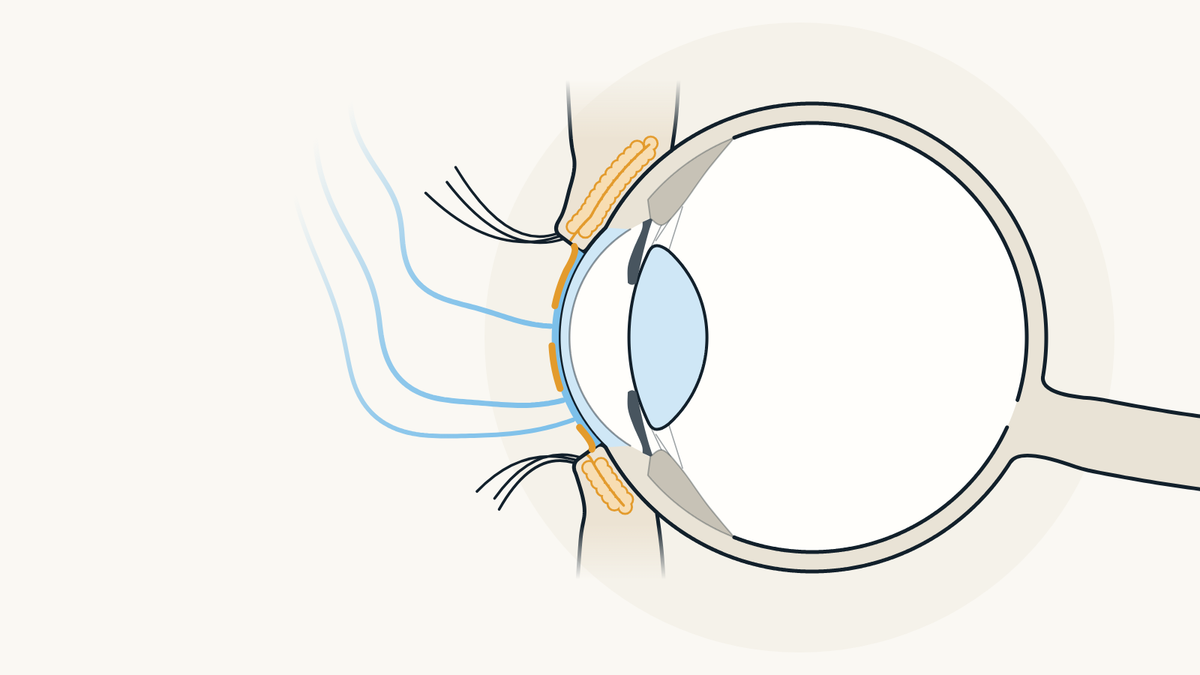
Dry eye is a disease of the eye's surface: the tear film, the thin layer of tears that covers it, becomes unstable. Dry eye is often chronic, but dry eye treatment matched to its cause, not just eye drops, can relieve the symptoms.

What are the symptoms of dry eyes?
Dry eyes often cause burning, a gritty feeling, redness and blurry vision. Possible signs include:
- burning, stinging or scratchy eyes
- a sandy or gritty feeling, as if something were in your eye
- red, irritated eyes
- blurry vision, especially when reading
- sensitivity to light
- discomfort with contact lenses
- watery eyes
According to the Canadian Association of Optometrists, watery eyes can still be dry eyes: the eye makes extra tears as a reflex to make up for the irritation.
Can dry eyes cause blurry vision?
Yes. Blurred vision, especially when reading, is one of the dry eye symptoms listed by the American Academy of Ophthalmology.
Over the long term, severe chronic dryness can even scar the cornea, which impairs vision, according to the Canadian Association of Optometrists.
What causes dry eyes?
Two mechanisms, often combined, are involved: the eye doesn't make enough tears, or the tears evaporate too quickly. According to the TFOS DEWS II report (2017), the most common cause of evaporative dry eye is meibomian gland dysfunction: these tiny glands in the eyelids then secrete too little oil to limit tear evaporation.

According to the American Academy of Ophthalmology and the Canadian Association of Optometrists, several factors raise the risk:
- Age and hormones: dry eye becomes more common with age and affects more women, especially after menopause.
- Some health conditions: Sjögren's syndrome, rheumatoid arthritis, lupus, thyroid disease, Parkinson's disease and, probably, diabetes and rosacea, according to the TFOS DEWS II report (2017).
- Some medications: certain antihistamines, antidepressants, birth control pills, diuretics and beta-blockers. Don't stop a medication without talking to the health professional who prescribed it.
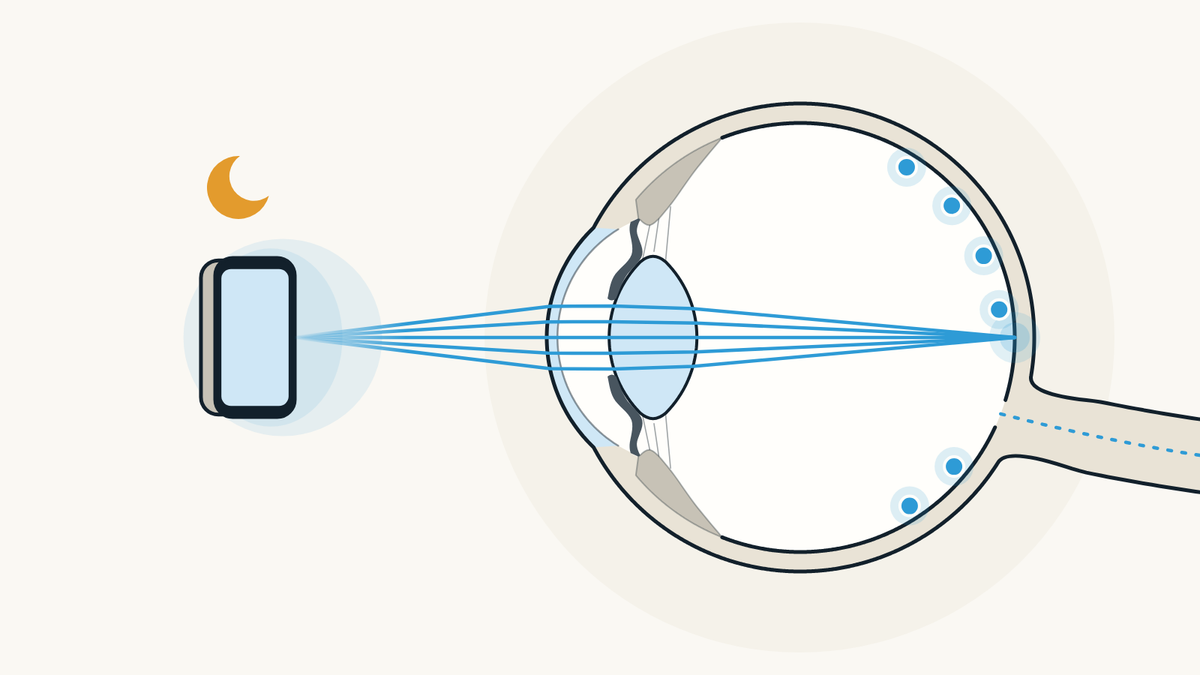
- Screens: at a screen we blink half as often or less (the Canadian Association of Optometrists reports about 4 times a minute instead of 17).
- Your environment: wind, cigarette smoke, air pollution and dry air, like the heated indoor air of a Montréal winter.
- Contact lenses and refractive surgery such as LASIK.
Wondering whether filtering lenses help with screen use? See our article on whether blue light glasses work.
Is dry eye syndrome serious?
Dry eye is usually not an emergency, but it is more than a nuisance. Estimates range from 5% to 50% of people, depending on the study, and the TFOS DEWS II report (2017) points to its impact on vision, quality of life and work. It can also complicate two situations:
- Wearing contact lenses, which becomes less comfortable and carries a higher risk of infection, according to the Canadian Association of Optometrists.
- Planning cataract surgery. In one study, the corneal measurements used to calculate the power of the lens implant varied more when tears were too concentrated. Four of the five authors had been paid by the maker of the tear-testing device used. The finding suggests checking the eye's surface before those measurements.
Why don't eye drops always fix dry eyes?
Artificial tears lubricate the eye and can ease symptoms, but they don't act on every cause: poorly functioning meibomian glands, inflammation of the eye's surface, an eyelid problem, a medication or a general health condition.
What the optometrist checks
The optometrist asks about your symptoms, medications, screen time and contact lenses, then examines your eyelids, cornea and tear film with a slit lamp, a type of microscope. Depending on the case, a dye can reveal damaged areas of the eye's surface and show how long the tear film takes to break up after a blink.
In Québec, optometrists may prescribe medication for conditions of the eye and surrounding structures such as the eyelids and tear ducts, as part of front-line (primary) care, according to the Ordre des optométristes du Québec.
What dry eye treatments are available?
According to the TFOS DEWS III international report (2025), no single approach suits everyone: the optometrist looks for what is driving your dry eye (tears, eyelids, eye surface) and chooses treatments to match, often several at once. The Canadian Association of Optometrists describes these options:
- Basic care, usually tried first: artificial tears, a gel or ointment at bedtime and warm compresses.
- Prescription medications that reduce inflammation in the eye.
- Punctal plugs: tiny plugs inserted in the corner of the eyelids to slow tear drainage.
- In-office treatments offered by some clinics: devices that apply heat or light to target the eyelid glands.
These devices are among the newer options, but the evidence varies from one treatment to another. According to the TFOS DEWS III report, a Cochrane review of 18 trials found no conclusive improvement with punctal plugs, and large, independent, long-term studies are still needed to clarify the effect of intense pulsed light.
Can dry eyes be cured permanently?
Usually not. Dry eye is a chronic condition that needs ongoing care, according to the Canadian Association of Optometrists. Regular treatment can still relieve symptoms and improve eye health.
Do omega-3 supplements help?
The evidence is mixed. In the DREAM study (2018), 535 people with moderate to severe dry eye took 3,000 mg of omega-3 a day or a placebo for a year: omega-3 did no better than the placebo.
A 2019 Cochrane review suggests a possible role but rates the evidence as uncertain and inconsistent. The 2025 TFOS DEWS III report, however, concludes that the overall evidence suggests a benefit, while the ideal source and dose still need study. Talk to a health professional before buying supplements.
What helps dry eyes at home, and what to avoid
These habits complement your optometrist's care:

- Warm compresses on closed eyelids, then gently cleaning the lids with warm water and a clean washcloth. The heat helps the glands release their oil.
- Screen breaks: the Canadian Association of Optometrists suggests looking at something at least 20 feet (about 6 metres) away for 20 seconds every 20 minutes. Blink more often, too.
- A humidifier during the heating season.
- Wraparound sunglasses on windy days.
- Enough sleep.
What to avoid: air from a fan or hair dryer aimed at your face, and cigarette smoke. If you wear contacts, see our guide to contact lens care as well.
When should you see an optometrist for dry eyes?
Even without symptoms, PrimeVision recommends an eye exam every two years for adults and every year for children. RAMQ covers one complete eye exam a year for people who are "under the age of 18 or age 65 or over", and some other people qualify under specific conditions: see RAMQ's optometric services page. This coverage applies to the exam itself: some additional tests, such as retinal photos or optical coherence tomography (OCT), are not covered.
Dry eyes and your visit to PrimeVision
If you have symptoms, mention them at your eye exam: the optometrist can assess the surface of your eyes and suggest a care plan. Our eye exams page describes our approach to dry eye management.
If your discomfort is mostly linked to your contact lenses, see our contact lenses page.
Sources
- TFOS DEWS II Patient Summary, Tear Film & Ocular Surface Society.
- Stapleton F et al., TFOS DEWS II Epidemiology Report, The Ocular Surface, 2017.
- Jones L et al., TFOS DEWS III: Management and Therapy, American Journal of Ophthalmology, 2025.
- Dry Eye (Ocular Surface Disease), Canadian Association of Optometrists.
- Computer Vision Syndrome (Digital Eye Strain), Canadian Association of Optometrists.
- What Is Dry Eye?, American Academy of Ophthalmology.
- Remedies to Reduce Dry Eye Symptoms, American Academy of Ophthalmology.
- Dry Eye, U.S. National Eye Institute.
- Testing for Dry Eye, U.S. National Eye Institute.
- DREAM Study Research Group, n-3 Fatty Acid Supplementation for the Treatment of Dry Eye Disease, New England Journal of Medicine, 2018.
- Downie LE et al., Omega-3 and omega-6 polyunsaturated fatty acids for dry eye disease, Cochrane Database of Systematic Reviews, 2019.
- Epitropoulos AT et al., Effect of tear osmolarity on repeatability of keratometry for cataract surgery planning, Journal of Cataract & Refractive Surgery, 2015.
- Questions fréquentes (grand public), in French, Ordre des optométristes du Québec.
- Optometric services, Régie de l'assurance maladie du Québec (RAMQ).
This article is general information and does not replace an eye exam.