Shingles Near the Eye: Signs, Treatment and When to Get Care
Shingles near the eye, or herpes zoster ophthalmicus: the early signs, what it does in the eye, why antivirals work better early, who is more at risk, complications, contagion, what NACI recommends for the vaccine and where to go for care.
By Michel Geha, O.O.D.
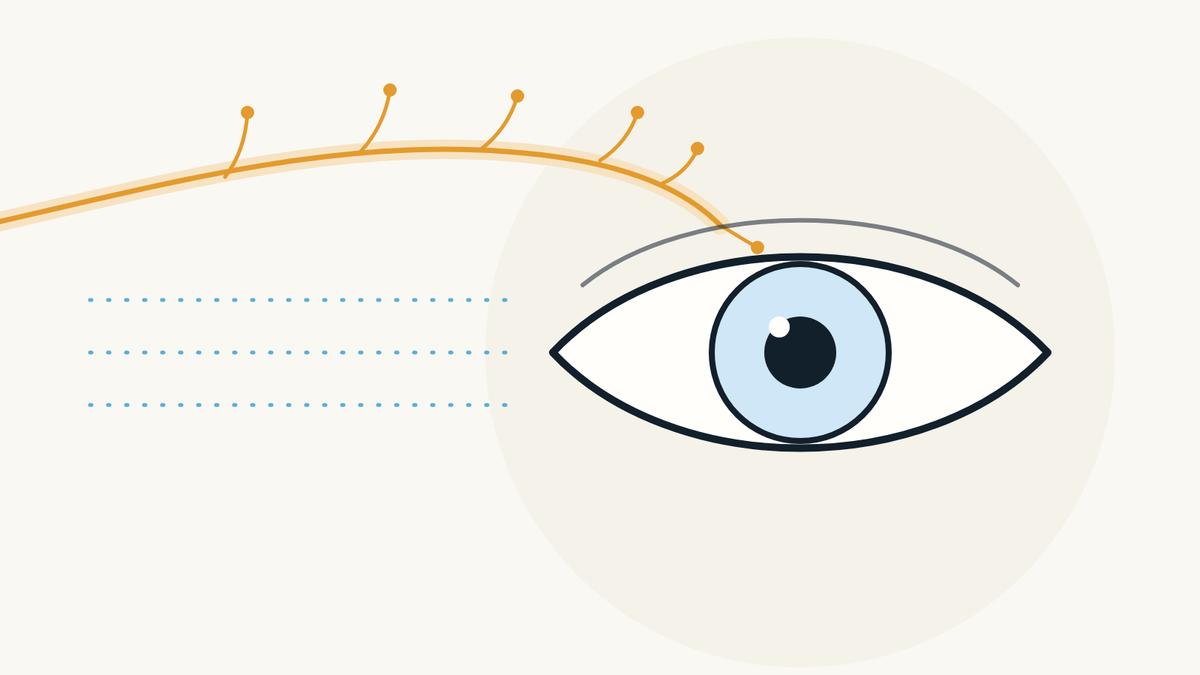
Shingles near the eye, or herpes zoster ophthalmicus, is the chickenpox virus waking up in a nerve of the face that also serves the eye. It often starts with pain or tingling, then a rash with blisters on one side only, on the eyelid or the nose. It calls for prompt medical care.
Can shingles affect the eye?
Yes. The American Academy of Ophthalmology (AAO) explains that shingles is caused by the same virus as chickenpox: after chickenpox, it stays dormant in nerve cells and can become active again years later. When it infects the nerves of the eye, it can cause problems in the eye itself.
This is called herpes zoster ophthalmicus. According to EyeWiki, the AAO's medical encyclopedia, the rash follows one or more branches of the trigeminal nerve, which gives feeling to the face and the eye, on one side only. The Public Health Agency of Canada notes that shingles on the face can involve the eyes, which is serious because it can cause scarring and harm vision. The Mayo Clinic also describes painful eye infections that may lead to vision loss.

What are the early signs of shingles near the eye?
Pain often comes first, before any rash. According to the AAO, shingles starts with pain, itching and tingling of the skin; redness and numbness then lead to a rash, whose blisters break open and scab over. The Mayo Clinic says the red rash begins a few days after the pain, sometimes around one eye or on one side of the face. Some people also have a fever, a headache, fatigue and sensitivity to light.
Near the eye, the AAO describes a rash on one or both eyelids on the same side of the face. EyeWiki also describes Hutchinson's sign: skin lesions on the tip, side or root of the nose. It is a strong sign that the eye will become inflamed.

What does shingles do inside the eye?
It can make the eye red, painful, watery or less clear. EyeWiki notes that people may describe pressure in the eye, tearing, redness or reduced vision, and that pain along the nerve can be severe. The Mayo Clinic lists sensitivity to light among the possible symptoms of shingles.
In the eye itself, the AAO names iritis or uveitis (pain, swelling and redness inside the eye), keratitis, a breakdown of the surface of the cornea, and optic neuritis, a swelling of the optic nerve. A red eye has many other causes: our article on red eyes goes through them, and the one on eye pain explains when pain becomes urgent.

Why does shingles near the eye need prompt care?
Because treatment works better when started early and the eye can be left with lasting damage. The Mayo Clinic advises contacting a health care provider as soon as possible if the pain and rash are near an eye: left untreated, this infection may lead to permanent eye damage.
The Public Health Agency of Canada says antivirals work better when taken in the first three days after the rash appears. The Mayo Clinic adds that early antiviral treatment may speed healing and lower the risk of complications. So do not wait for the rash to spread before getting care.

Who is more at risk of shingles?
Anyone who has had chickenpox, especially after age 50 or with a weakened immune system. The Canadian Immunization Guide says shingles occurs most often in older adults and in people who are immunocompromised, and that over two-thirds of cases occur in people over 50.
The Mayo Clinic and the AAO also name diseases that weaken immunity, such as HIV and cancer, chemotherapy or radiation, and some medicines: long-term corticosteroids or drugs that prevent transplant rejection. The AAO adds fatigue, stress and poor nutrition.

How is herpes zoster ophthalmicus treated?
With antivirals prescribed by a doctor, ideally from the first symptoms, plus eye care when needed. The Mayo Clinic names acyclovir, famciclovir and valacyclovir; the AAO says an antiviral taken right after symptoms appear can shorten the rash and make it less severe. The choice of medicine and dose is up to the doctor.
For the eye, EyeWiki says corticosteroid eye drops are used when the cornea or the inside of the eye is inflamed. The AAO suggests cool, moist compresses over closed eyes for relief. If shingles has caused glaucoma, a cataract, double vision or scarring, the ophthalmologist discusses other treatments.

What complications can shingles leave in the eye?
Dry eyes, infection, scarring of the cornea and, at times, vision loss. The AAO explains that when shingles affects the eye, the risk of more serious problems rises: dry eyes, a bacterial eye infection and scarring of the cornea. It also lists glaucoma, cataracts and double vision among the possible after-effects.
The most common complication of shingles is postherpetic neuralgia, pain that lasts after the rash has healed, according to the Mayo Clinic and the Canadian Immunization Guide. EyeWiki adds that high pressure in the eye often comes with iritis caused by shingles.

Is shingles contagious?
You cannot catch shingles from someone, but the virus can give chickenpox to a person who never had it. The AAO explains that the virus can only pass to people who have not had chickenpox, and that they then get chickenpox, not shingles.
The Mayo Clinic says it spreads mostly through direct contact with the open sores, and you are contagious until the blisters scab over. Until then, avoid contact with anyone who has not had chickenpox or the chickenpox vaccine, especially newborns, pregnant women and people with weakened immunity. For a red eye that itches or feels sticky, with no rash on the skin, our article on pink eye or allergies helps tell them apart.

What does Canada recommend for the shingles vaccine?
The National Advisory Committee on Immunization (NACI) recommends the recombinant zoster vaccine (Shingrix) for adults 50 and older without contraindications, and for adults 18 and older whose immune system is or will be weakened. According to the Canadian Immunization Guide, it is given in two doses, 2 to 6 months apart.
The Guide says that after an episode of shingles, the vaccine may be considered at least one year later, but never during active shingles. It also reports that one observational study found more recurrences of herpes zoster ophthalmicus in vaccinated people, and that NACI continues to monitor the evidence. The AAO points out that the vaccine lowers the risk of shingles but does not treat active shingles or the pain that remains afterwards. To find out whether it is right for you, talk to your doctor or pharmacist.

Can shingles come back?
Yes, although most people get it only once. The Mayo Clinic says shingles generally lasts 2 to 6 weeks and that it is possible to get it two or more times. The Canadian Immunization Guide notes that people who are immunocompromised may be more likely to have it again.
After herpes zoster ophthalmicus, the eye needs follow-up even once the skin has healed. EyeWiki mentions that checks every 3 to 12 months after the episode may help catch late effects such as high eye pressure, cataract or corneal scarring.

Emergency, doctor or eye exam: where should you go?
Go to the emergency department if your vision changes suddenly or the eye pain is severe. The Mayo Clinic advises emergency care for eye pain that is severe or comes with a headache, fever or more sensitivity to light, for a sudden change in vision, or for swelling in or around the eye.
If a rash or blisters appear near an eye without those signs, see a doctor as soon as possible: antivirals should ideally be prescribed early. Once shingles has been treated, eye follow-up keeps watch on the cornea, the pressure in the eye and the lens. Our page on urgent eye care in Montréal explains how the clinic handles urgent problems.

Where can you have your eyes checked in Montréal after shingles?
At PrimeVision, 9520 Boulevard de l'Acadie, Suite 222, in Montréal (Ahuntsic), optometrists and a licensed optician work under one roof. An urgent problem is seen when there is availability; otherwise, depending on how severe it is, the clinic recommends going to the emergency department. When treatment is a matter for an ophthalmologist, the clinic writes the referral, sends it directly and gives you a copy; the wait depends on the hospital or clinic that receives it. The eye exam for adults 18 to 64 there includes the health of both retinas and OCT imaging, done with a Canon RS-330. RAMQ covers eye exams for children under 18 and adults 65+, and we see children from age 4.
For a follow-up visit, book ahead online: the times shown are the open ones. If you have an emergency sign, do not wait for an appointment: go to the emergency department. If your vision is blurry for another reason, our article on blurry vision covers the common causes. Other eye conditions are gathered in eye conditions from A to Z.

Sources
- What Is Shingles (Herpes Zoster)?, American Academy of Ophthalmology, June 30, 2026, accessed November 8, 2026.
- Herpes Zoster Ophthalmicus, EyeWiki, American Academy of Ophthalmology, accessed November 8, 2026.
- Shingles: Symptoms and causes, Mayo Clinic, August 20, 2022, accessed November 8, 2026.
- Shingles: Diagnosis and treatment, Mayo Clinic, August 20, 2022, accessed November 8, 2026.
- Eye pain: When to see a doctor, Mayo Clinic, February 18, 2025, accessed November 8, 2026.
- Shingles (Herpes Zoster): Fact sheet, Public Health Agency of Canada, accessed November 8, 2026.
- Herpes zoster (shingles) vaccine: Canadian Immunization Guide, Public Health Agency of Canada, partial update June 2025, accessed November 8, 2026.
- Summary of the NACI Statement: Updated recommendations on herpes zoster vaccination, Canada Communicable Disease Report, vol. 52, January-February 2026, accessed November 8, 2026.
Find our eye care articles useful? Add PrimeVision as a preferred source in Google.
This article is general information and does not replace an eye exam.