Halloween Costume Contact Lenses: The Risks and the Safe Option
Costume contact lenses bought without a prescription can scratch the cornea or cause an infection. What Health Canada and the AAO say, and how to wear coloured lenses safely.
By Michel Geha, O.O.D.
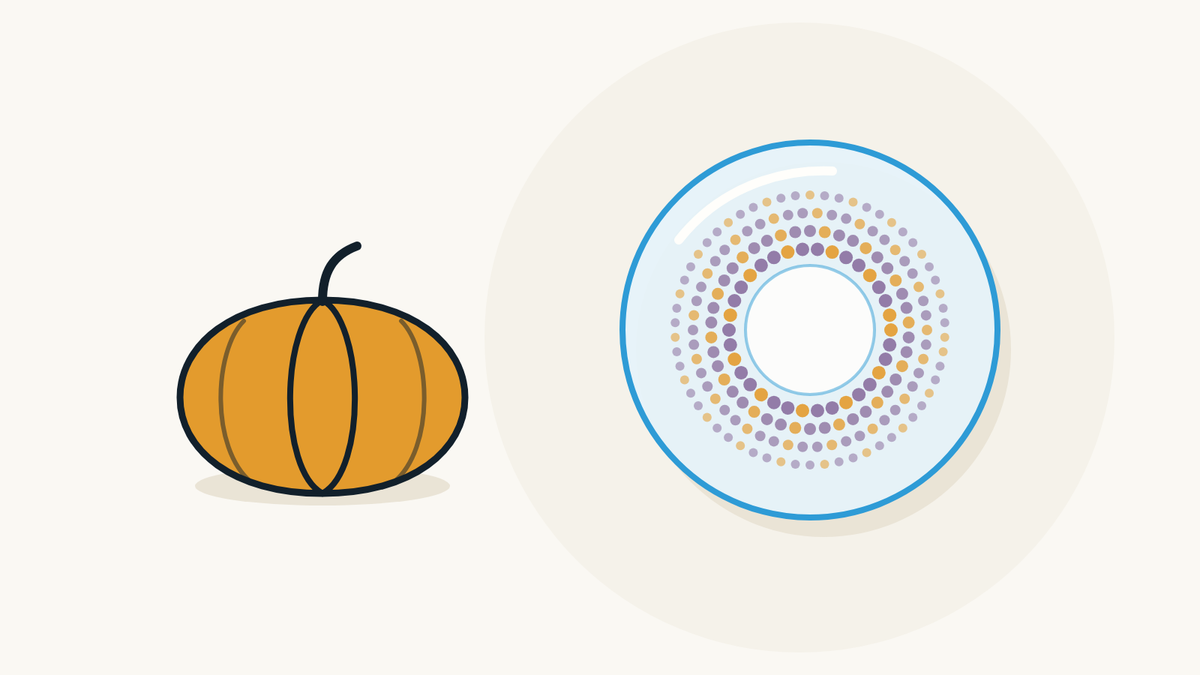
Decorative contact lenses bought without a prescription, from a costume shop or online, can scratch the cornea and cause an allergic reaction or an infection. In Canada they are medical devices and must be licensed. The safe option is the one used for corrective lenses: an eye exam, a fitting and a prescription.
Are Halloween contact lenses safe?
They can be risky when you buy them without a prescription or a fitting. Ahead of Halloween, Health Canada has reminded Canadians that all contact lenses, decorative ones included, carry health risks, and that the risk may be higher with unlicensed decorative lenses than with licensed prescription lenses.
You can still have coloured eyes for the party: licensed lenses, fitted by a professional and cared for properly, are worn like any other contact lens.
What are decorative contact lenses?
They are lenses that change how your eyes look without correcting your vision. Health Canada notes they are also called fashion, costume, cosmetic or coloured lenses. They are mostly sold at costume and novelty shops, at cosmetic retailers and online.
They can give you blue eyes, cat eyes or vampire eyes for one night. But they sit on the cornea exactly like a corrective lens, and your eye reacts the same way.

Are decorative lenses regulated in Canada?
Yes. Since 2016, Health Canada has regulated them as medical devices. They must be licensed before they can be sold, and selling unlicensed health products is illegal. You can look a lens up in Health Canada's Medical Devices Active Licence Listing, using the product or company name on the package.
The rule is not always followed. In the fall of 2018, Health Canada inspectors visited 23 stores and reviewed 39 websites selling these lenses: 8 of the stores and 23 of the websites did not meet the licensing and labelling requirements. Health Canada also found grey-market lenses whose instructions were not always in the official languages.


What problems can decorative lenses cause?
The same ones as any poorly chosen or poorly cared-for lens. Health Canada lists cuts or scratches on the surface of the eye (corneal abrasions), allergic reactions such as itchy, watery or red eyes, impaired vision and infections, which can lead to blindness.
A joint statement by the American Academy of Ophthalmology and the American Academy of Optometry adds that one study found a significantly higher risk of microbial keratitis, an infection of the cornea, in people wearing cosmetic lenses. The same statement reports that the FDA tested over 300 cosmetic lenses: more than half of the counterfeit lenses and about one in four of the unapproved lenses had microbial contamination.

Why doesn't one size fit all?
Because every eye has its own size and shape. According to the American Academy of Ophthalmology (AAO), lenses advertised as "one size fits all" or "no need to see an eye doctor" are not safe: a lens that is the wrong size can scratch the eye and lead to a corneal ulcer or an infection.
The AAO also notes that paints and pigments make coloured lenses thicker, which can let less oxygen through to the eye. That is one more reason to have a professional check how the lens sits on your cornea.

Can you share or borrow costume lenses?
No, never. Health Canada says never to swap or share decorative contact lenses with anyone. The FDA compares it to sharing a toothbrush, and reminds wearers that their lenses are fitted for their eyes only.
On Halloween night, trying a friend's lenses is tempting. According to the AAO, lenses prescribed for someone else are not safe for you: they were not chosen for your eye.

How can you wear coloured lenses safely?
Get them the way you would get corrective lenses. The FDA recommends an eye exam and a prescription for every contact lens, decorative ones included, and following the care instructions. Health Canada says to use only licensed lenses, to wash and dry your hands before handling them, and never to sleep in them unless they are extended-wear lenses designed for it.
The AAO and American Academy of Optometry statement says the same care rules apply to corrective and decorative lenses: no tap water, fresh solution every time, a new case every 3 months. Our article on contact lens care covers each step, and the one on sleeping in contact lenses explains why they come out at night.


What should you do if your eye turns red or hurts?
Take the lenses out right away and call an eye care professional. Health Canada names four signs: redness, blurred vision, ongoing discharge or sensitivity to light. Left untreated, these symptoms could lead to blindness. The FDA adds pain that doesn't go away after a short time.
The AAO notes that an eye infection from contact lenses can develop within hours. Don't wait until the next day to see whether it settles. Our urgent eye care page explains what to do first.

Where can you get coloured lenses fitted in Montréal?
At PrimeVision, 9520 Boulevard de l'Acadie, Suite 222, in Montréal (Ahuntsic), optometrists and a licensed optician work under one roof. The clinic fits coloured contact lenses with a prescription, the same way as corrective lenses: an eye exam, a fitting, then a follow-up. RAMQ covers eye exams for children under 18 and adults 65+.
Our page on contact lenses in Montréal covers fittings and trial lenses. If you are still weighing the two, our article Glasses or contact lenses: which should you choose? compares the options. To start, book an eye exam.

Sources
- Health Canada reminds Canadians of the risks of decorative contact lenses, Health Canada, October 12, 2018.
- 2018-2019 Compliance Monitoring Project on Decorative Contact Lenses, Health Canada.
- Decorative Contact Lenses for Halloween and More, U.S. Food and Drug Administration.
- Cosmetic Contact Lenses: Potential Threat to Vision Health, joint statement of the American Academy of Ophthalmology and the American Academy of Optometry, October 2018.
- Colored Contacts and Halloween Safety, American Academy of Ophthalmology.
Find our eye care articles useful? Add PrimeVision as a preferred source in Google.
This article is general information and does not replace an eye exam.