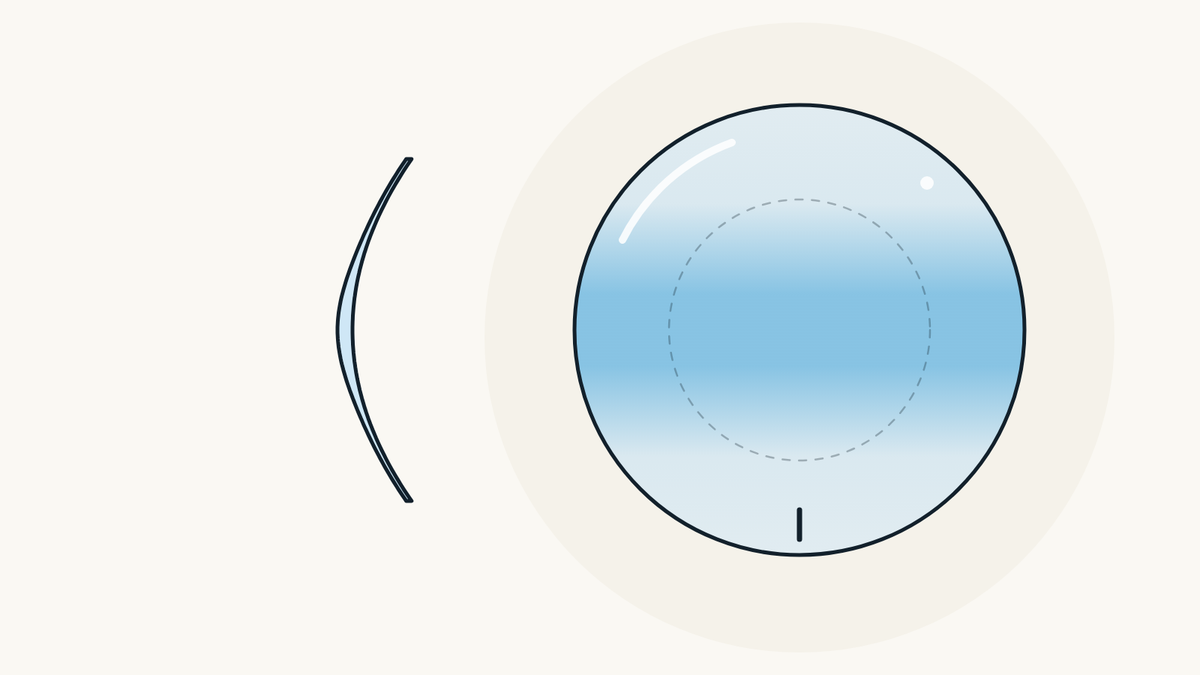
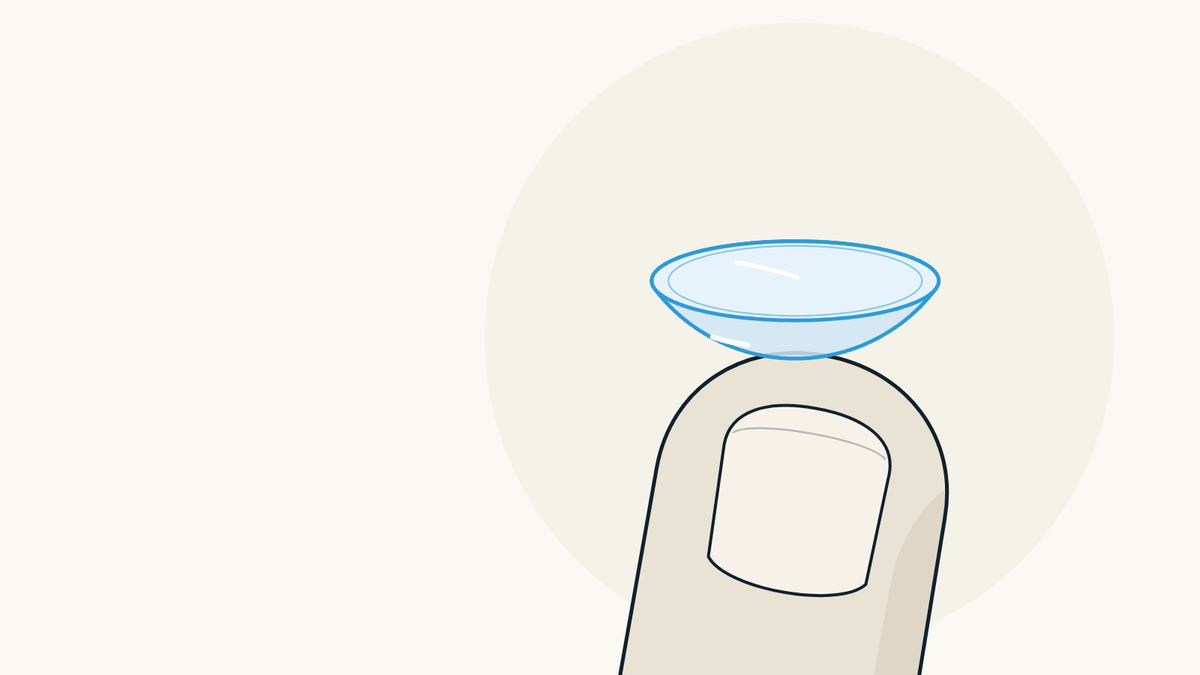
Glasses or Contact Lenses: Which Should You Choose?
Glasses and contact lenses correct the same vision problems. What each one does well, the care contacts need, sports, wearing both, and the options after 40.
By Michel Geha, O.O.D.
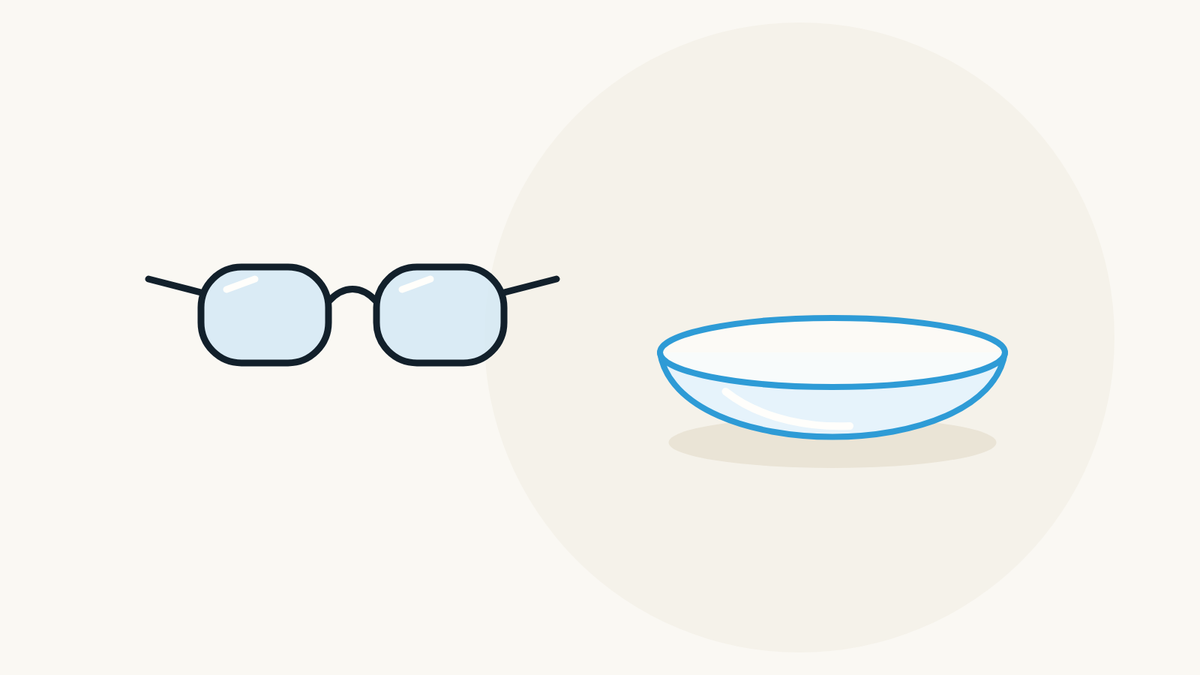
Neither one suits everyone. Glasses and contact lenses correct the same vision problems. Glasses never touch your eye and need little care; contacts move with your eye and suit sports and an active life, but they need strict hygiene. You can also wear both, depending on the day and the activity.
Glasses or contact lenses: which should you choose?
The ones that suit your eyes and your days. The American Academy of Ophthalmology (AAO) calls glasses an easy way to correct your vision. Contact lenses take more care, but Health Canada says people often choose them for lifestyle, sports or appearance.
You don't have to settle it once and for all: you can wear contacts for sports or evenings out and glasses the rest of the time. Your optometrist will first tell you whether your eyes do well with contacts.

Do contacts correct the same problems as glasses?
Yes. According to the AAO, contact lenses, like glasses, correct vision problems caused by refractive errors: nearsightedness, farsightedness, astigmatism and presbyopia. In both cases the lens changes the way light enters the eye so that it comes to a focus on the retina.
For astigmatism, there are soft toric contact lenses. Our article on contact lenses for astigmatism explains how they stay in place.

What are the advantages of contact lenses?
They follow your gaze. Health Canada says contact lenses move with your eye and will not block what you see; in some cases they give more natural vision than glasses. It lists lifestyle, sports and appearance among the reasons people choose them.
If you are starting out, our article on wearing contact lenses for the first time explains how to put them in and get used to them.

What are the advantages of glasses?
They never touch your eye. Nothing goes in your eye, nothing needs disinfecting, and they come off in a second. The AAO notes that lenses can also have an anti-reflective coating, which reduces glare, including from headlights at night, or be photochromic, darkening in sunlight and clearing indoors.
The AAO adds that polycarbonate lenses are highly impact resistant and often recommended for sports. After 40, progressive lenses correct distance, intermediate and near vision in a single lens.


How much care do contact lenses need?
Daily care. The AAO says to wash and dry your hands before touching your lenses, to use fresh solution every time without topping off the old, and not to sleep in daily wear lenses. The CDC says to replace your case at least every three months.
Daily disposable lenses make it simpler: they go in the trash at night, with no case or solution. Other lenses are cleaned and disinfected every time you take them out. Our article on contact lens care covers each step.


Who should not wear contact lenses?
Some people can't. According to the AAO, that may be the case if you get a lot of eye infections, have severe allergies or dry eyes that are hard to treat, live or work somewhere very dusty, or are not able to care for your lenses properly.
Health Canada adds that smokers are 8 times more likely to develop corneal ulcers than non-smokers, whatever type of lens they wear, and that anything that dries your eyes, such as air travel or some antihistamines, can make contacts uncomfortable. If your eyes are dry, our article on dry eye treatment may help.

Glasses or contacts for sports?
Contacts are handy for sports, but they don't protect your eyes. Health Canada reminds wearers to use appropriate protective eyewear, especially for hockey and squash.
According to the AAO, polycarbonate is highly impact resistant, often recommended for sports and can help prevent eye injuries. The right choice depends on the sport: contacts under a visor or protector, or prescription lenses in protective eyewear designed for that activity.

Can you wear both glasses and contacts?
Yes. In Québec, according to the Ordre des optométristes du Québec (OOQ), the regulations provide for a single ophthalmic lens prescription, whether the lenses are mounted in glasses or worn as contacts. Contact lens parameters, such as material and curve, are chosen at the fitting.
Health Canada suggests carrying artificial tears, a wetting solution or your glasses when your eyes are likely to get dry or irritated. An up-to-date pair of glasses is useful even if you mostly wear contacts. And if an eye turns red or painful, take your lenses out: our article Can you sleep in your contact lenses? lists the signs that mean you should call.


Glasses or contacts after 40?
Both still work. According to the AAO, presbyopia can be corrected with reading glasses, progressive lenses, or bifocal or multifocal contact lenses. There is also monovision: one contact lens for distance in one eye and one for near vision in the other.
The AAO notes that your reading correction often changes between 40 and 60, because the eye's natural lens keeps losing flexibility. That is a good reason to have your vision checked regularly, whichever correction you choose.

Where can you try both in Montréal?
At PrimeVision, 9520 Boulevard de l'Acadie, Suite 222, in Montréal (Ahuntsic), optometrists and a licensed optician work under one roof. The shop has more than 4,000 frames in store, across a wide range of prices, and soft contact lenses in silicone hydrogel; most trial lenses are available the same day when they are in stock. You can compare both in one place, with the same prescription. RAMQ covers eye exams for children under 18 and adults 65+.
Our page on contact lenses in Montréal covers fittings and trial lenses. To see frames, browse our eyeglasses. For an up-to-date prescription, book an eye exam.

Sources
- Contact Lenses for Vision Correction, American Academy of Ophthalmology.
- Eyeglasses: How to Choose Glasses for Vision Correction, American Academy of Ophthalmology.
- How to Take Care of Contact Lenses, American Academy of Ophthalmology.
- Contact lenses, Health Canada.
- Preventing Eye Infections When Wearing Contacts, Centers for Disease Control and Prevention.
- Questions fréquentes (grand public), Ordre des optométristes du Québec (in French, accessed October 28, 2026).
Find our eye care articles useful? Add PrimeVision as a preferred source in Google.
This article is general information and does not replace an eye exam.