Can You Sleep in Your Contact Lenses?
Daily wear lenses come out before you sleep, even for a nap. What extended wear lenses are, what to do if you fell asleep in your contacts, and the signs that mean you should call.
By Michel Geha, O.O.D.
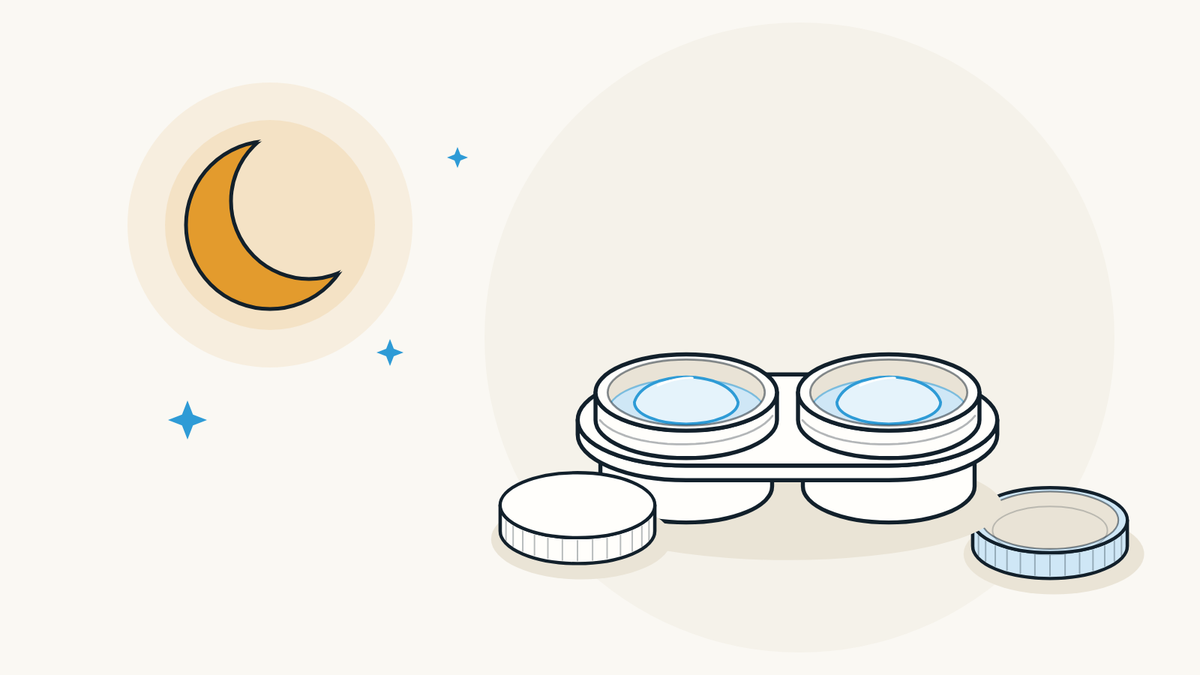
Usually, no. Daily wear lenses, whether dailies or monthlies, come out before you sleep, even for a nap. Only some extended wear lenses are approved for overnight wear, and only if your optometrist prescribed them for that use. Sleeping in contact lenses raises the risk of an infection of the cornea.
Can you sleep in your contact lenses?
Not in daily wear lenses. The Ordre des optométristes du Québec (OOQ), says it plainly in its tips for lens wearers: do not sleep in daily wear lenses. The Centers for Disease Control and Prevention (CDC) also say to avoid sleeping in lenses unless your eye care provider has told you otherwise.
The only exception is extended wear lenses, designed and approved to be worn overnight. Even then, they must have been prescribed to you for that use. If you are not sure which type you wear, ask your optometrist or optician.

Why does sleeping in contacts raise the risk of infection?
Because a night in lenses makes infections of the cornea more likely. Health Canada says clinical studies suggest that extended use of contact lenses, particularly overnight, increases the risk of serious conditions such as ulcerative keratitis, an ulcer of the cornea. Health Canada notes that an ulcer can scar or perforate the cornea in 1 or 2 days.
The AAO puts a number on it: sleeping in contact lenses increases the risk of an eye infection six- to eightfold. It adds that this is true whether you wear extended wear lenses or fall asleep in your lenses by accident, or only occasionally. According to the AAO, one in three lens wearers has admitted to sleeping in their lenses.


Is a short nap in contacts a problem?
Yes, the rule covers naps too. Dr. Thomas Steinemann, an ophthalmologist quoted by the AAO, sums it up: don't sleep in your contact lenses, don't even take a nap. A nap on the couch or on the bus counts as sleep for your eyes.
If you know you are going to doze off, even for twenty minutes, take your lenses out and store them in their case with fresh solution. Our article on wearing contact lenses for the first time shows how to take them out without hurting your eye.

Are daily disposable lenses made for sleeping?
No. A daily disposable lens is a daily wear lens that you throw out at night. The FDA defines "disposable" as used once and discarded. The AAO says it in its care tips: do not sleep in daily wear lenses.
Monthly lenses are daily wear lenses too, unless your optometrist prescribed them for extended wear. They come out every night, are cleaned and disinfected, and spend the night in their case.

What are extended wear contact lenses?
They are lenses approved to be worn overnight. According to the FDA, they are available for continuous wear ranging from one to six nights or up to 30 days. Most are soft lenses made of flexible plastics that let oxygen pass through to the cornea. Health Canada describes them as soft contacts licensed for continuous wear for up to 30 days and nights.
The number of nights depends on the type of lens and on your eye care professional's evaluation. The FDA adds that after each scheduled removal, your eyes should rest for at least one night without lenses. And the AAO notes that the infection risk goes up with these lenses too: extended wear is a decision to make with your optometrist.

I fell asleep in my contacts: what should I do?
Take them out as soon as you wake up, with clean hands. The AAO says to wash your hands with soap and water and dry them with a lint-free towel before touching your lenses.
A daily disposable lens then goes in the trash. Any other lens must be cleaned and disinfected before it goes back in, as every time you take it out. If your eyes are irritated, the FDA says not to put the lenses back in, to keep them in their case and to call your eye care professional, who may want to examine them. Wear your glasses in the meantime.

Which signs mean you should call right away?
An eye that is very red, painful, watery or sensitive to light. The AAO says to take your lenses out and call your eye care professional right away. The same goes for blurry vision or any discharge. These can be signs of an infection or another serious eye problem.
The AAO lists contact lens wearers among the people at risk of a corneal ulcer. Our page on urgent eye care explains what to do when an eye turns red and painful.

How do you avoid falling asleep in your lenses?
Have what you need to take them out ready before bedtime: keep a clean case, fresh solution and your glasses by the bed. The CDC says to store lenses in fresh solution, never in water, and to replace the case at least every three months.
If you often fall asleep in front of the TV, take your lenses out when you get home and spend the evening in your glasses. Our article on contact lens care covers cleaning and storage step by step.


Where can you have your contact lenses checked in Montréal?
At PrimeVision, 9520 Boulevard de l'Acadie, Suite 222, in Montréal (Ahuntsic), optometrists and a licensed optician work under one roof. The soft lenses we fit are silicone hydrogel, and most trial lenses are available the same day when they are in stock (otherwise in 2 to 5 business days). With these lenses as with any others, the rule is the same: they come out before you sleep, unless the optometrist prescribed extended wear. RAMQ covers eye exams for children under 18 and adults 65+.
Our page on contact lenses in Montréal covers fittings, trial lenses and follow-ups. If you have worn your lenses for a long time without an exam, it is a good moment for an eye exam.

Sources
- 10 conseils pour les porteurs de lentilles, Ordre des optométristes du Québec (in French).
- Contact lenses, Health Canada.
- Why You Should Never Sleep in Your Contact Lenses, American Academy of Ophthalmology.
- How to Take Care of Contact Lenses, American Academy of Ophthalmology.
- What Is a Corneal Ulcer (Keratitis)?, American Academy of Ophthalmology.
- Preventing Eye Infections When Wearing Contacts, Centers for Disease Control and Prevention.
- Types of Contact Lenses, U.S. Food and Drug Administration.
- Contact Lens Risks, U.S. Food and Drug Administration.
This article is general information and does not replace an eye exam.