Pink Eye or Allergies? How to Tell the Difference and When to Get Checked
How to tell viral, bacterial and allergic pink eye apart, whether it is contagious, how to avoid spreading it, what helps at home, when antibiotics help, what to do with contact lenses, school and work, and when to get checked.
By Michel Geha, O.O.D.
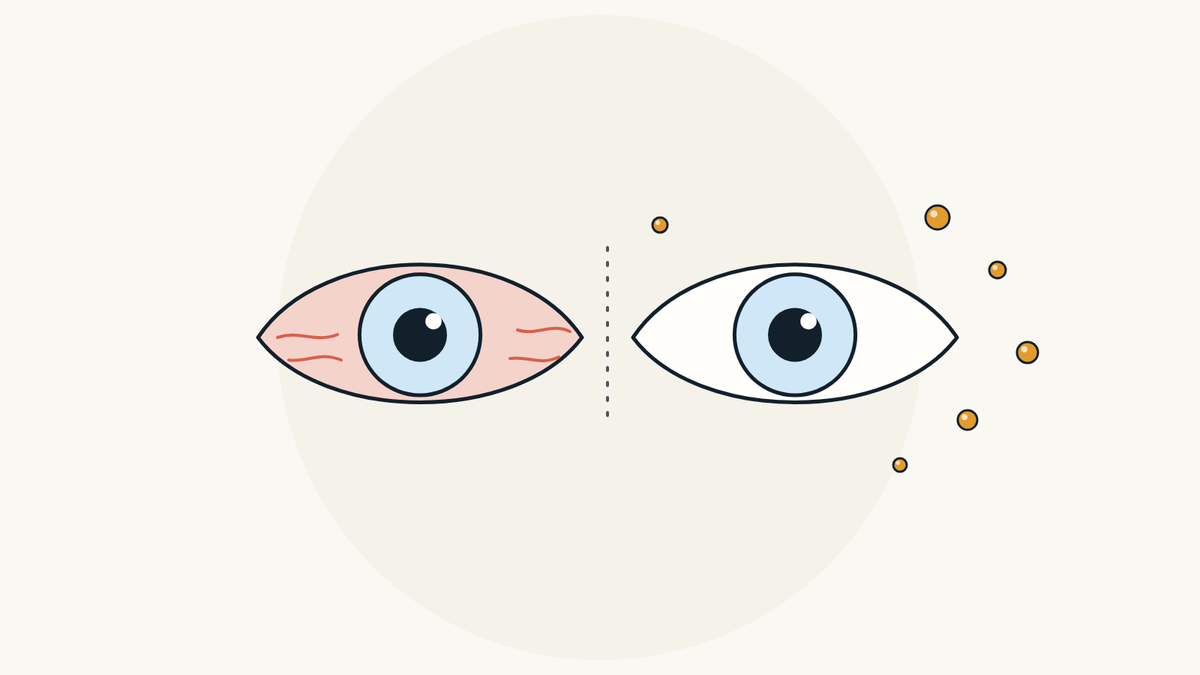
Pink eye caused by a virus or bacteria usually brings a red eye with tears or discharge, sometimes on one side only, and it spreads to others. An eye allergy mostly makes both eyes itch at the same time, often with sneezing, and it does not spread. When in doubt, have the eye examined.
Pink eye or allergies: how can you tell the difference?
Look at the itching, the discharge and what comes with the red eye. According to the American Academy of Ophthalmology (AAO), viral pink eye mostly brings tears and a watery discharge, often during or after a cold. Bacterial pink eye tends to bring a thicker, yellow or green discharge. An allergy itches a lot, makes the eyes water and affects both eyes.
These clues are not always enough. The US National Eye Institute (NEI) notes that the cause is often hard to pin down because the symptoms are much the same, and the AAO notes that other problems, such as inflammation of the cornea, can look like pink eye.

What is pink eye (conjunctivitis)?
It is inflammation of the conjunctiva, the thin clear layer that covers the white of the eye and the inside of the eyelids. The AAO explains that it can affect one or both eyes and comes from an infection or an allergy.
A virus is the most common cause, according to the NEI and the Mayo Clinic. The Canadian Association of Optometrists (CAO) adds irritants such as air pollution, chemicals or pool chlorine; that form does not spread to others. The Mayo Clinic notes that pink eye rarely affects vision.

What are the signs of viral pink eye?
A red, watery eye with a clear discharge. The AAO says it often comes during or after a cold, and is often caused by the same virus, with a runny nose and a sore throat.
According to the CAO, when it starts in one eye it quickly spreads to the other. It lasts from 7 days to several weeks, and the CAO notes that it cannot be treated with antibiotics.

What are the signs of bacterial pink eye?
Often a thick, yellow or green discharge. The AAO describes a sticky discharge that can build up, but also notes that some people have little or none.
The NEI and the Mayo Clinic mention crust on the eyelids or lashes that can keep the eyes from opening when you wake up. According to the AAO, pain is more typical of the bacterial form.

How do you recognize an eye allergy?
By the itching. The AAO describes an allergy that itches intensely, makes the eyes water a lot and affects both eyes. The Mayo Clinic adds sneezing and a runny nose.
The CAO separates seasonal allergies (pollen, ragweed, grass) from year-round allergies (dust, fabrics, animal dander). An eye allergy does not pass from one person to another.

Is pink eye contagious?
Yes, when it comes from a virus or bacteria. The AAO says it mostly spreads from hand to eye and passes easily wherever people are in close contact, such as schools and daycares. The Mayo Clinic explains that it spreads through direct or indirect contact with the fluid that drains from the eye.
Allergies and irritation do not spread (AAO; CAO). According to the AAO, children catch it more often, and that adults are more likely to get it from unclean contact lenses.

How do you avoid spreading pink eye?
Wash your hands often and keep your things to yourself. The NEI advises washing your hands often, not touching or rubbing your eyes, and washing pillowcases, sheets and towels often in hot water.
Do not share towels, eye drops or makeup. The NEI advises throwing away eye and face makeup, brushes and sponges used during the infection, and the AAO adds eye drop bottles and disposable contact lenses.

How can you ease pink eye at home?
With a cold compress and artificial tears. The AAO, the NEI and the CAO suggest a clean washcloth soaked in cold water on the eyelids; the AAO and the NEI add over-the-counter artificial tears. Throw the bottle away once you have recovered, the AAO advises.
For an allergy, the first step is to avoid the trigger. The AAO and the Mayo Clinic mention allergy eye drops to calm itching and puffiness; ask for advice before you pick one. If a chemical got into the eye, rinse it with water: the CAO notes that a serious exposure can be an emergency.

Do you need antibiotic eye drops?
Only for bacterial pink eye. The AAO is clear: antibiotics do not help viral pink eye or allergies. According to the AAO, antibiotic drops may be prescribed for the bacterial form, depending on how severe the symptoms are.
Viral pink eye has no treatment that makes it go away faster: it clears on its own, and the symptoms are eased in the meantime (AAO). That is one reason to have the eye examined rather than using old drops from the medicine cabinet.

What should you do with your contact lenses?
Take them out at the first symptoms and wear your glasses. The Mayo Clinic advises stopping right away, and booking an appointment if the symptoms do not start to improve within 12 to 24 hours.
Do not put them back in until it has cleared (AAO). The NEI advises throwing away the lenses, solution and case you used during the infection. To start again on the right foot, read our article on contact lens care, and if the red eye appears while you wear lenses, our article on red eye with contact lenses.

Can you go to work, school or daycare?
With an allergy, yes: the AAO says it is no reason to stay home. With viral or bacterial pink eye, the AAO advises staying home until your eyes are no longer red and there is no more discharge.
Advice varies. The Mayo Clinic says going back can be fine if you can keep good hygiene and avoid close contact. The CAO, for its part, advises staying away from school or work for two full weeks from the start of viral pink eye. Your school, daycare or employer may also have its own rules.

When should you get it checked?
Promptly if your eye hurts, if your vision stays blurry after you wipe away the discharge, if light hurts your eyes or if the eye is very red. The AAO, the NEI and the Mayo Clinic all name these signs.
The NEI adds a lot of discharge, symptoms that do not improve after a few days, wearing contact lenses, a recent scratch on the eye and a weakened immune system. For a newborn, the NEI and the Mayo Clinic say to see a doctor right away. To know what to do when an eye problem cannot wait, see our urgent eye care page.

Where can you have a red eye examined in Montréal?
At PrimeVision, 9520 Boulevard de l'Acadie, Suite 222, in Montréal (Ahuntsic), optometrists and a licensed optician work under one roof. An optometrist can examine a red eye, look for the likely cause and check that the cornea is not involved. An urgent problem is seen when there is availability; otherwise, depending on how serious it is, the clinic may direct you to the emergency department. RAMQ covers eye exams for children under 18 and adults 65+, and we see children from age 4.
To book, go through our page on eye exams with an optometrist in Montréal: book online, the times shown are the open ones. If it is a bump on the eyelid instead, read our article on styes and chalazia.

Sources
- Conjunctivitis: What Is Pink Eye?, American Academy of Ophthalmology, September 11, 2024.
- Pink Eye, National Eye Institute, updated November 5, 2025.
- Pink eye (conjunctivitis): symptoms and causes, Mayo Clinic, January 10, 2025.
- Conjunctivitis (Pink Eye), Canadian Association of Optometrists.
Find our eye care articles useful? Add PrimeVision as a preferred source in Google.
This article is general information and does not replace an eye exam.