Tinted Lenses: What Each Colour Does and How to Choose
Each lens tint colour changes light in its own way, but none of them tells you whether your glasses block UV. Here is what each tint does, its limits behind the wheel and when to see an optometrist.
Reviewed by Michel Geha, O.O.D., on September 26, 2026
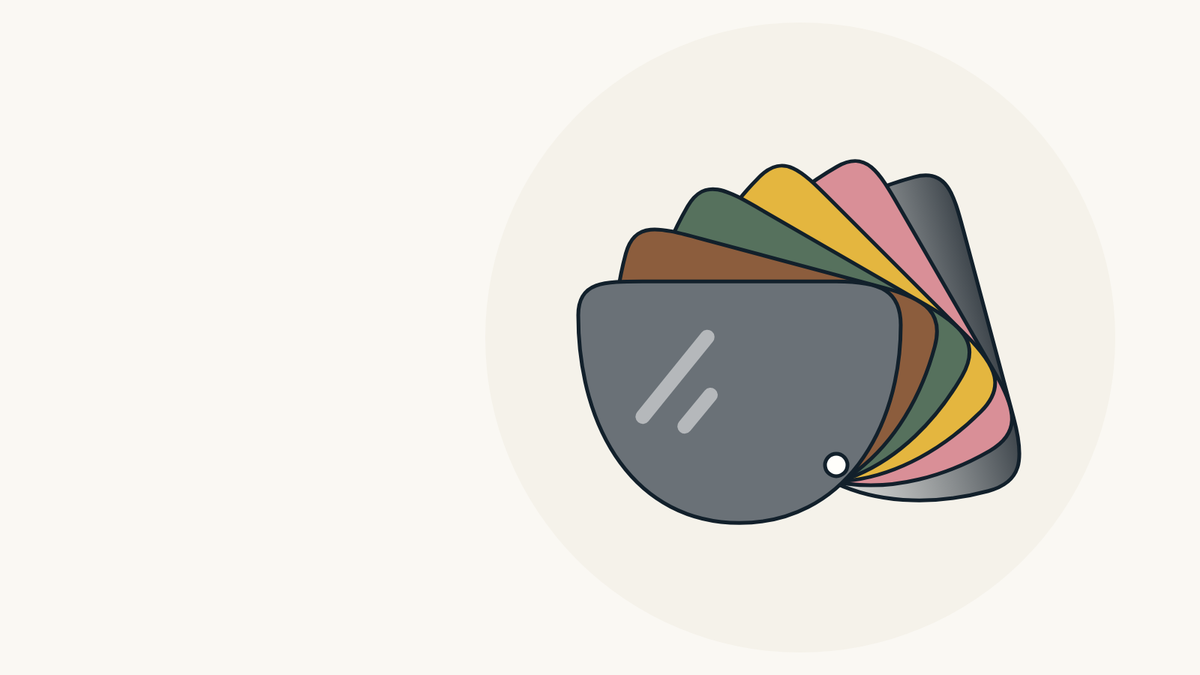
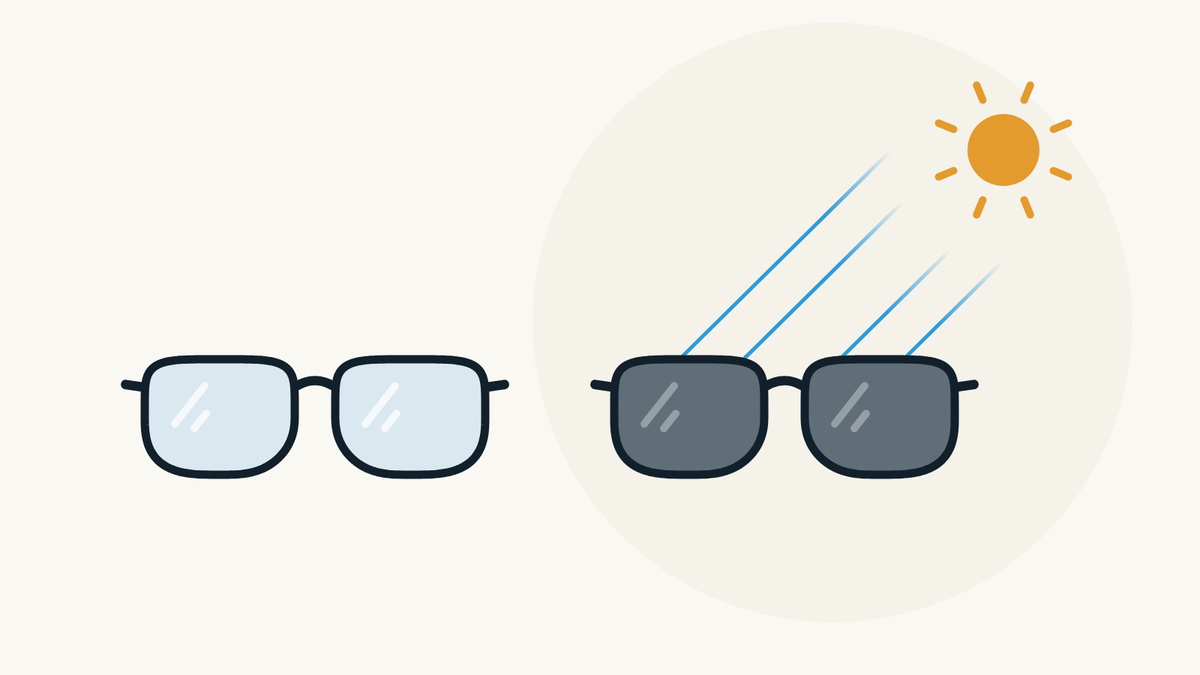
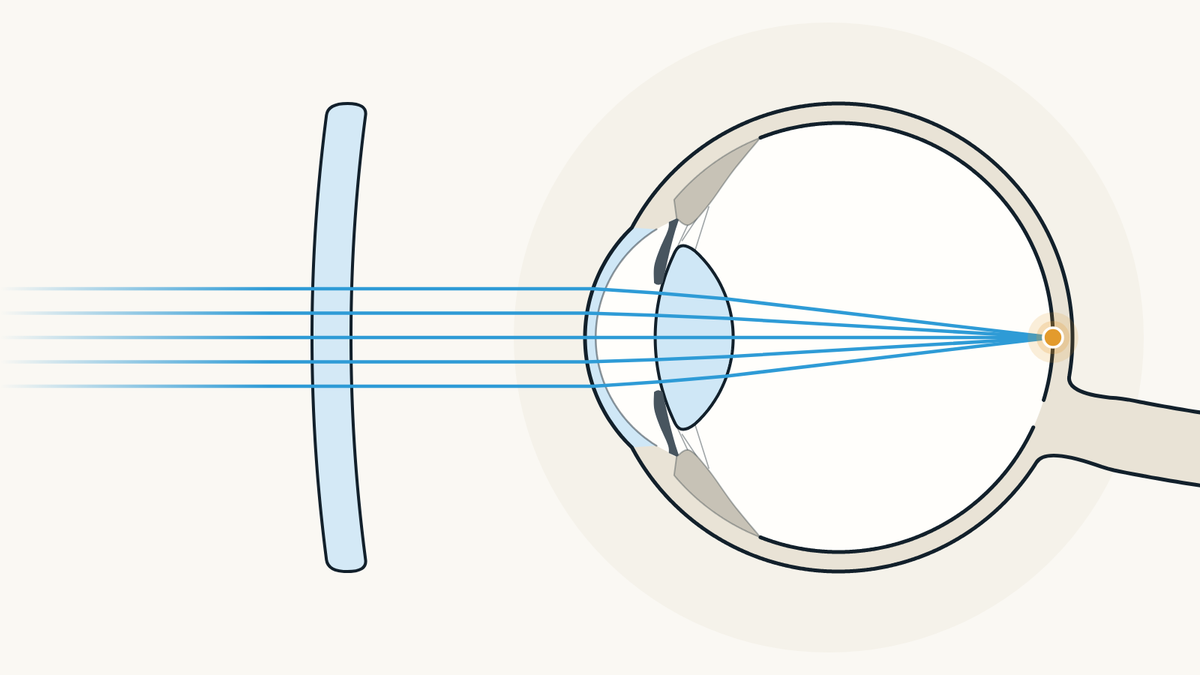
Tinted lenses absorb some visible light. They cut glare and, depending on the colour, change contrast and how colours look. The tint says nothing about UV protection, though: that depends on the lens material or a UV filter (100% UVA and UVB, or UV400).
Why would someone wear tinted glasses?
Mostly for comfort in bright light, or simply for the look. Health Canada recommends sunglasses for driving in bright sunlight because they reduce glare and improve contrast. For glare off snow or water, it suggests “medium to dark lenses with a grey, or slightly brown or green tint.”
Which lens tint colour should you choose?
In bright sun, grey is a neutral choice: the Canadian Association of Optometrists (CAO) says grey lenses provide “the most natural colour vision.” Brown can enhance contrast, and the American Optometric Association (AOA) suggests yellow for dark days.

| Tint | What it does | Common uses | Good to know |
|---|---|---|---|
| Grey | Reduces light intensity (CAO) | Bright sun, daytime driving | Preserves colour perception (AOA) |
| Brown, amber | Depending on the tint, can enhance contrast and depth perception (CAO) | Golf, baseball (American Academy of Ophthalmology, AAO) | Amber lenses that block all blue light make things look yellow or orange (AAO) |
| Green | Cuts light and glare | Outdoors | On snow and water: a medium to dark shade (Health Canada) |
| Yellow, orange | More contrast on dark days or in dim light (AOA) | Winter sports on grey days | No proven benefit for night driving |
| Rose | More contrast (AAO) | Golf, baseball | FL-41, a rose tint, has been the subject of small studies (see below) |
| Gradient | Dark at the top, light at the bottom: cuts glare from the sky (AAO) | Driving, since the dashboard stays clear | Double gradients are not recommended for driving (AAO) |
Are tinted lenses better for your eyes?
They make bright light more comfortable, but a darker tint does not mean more UV protection. Health Canada is clear: “You cannot tell how much UV protection a pair of sunglasses will provide by their price, colour, or by the darkness of the lenses.”

How dark can tinted lenses be for driving?
By day, the ISO 12312-1 standard, used in Europe among other places, limits driving to categories 0 to 3 and excludes category 4. For twilight and night, it rules out any lens that lets through less than 75% of light. That is not a recommendation to wear a tint at night.

Table based on the UK’s College of Optometrists.
| Category | Light transmitted | Daytime driving | Twilight and night (per the standard) |
|---|---|---|---|
| 0 | Over 80% to 100% | Eligible | Not excluded |
| 1 | Over 43% to 80% | Eligible | Excluded below 75% |
| 2 | Over 18% to 43% | Eligible | Excluded |
| 3 | Over 8% to 18% | Eligible | Excluded |
| 4 | Over 3% to 8% | Excluded | Excluded |
For road use, the standard also requires that the tint lets you recognize traffic-signal colours.
In Canada, manufacturers follow voluntary industry standards when labelling sunglasses, so the category may not appear on the label. Health Canada says lightly tinted “cosmetic” sunglasses are “not usually recommended for daylight driving,” and “special purpose” ones, which block up to 97% of visible light, are not recommended for driving.
Do yellow tinted glasses help with night driving?
The available evidence does not show a benefit. In a small driving-simulator study in JAMA Ophthalmology (22 participants), three pairs of commercially available yellow “night-driving” glasses did not appear to improve pedestrian detection or reduce the effect of oncoming headlight glare. The authors concluded that their findings do not support recommending them.
Polarized vs tinted lenses: what’s the difference?
A tinted lens darkens everything you see. A polarized lens also cuts glare reflected off water, snow or pavement. Health Canada says polarized lenses are “good for driving and outdoor activities in the snow or on water.”

| Lens type | What it does | Limits |
|---|---|---|
| Tinted | Reduces light; the colour changes contrast | Colour doesn’t indicate UV protection (Health Canada) |
| Polarized | Cuts reflected glare | LCD screens (dashboard, phone) harder to read, icy patches harder to spot, may do more harm than good at night; polarization is not UV protection in itself (AAO) |
| Photochromic | Darkens outdoors with UV, lightens indoors (Health Canada) | Darkens less in the car, because car windows block UV (AAO), except models designed for driving |
To learn more, read our article on transition lenses.
What are the disadvantages of tinted glasses?
- Less light when it gets dark. A tint that feels good in the sun gets in the way at dusk and at night.
- Altered colours. Yellow and amber change how colours look; grey preserves them better.
Is it okay to wear tinted glasses all the time?
Outdoors in daylight, yes. Indoors, a light tint is mostly a matter of taste. A dark tint, on the other hand, can dark-adapt your eyes and make you more sensitive to light, according to the Moran Eye Center. At night behind the wheel, leave them off.
For screens, a 2023 Cochrane review found that blue-light filtering lenses may not reduce eye strain from computer use (low-certainty evidence). Our article on whether blue light glasses work covers this.
Can tinted glasses help with light sensitivity or migraines?
A rose tint called FL-41 is sometimes suggested for people with migraine who are sensitive to light. The evidence is thin: the trial that introduced it, in 1991, included only 20 children.
After one month, all of them had improved, whatever the tint; only the rose-tint group kept that improvement up to four months (from 6.2 to 1.6 attacks a month on average). Other small trials have followed, including in blepharospasm (eyelid spasms).
Photophobia, or light sensitivity, comes with a range of eye and nervous-system conditions. According to a review in Survey of Ophthalmology, current treatment targets the underlying cause, sometimes with optical filtering of light as well. Light that hurts deserves an eye exam before you buy a darker tint. If you live with migraines, talk to your doctor as well.
As for coloured lenses and filters marketed for dyslexia, the American Academy of Pediatrics and the AAO found that the science does not support them as treatments for learning disabilities. A children’s eye exam is the more useful step: it checks vision and can pick up a treatable problem.
When should you see an optometrist?
Can you get tinted prescription glasses?
Yes, when you order the lenses. According to the AAO, sunglasses can be made with nearly any lens prescription. Tint colour, darkness, gradient and polarization can then be matched to what you do, within the options available for the lens you choose. Visit our page on tinted prescription glasses. See also Transitions lenses, which darken on their own in the sun.
Wear contact lenses? Keep a pair of sunglasses handy: even with a UV filter, contact lenses do not fully protect the eye and the skin around it (Health Canada).
Sources
- Health Canada, Sunglasses
- Canadian Association of Optometrists, selecting sunglasses
- AAO, choosing sunglasses to avoid sun damage
- AAO, Recommended Types of Sunglasses
- AAO, What Are Polarized Lenses?
- AAO, Transition (Photochromic) Lenses: Pros and Cons
- AAO, Taking a Clear Look at Prescription Sunglasses
- AAO, What Are Cataracts?
- AOA, winter eye care for athletes (2018)
- College of Optometrists (UK), Tints and driving
- Hwang AD et al., JAMA Ophthalmology, 2019
- Good PA et al., Headache, 1991
- Blackburn MK et al., Ophthalmology, 2009
- Katz BJ, Digre KB, Survey of Ophthalmology, 2016
- Moran Eye Center, University of Utah, FL-41 lenses
- Handler SM et al., Pediatrics, 2011 (AAP and AAO joint statement)
- Singh S et al., Cochrane review, 2023
- RAMQ, Optometric services
This article is general information and does not replace an eye exam.