Diabetes and Your Eyes: Why Regular Eye Exams Matter
How diabetes damages the retina, why diabetic retinopathy often has no early symptoms, how often to have an eye exam with type 1 or type 2 diabetes (Diabetes Canada), what the exam checks, pregnancy, cataract and glaucoma risk, prevention and treatment.
By Michel Geha, O.O.D.
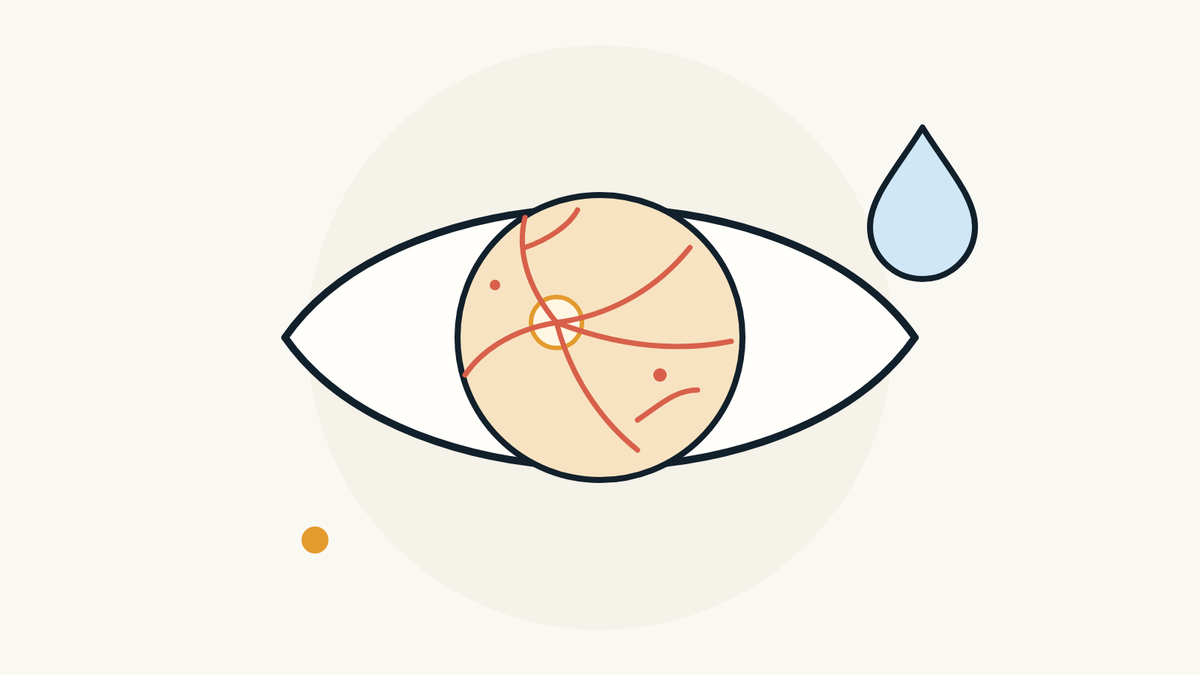
Diabetes can damage the tiny blood vessels of the retina, at the back of the eye: this is diabetic retinopathy. It often causes no symptoms at first, which is why regular eye exams matter. Diabetes Canada recommends a first screening at the diagnosis of type 2 diabetes, then every 1 to 2 years if everything is normal.
Why does diabetes affect the eyes?
Because too much sugar in the blood damages the tiny blood vessels of the retina. According to the National Eye Institute (NEI), diabetic retinopathy is caused by high blood sugar: over time, the small vessels that feed the retina change, blood flows less well, and blocked vessels leak fluid or bleed.
To make up for it, the eye grows new blood vessels, but these do not work well and bleed easily, the NEI explains. The retina is the layer at the back of the eye that detects light and sends images to the brain through the optic nerve. Anyone with diabetes can be affected, whether it is type 1, type 2 or gestational diabetes.

What is diabetic retinopathy?
It is damage to the blood vessels of the retina that progresses in two stages. The American Academy of Ophthalmology (AAO) first describes the non-proliferative form, the early stage, where tiny vessels leak and make the retina swell. When the macula, the area for sharp vision, swells, it is called macular edema: according to the AAO, it is the most common reason people with diabetes lose vision.
The advanced stage, the proliferative form, starts when the retina grows new blood vessels. These fragile vessels often bleed into the vitreous, the gel that fills the eye, and can form scar tissue that pulls on the retina, up to a detachment. To recognize the signs of a detachment, see our article on retinal detachment.

What are the symptoms of diabetic retinopathy?
Early on, there are often none. The AAO notes that you can have diabetic retinopathy and not know it. As it gets worse, you may notice more floaters, blurry vision, vision that changes from blurry to clear, blank or dark areas in your field of vision, poor night vision, colours that look faded, and vision loss. Both eyes can be affected.
The NEI adds that in later stages, vessels can bleed into the vitreous: you may then see dark floating spots or streaks that look like cobwebs. Even if the spots sometimes clear up on their own, treatment is needed right away. Our article on floaters and flashes explains when they become an emergency.

How often should you have an eye exam if you have diabetes?
It depends on the type of diabetes and on what the exam shows. Diabetes Canada's 2018 guidelines recommend, for type 2 diabetes, screening by an optometrist or an ophthalmologist at diagnosis, then every 1 to 2 years if there is no or minimal retinopathy. For type 1 diabetes, in people 15 and older, screening is done every year starting 5 years after diabetes began.
If retinopathy is present, Diabetes Canada recommends follow-up every 12 months or more often, depending on how severe it is. The NEI, in the United States, advises a comprehensive dilated eye exam at least once a year, and notes that some people with retinopathy need to be seen every 2 to 4 months. To know how often you should come back, ask your optometrist.

What is checked during a diabetic eye exam?
The retina, at the back of the eye. According to the NEI and the AAO, drops are often used to dilate the pupil so the inside of the eye can be seen better. The AAO explains that optical coherence tomography (OCT) images the retina in cross-section and measures its thickness, which helps find and measure swelling of the macula.
When retinopathy looks advanced, a fluorescein angiogram, a dye injected into a vein in the arm, shows vessels that leak or are blocked. To learn more, read our articles on the OCT scan and on pupil dilation, or see our eye exam page for Montréal.

Does diabetes raise the risk of cataracts and glaucoma?
Yes. According to the NEI, diabetes makes cataracts 2 to 5 times more likely, and at a younger age. It nearly doubles the risk of open-angle glaucoma. The NEI adds that over time, about 1 in 15 people with diabetes will develop macular edema.
Retinopathy can also cause neovascular glaucoma: abnormal new vessels block fluid from draining out of the eye. To learn more, see our articles on cataracts and glaucoma.

Diabetes and pregnancy: do you need an eye exam?
Yes, as soon as possible. The NEI says that women with diabetes who become pregnant, and women who develop gestational diabetes, are at high risk of diabetic retinopathy. It recommends a comprehensive eye exam as soon as possible, and asking your doctor whether more exams will be needed during the pregnancy.
Diabetes Canada also lists pregnancy among the factors in the progression of retinopathy in people with type 1 diabetes. Your doctor and your optometrist can plan the follow-up together.

Can blood sugar change my vision and my glasses?
Yes. The AAO explains that changes in blood sugar can affect your vision, and advises having your blood sugar under control for at least a week before an exam for glasses. Glasses prescribed while blood sugar is stable work better.
If your vision changes from day to day, talk to your doctor before changing glasses, and mention it to your optometrist. The NEI also notes that some people with retinopathy notice vision changes that come and go, for reading as well as for distance.

Can diabetic retinopathy be prevented?
You can lower the risk. According to the NEI, managing your diabetes is the main way to lower the risk of retinopathy: keeping blood sugar in range, staying active, eating well and following your treatment. The A1C test, which shows your average blood sugar over the past 3 months, helps check that the plan is working.
High blood pressure or high cholesterol increase the risk, the NEI adds. Diabetes Canada also lists the duration of diabetes, a high A1C, blood pressure and lipids among the risk factors. Finally, the AAO points out that retinopathy may be found before you even notice a vision problem: the regular exam is part of prevention. Our article Why eye exams are important explains what an exam can find.

How is diabetic retinopathy treated?
Depending on the stage, with monitoring, injections, laser or surgery. The NEI explains that early on, the eyes are often just monitored. In later stages, anti-VEGF medicines or corticosteroids injected into the eye can slow the disease, laser helps reduce swelling in the retina, and surgery called vitrectomy may be suggested when the retina bleeds a lot or has scars.
These treatments are given by an ophthalmologist. The NEI notes that they do not undo damage already done, but they can stop vision from getting worse; controlling blood sugar, blood pressure and cholesterol still matters.

Where can you have a diabetic eye exam in Montréal?
At PrimeVision, 9520 Boulevard de l'Acadie, Suite 222, in Montréal (Ahuntsic), optometrists and a licensed optician work under one roof. The adult eye exam includes a check of the health of both retinas and OCT imaging, done with a Canon RS-330. When treatment is a matter for an ophthalmologist, the clinic writes the referral, sends it directly and gives you a copy; the wait depends on the hospital or clinic that receives it. Children's eye exams are done from age 4. RAMQ covers eye exams for children under 18 and adults 65+.
To make an appointment, book ahead online from our eye exam page: the times shown are the open ones. Our page on eye exam coverage explains what RAMQ and insurance pay.

Sources
- Diabetic Retinopathy, National Eye Institute (NIH), accessed November 4, 2026.
- Diabetic Retinopathy: Causes, Symptoms, Treatment, American Academy of Ophthalmology, updated October 23, 2026.
- Altomare F, Kherani A, Lovshin J. Retinopathy, Diabetes Canada 2018 Clinical Practice Guidelines, Canadian Journal of Diabetes, 2018;42(Suppl 1):S210-S216.
This article is general information and does not replace an eye exam.