Glaucoma: Risk Factors and Why It Is Found by Testing, Not Symptoms
What glaucoma is, its symptoms and why it is not felt at first, the emergency signs of an angle-closure attack, the types, risk factors, heredity, eye pressure, how it is found, how often to get checked, young people, prevention and treatment.
By Michel Geha, O.O.D.
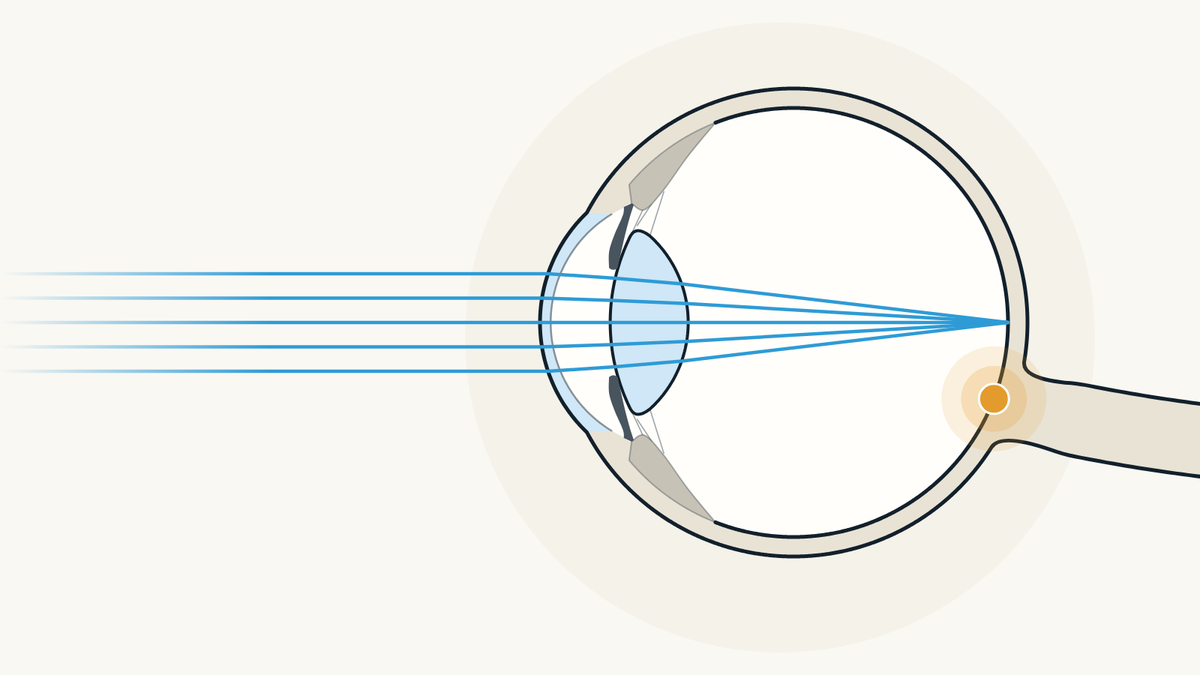
Glaucoma damages the optic nerve, the cable that links the eye to the brain. Its most common form causes no pain and no symptoms at first: side vision fades so slowly that people notice nothing. That is why it is found by testing the eyes, not by waiting for symptoms.
What is glaucoma?
It is a group of diseases that damage the optic nerve and can cause vision loss that cannot be recovered. The Canadian Association of Optometrists (CAO) says it affects more than 450,000 Canadians.
The optic nerve carries what the eye sees to the brain. The American Academy of Ophthalmology (AAO) compares it to an electric cable made of more than a million tiny fibres. Most often, the fluid made at the front of the eye does not drain well, pressure rises and the fibres die little by little. The Mayo Clinic notes that glaucoma can also happen with typical eye pressure.

What are the symptoms of glaucoma?
Early on, there are often none. The National Eye Institute (NEI) explains that the loss usually starts in side vision, especially on the side closest to the nose, and moves so slowly that many people cannot tell their vision is changing.
Over time, blind spots appear in side vision. The CAO then describes tunnel vision that can get in the way of daily activities such as driving. The Mayo Clinic adds that in later stages, central vision is affected too.

Why can you not feel glaucoma at first?
Because its most common form, open-angle glaucoma, is painless and moves very slowly. The CAO says it develops without pain or early warning signs.
The AAO explains that the optic nerve fibres die gradually and that you may not notice the blind spots until most of the fibres are gone. The NEI and the AAO note that half of people with glaucoma do not know they have it. Seeing clearly straight ahead does not prove the optic nerve is fine.

Which glaucoma symptoms mean going to the emergency room?
Severe eye pain with a red eye, sudden blurry vision, rainbow-coloured halos around lights, a headache, nausea or vomiting. These are the signs of an acute angle-closure glaucoma attack, which the AAO describes as a true emergency.
The CAO says this kind of attack can cause vision loss within a day, and the NEI advises seeing a doctor or going to an emergency room right away. The AAO adds that milder early signs, such as blurred vision, halos, a mild headache or eye pain, should be checked as soon as possible. Our articles on red eyes and on headaches linked to vision, and our page on urgent eye care, give more guidance.

What are the types of glaucoma?
There are several, and by far the most common is primary open-angle glaucoma: the CAO puts it at about 90% of cases. The eye's fluid drains poorly, pressure rises slowly and the nerve is damaged without pain. The other types described by the CAO and the AAO:
- Angle-closure glaucoma. The iris blocks the eye's drainage system. It can progress slowly with no symptoms, or come on suddenly as an attack.
- Normal-tension glaucoma. The optic nerve is damaged even though eye pressure stays in the normal range.
- Secondary glaucoma. It follows an injury, surgery, infection or tumour in or around the eye, or certain medical conditions or medicines.

Who is most at risk of glaucoma?
People with high eye pressure, people getting older and people with a relative who has glaucoma. The CAO, the AAO and the Mayo Clinic all name these factors, and the NEI points out that anyone can get glaucoma.
The age at which risk rises differs by source: 40 for the AAO, 55 for the Mayo Clinic, 60 for the NEI. The AAO and the Mayo Clinic also name people of African, Asian or Hispanic heritage, and the NEI African Americans from age 40. The AAO adds that having more than one risk factor raises the risk further.

Which health problems and medicines raise the risk?
Diabetes, high blood pressure, migraines and poor blood circulation, according to the AAO, as well as steroids (corticosteroids) used for a long time. The Mayo Clinic says this is especially true of steroid eye drops.
The AAO and the Mayo Clinic also name nearsightedness or farsightedness, especially when strong, corneas that are thin in the centre, and an eye injury or certain eye surgeries. The CAO adds cardiovascular conditions, including blood pressure that is too high or too low. In the Ocular Hypertension Treatment Study, published in 2002 and done in people with high eye pressure, age, eye pressure, the shape of the optic nerve and a thinner cornea predicted who would develop glaucoma. If you take steroids in any form, tell your optometrist. Our article on myopia explains what a nearsighted eye is.

Is glaucoma hereditary?
It tends to run in families, according to the Mayo Clinic, which adds that genes linked to high eye pressure and optic nerve damage have been found in some people. The CAO and the AAO also list a family history among the risk factors.
If a parent, brother or sister has glaucoma, tell your optometrist: your eyes may need to be checked more often. The NEI also advises encouraging family members to get checked when one of them is found to have glaucoma.

Does normal eye pressure rule out glaucoma?
No. The AAO says you can have glaucoma with eye pressure in the normal range, typically about 10 to 20 mmHg: this is normal-tension glaucoma.
The other way round, the NEI notes that some people with high eye pressure do not get glaucoma, and that normal pressure varies from person to person. For the AAO, a screening that only checks eye pressure is not enough to find glaucoma. Measuring pressure is only one part of the exam.

How is glaucoma found when there are no symptoms?
With a complete examination of the eyes that looks at pressure, the optic nerve and side vision together. The CAO stresses that without symptoms, a routine exam is often the only way to detect it. According to the AAO, this exam can include:
- measuring eye pressure;
- looking at the drainage angle, where fluid leaves the eye;
- examining the optic nerve at the back of the eye;
- testing side vision (the visual field);
- a picture or computer measurement of the optic nerve;
- measuring the thickness of the cornea.
OCT is one of these measurements: the AAO explains that it shows the optic nerve fibre layer and lets its thickness be followed from one visit to the next. The NEI adds that the exam often uses drops that widen the pupil; our article on pupil dilation explains how that feels afterwards. How these tests are done at the clinic is described on our glaucoma screening and OCT page.

How often should you have your eyes checked?
The Ordre des optométristes du Québec (OOQ) recommends an exam every 2 years from 40 to 64 and every year from 65. From 18 to 39, it recommends one every 2 to 3 years.
The OOQ notes that follow-up can be more frequent if something unusual or a concern comes up, and the NEI recommends a dilated exam every 1 to 2 years for people at higher risk. The OOQ also points out that an exam is still needed when you see well. After 65, our article on eye checks after 65 explains what RAMQ covers.

Can young people get glaucoma?
Yes. The Mayo Clinic says glaucoma can happen at any age, even though it is more common in older adults.
In children, the Mayo Clinic lists blurred vision, nearsightedness that gets worse and headaches among the possible signs. They are worth a visit. At PrimeVision, children are seen from age 4.

Can glaucoma be prevented?
Not really: the NEI says there is no way to prevent glaucoma, which is why it matters to find it before it affects vision.
The Mayo Clinic still suggests a few steps. Regular eye checks and knowing your family history help find it early. Wearing eye protection with power tools or during sports limits serious injuries, which can lead to glaucoma. And when drops are prescribed, use them as directed, even with no symptoms at all.

Can glaucoma be treated?
It cannot be cured, but treatment can slow or stop vision loss. The NEI says treatment will not undo damage already done, but it can keep it from getting worse.
According to the CAO and the NEI, treatment usually starts with daily eye drops that lower eye pressure; laser treatment or surgery can be added when drops are not enough. A 2014 review in JAMA notes that lowering eye pressure is the only proven way to treat the disease, and the Ocular Hypertension Treatment Study showed that drops can delay or prevent glaucoma in people with high pressure and no nerve damage. The AAO advises never stopping or changing your drops without talking to your doctor, and expects a visit about every 3 to 6 months once treatment has started.

Where can you have your optic nerve checked in Montréal?
At PrimeVision, 9520 Boulevard de l'Acadie, Suite 222, in Montréal (Ahuntsic), optometrists and a licensed optician work under one roof. During the exam, the optometrist can measure your eye pressure with the Nidek Tonoref III, take images of the retina with the Canon RS-330 OCT and check your visual field with the Haag-Streit Octopus 900. If an ophthalmologist's opinion is needed, the clinic sends the referral directly and gives you a copy; wait times depend on the hospital or clinic that receives it. Children are seen from age 4. RAMQ covers eye exams for children under 18 and adults 65+.
To book, go through our page to have the health of your eyes checked by an optometrist: book online, the times shown are the open ones.

Sources
- Glaucoma, Canadian Association of Optometrists.
- Informations sur votre santé oculaire, Ordre des optométristes du Québec (page in French).
- Understanding Glaucoma: Symptoms, Causes, Diagnosis, Treatment, American Academy of Ophthalmology, March 4, 2026.
- What Is Optical Coherence Tomography?, American Academy of Ophthalmology, August 13, 2026.
- Glaucoma, National Eye Institute, August 19, 2026.
- Glaucoma: Symptoms and causes, Mayo Clinic, November 5, 2024.
- The pathophysiology and treatment of glaucoma: a review, Weinreb R.N. et al., JAMA, 2014.
- The Ocular Hypertension Treatment Study: baseline factors that predict the onset of primary open-angle glaucoma, Gordon M.O. et al., Archives of Ophthalmology, 2002.
Find our eye care articles useful? Add PrimeVision as a preferred source in Google.
This article is general information and does not replace an eye exam.