Do You Need to Spend a Lot on Glasses?
What changes the price of glasses, where spending more is worth it, what you can skip, and what RAMQ and insurance cover.
By Michel Geha, O.O.D.
No, you do not need to spend a lot to get good glasses. The American Academy of Ophthalmology says plainly that spending more on frames does not mean you will end up with better-quality glasses. What makes the biggest difference to how you see is the lens and how well it is fitted, not the name on the temple. Some people still choose to spend more on a frame they love, and that is a personal choice, not a requirement.
In short
Good glasses do not have to be expensive. Frames mostly change the look, the weight and the durability, while the lenses and the fitting decide how well you see. The places where spending more is usually worth it are progressive lens design, accurate measurements, and coatings or thinner lenses when your prescription or your habits call for them. A designer frame is optional; many people choose one because they wear their glasses all day and want a pair they feel good in.
What makes one pair of glasses cost more than another?
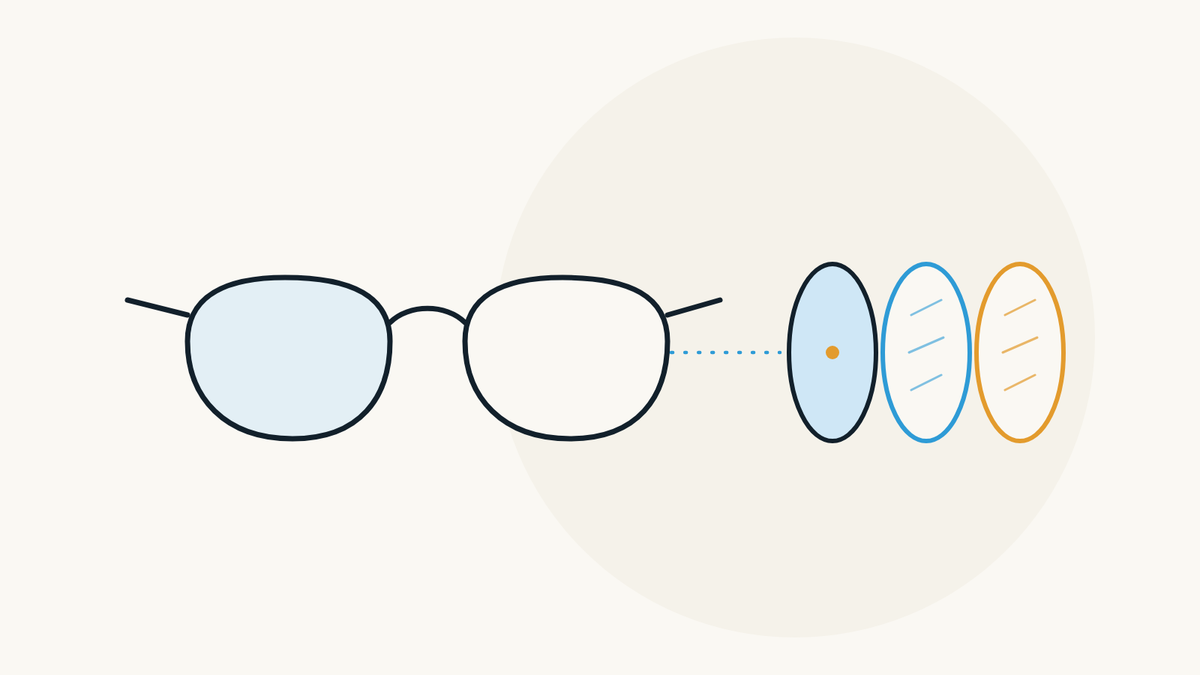
A pair of glasses is two things: a frame and two lenses made to your prescription. Each one has its own price range.
- The lenses. Single-vision lenses correct one distance. Multifocal lenses, and progressive lenses in particular, cost more because they are more complicated to make, according to the Canadian Association of Optometrists. Newer digital or high-definition designs, which correct aberrations and give a wider field of view, also add to the cost.
- The lens material. Plastic, polycarbonate, Trivex and high-index lenses each have their use. High-index lenses are thinner and lighter, which helps people with a strong prescription.
- Coatings and options. Anti-reflective coatings, photochromic lenses that darken in the sun, or a sun tint.
- The frame. Material, construction and brand. Plastic frames are usually less expensive, while designer brands can get pricey, notes an ophthalmologist writing for the American Academy of Ophthalmology.

Do expensive frames give you better vision?
No. A frame holds the lenses in front of your eyes; it does not change your prescription or the quality of the lenses. The American Academy of Ophthalmology puts it simply: you do not need designer frames to have a good pair of glasses.
What a frame does change is comfort and wear. Titanium frames, for example, are strong, lightweight, corrosion-resistant and hypoallergenic, which matters if you react to nickel. Plastic frames are popular because they are usually less expensive, light, and come in many colours and styles. A well-made frame that fits your face and holds its adjustment is worth more to your vision than a label.
Where is it worth spending more?
- Progressive lenses. This is where the American Academy of Ophthalmology advises not to skimp: lenses with a wide reading area that minimize distortion are well worth the cost. In our experience as opticians, a basic progressive with narrow zones is often why people give up on progressives. See our guide to wearing progressive glasses.
- Accurate measurements and fit. Lenses are centred on measurements taken with the frame you chose, such as the pupillary distance and the fitting height. One study found that some of these measurements, like fitting height, vary more from one reading to the next, and that imprecision can throw the lens off-centre and affect vision or adaptation. Careful measuring costs time, not a brand name.
- Anti-reflective coating when you need it. It reduces glare, makes eye contact easier and lets more light through. It is especially helpful for people bothered by headlight glare at night.
- Thinner lenses for a strong prescription. High-index lenses reduce the thick "coke bottle" look and the weight of the glasses.
What can you usually skip?
- An anti-reflective coating on reading glasses. An ophthalmologist answering for the American Academy of Ophthalmology says it will not noticeably improve how reading glasses work.
- A separate UV coating on some plastic lenses. Some plastic lenses already block UV light without a special coating, according to the American Academy of Ophthalmology. Ask which lens you are getting before paying for it twice.
- A designer label, if a simpler frame fits you well. The fit, the weight and the lenses matter more to your eyes.
Why do some people see glasses as an investment in themselves?
Because few things you buy sit on your face from morning to night. Your glasses are part of how you look in every meeting, photo and conversation. For some people, a frame with a finer finish, a lighter material or a design they love is worth it, the same way a good watch or a good pair of shoes is. That is a valid reason to spend more, as long as the lenses and the fit get the same attention.
It goes the other way too. If you want a second pair for sport, for the cottage or as a backup, there is no reason to spend the same amount on it.
Does RAMQ or insurance pay for glasses?
For adults, the public plan does not. RAMQ states that neither prescription glasses nor contact lenses are covered by the public plan.
For children, there is an exception. Through the See Better to Succeed program, RAMQ offers a fixed reimbursement for glasses or contact lenses prescribed for a child under 18. The amount does not change with the price of the purchase, the purchase must be made from a Québec optician or optometrist, and a new request for the same child can be made 24 months after the last reimbursed purchase.
If you have private or group insurance, check your plan's vision coverage and its renewal period before you choose. It can change what makes sense to buy now.
How do you choose without overspending?
- Start from your prescription and your day: driving at night, long screen hours, reading, sport.
- Put the budget on the lenses first, then choose the frame.
- Try frames for fit before style: the lenses should sit centred on your eyes, the frame should not slide or press.
- Ask what each option does for you, and skip the ones that do not apply.
What we carry at PrimeVision
PrimeVision carries many luxury frames, but they are only part of the store. We have more than 4,000 frames in store across a wide range of prices, so you can find a pair that fits your face and your budget. As an independent clinic and boutique, we find it easier to compete on price with the large chains. Our opticians will help you put your budget where it changes your vision. See our prescription glasses in Montréal page, and if you wear progressives, read about getting used to progressive lenses or prescription sunglasses.
When to see an optometrist
Common questions
Are expensive glasses better?
Not necessarily. A more expensive frame does not improve your vision. The lenses and the fitting decide how well you see; that is where extra money usually pays off, especially for progressive lenses.
Is an anti-reflective coating worth it?
Often, yes, for night driving, screens and strong prescriptions, because it reduces glare. On reading glasses, an ophthalmologist for the American Academy of Ophthalmology says it is not necessary.
Does RAMQ pay for glasses?
Not for adults. For children under 18, RAMQ's See Better to Succeed program offers a fixed reimbursement, renewable 24 months after the last reimbursed purchase.
Sources
- American Academy of Ophthalmology. Eyeglasses: How to Choose Glasses for Vision Correction, 2023
- American Academy of Ophthalmology. How to Choose the Glasses Frame Material That's Right for You, 2020
- American Academy of Ophthalmology. Is an anti-reflective coating necessary for reading glasses?, 2025
- Canadian Association of Optometrists. Multifocal Lenses, 2024
- Garcia-Espinilla O et al. Comparison of physiognomy and frame angle parameters using different devices to prescribe progressive addition lenses. Clin Exp Optom, 2022
- Régie de l'assurance maladie du Québec. Is the purchase of eyeglasses or contact lenses covered by health insurance?
- Régie de l'assurance maladie du Québec. Eyeglasses and contact lenses for children
This article is general information and does not replace an eye exam.