Your Child's First Eye Exam: When to Go and What Happens
When to have your child's eyes checked, how the exam works before they can read, and what the RAMQ covers for children under 18 in Québec.
By Michel Geha, O.O.D.
The Canadian Association of Optometrists (CAO) recommends a child's first eye exam between 6 and 9 months of age, at least one more between 2 and 5, then one every year through the school years. Your child doesn't need to read: optometrists use pictures, toys and lights. In Québec, the RAMQ covers the exam for insured children under 18. At PrimeVision, we see children from age 4.
When should a child have their first eye exam?
Earlier than most parents expect. In its position statement, reviewed in 2024, the CAO says infants and toddlers should have their first eye exam between six and nine months of age. After that, it recommends at least one exam between two and five, then a yearly exam from 6 to 19.

Québec's optometry bodies use a very similar schedule. The Association des optométristes du Québec (AOQ) suggests around 6 months, at 3 and again when kindergarten starts, then every year. The Ordre des optométristes du Québec (OOQ) also lists exams at 6 months, 3 and 5 years, then yearly.
At our clinic, we see children from age 4, once a year. Kids' eyes change quickly as they grow, and a child who sees poorly almost never complains about it. As the CAO puts it, children usually assume everyone sees the way they do.
How is an eye exam adapted to a child's age?
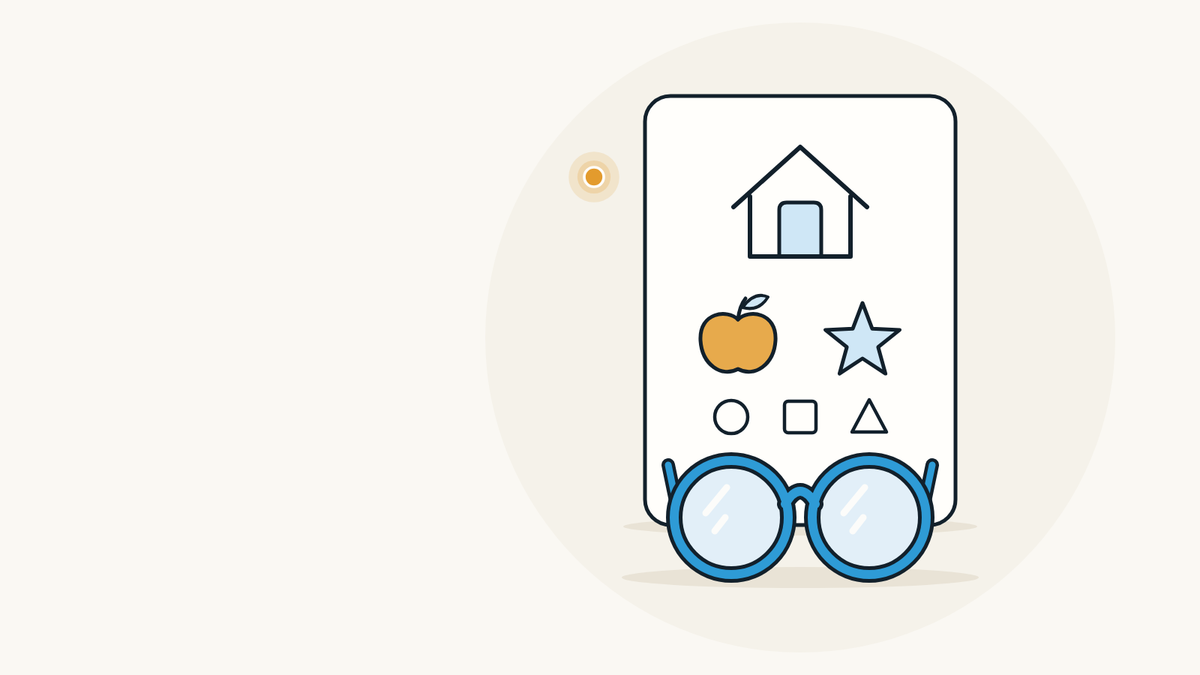
Your child doesn't need to know letters or numbers. The AOQ notes that with instruments, toys or simple drawings, an optometrist can get a very precise idea of how a child sees. The exam is adapted to their age.

- Babies. According to the AOQ, the optometrist checks if your baby follows an object or a light, how the eyes move and work together, and how light reflects in the pupils.
- Toddlers and preschoolers. Simple pictures and games stand in for letters. Around age 3, the AOQ recommends a full exam covering sharpness of vision, how the two eyes work together, whether glasses are needed, and eye health.
- School-age kids. Once a child can read an eye chart, vision is measured the usual way, along with near vision, which matters in class.
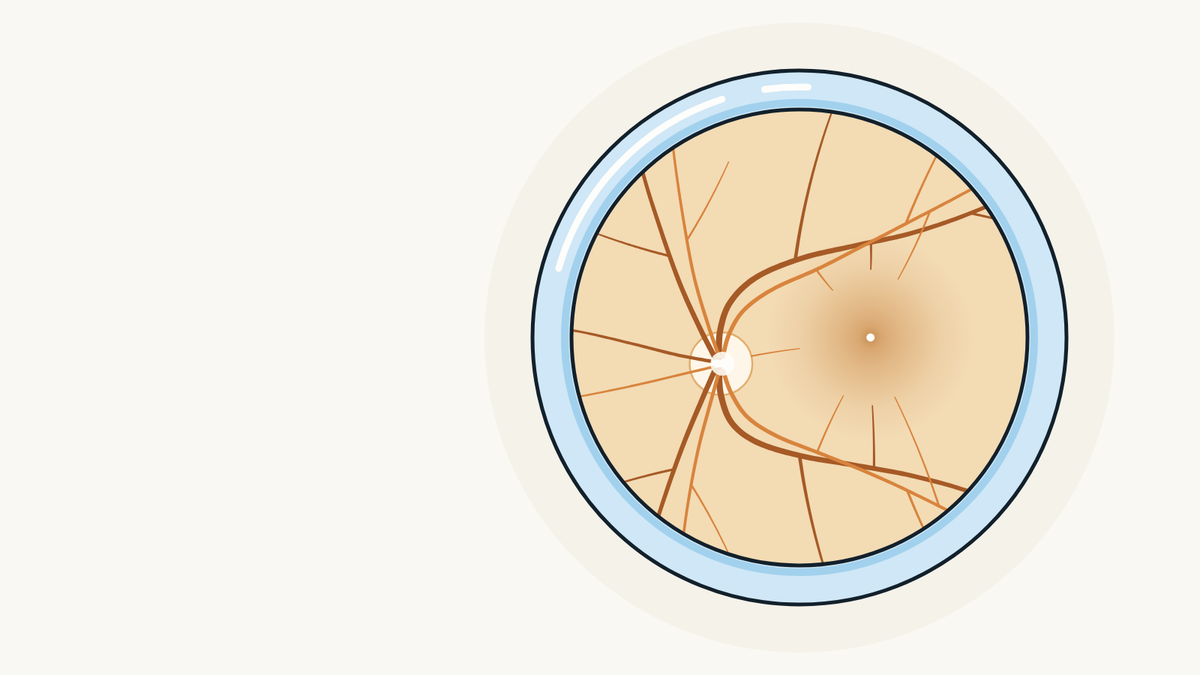
At every age, the optometrist also checks the health of the eye, from the front all the way to the retina. The AOQ stresses that what matters is that the child leaves with a good memory of the visit, and the games help with that too.
Why does the optometrist put drops in my child's eyes?
Not every visit needs them. The optometrist decides based on your child's age and what needs checking. Drops can do two jobs, and some do both.

Some widen the pupil, which gives a fuller view inside the eye, as the American Academy of Ophthalmology (AAO) explains. Others briefly relax the muscle the eye uses to focus. The RAMQ describes cycloplegic exams as "the use of eye drops to temporarily paralyze the focusing eye muscles in order to measure and analyze refraction". It matters in children, because a young eye can hide part of its farsightedness by working harder to focus.
Afterwards, close-up vision stays blurry and bright light may bother your child for a few hours. The AAO notes that the effect can last longer in children, especially those with light-coloured eyes, and occasionally more than 24 hours. A cap or sunglasses make the trip home easier.

Is a school vision screening enough?
No. A school screening can catch some problems, but the CAO says it does not replace a comprehensive eye exam, and the AOQ says the same for children aged 6 to 11. The RAMQ itself recommends a complete exam by an optometrist before a child starts school.

A big reason is amblyopia, or lazy eye. One eye sees less clearly than the other, and the child doesn't notice because the stronger eye does the work. According to the AAO, amblyopia should ideally be treated before age 7 or 8, which is why early exams matter. Treatment makes the child use the weaker eye, often with a patch over the stronger eye, or with drops or glasses that blur vision on that side. Our article on why eye exams are important covers what an exam checks at any age.
What signs of vision problems should parents watch for?
Kids rarely say "things look blurry." Their habits tell you instead. The CAO and the AOQ list signs such as:

- squinting or rubbing the eyes a lot
- holding books or tablets very close
- an eye that turns in or out (strabismus)
- turning or tilting the head to look at things, or covering one eye
- a baby who doesn't follow objects with their eyes, or who fusses when one eye is covered but not the other
Some eye crossing is normal before 2 months, the AOQ notes, because a newborn's eyes don't work well together yet.
When should you see an optometrist?

Does RAMQ cover eye exams for children?
Yes. The RAMQ covers optometric services for insured people in certain situations, including "You are under the age of 18". For complete exams, the RAMQ lists "Under age 18: 1 examination per year". Bring your child's valid health insurance card. The RAMQ's Optometric services page has the details.

What if your child needs glasses? Under its See Better to Succeed program, the RAMQ "offers a reimbursement for the purchase of eyeglasses or contact lenses for a child under the age of 18." The child must be covered by the Health Insurance Plan and have a prescription from an eye exam done by an optometrist or ophthalmologist.
How can you prepare your child for the visit?
- Pick a good time. An appointment away from nap time helps a young child stay focused.
- Bring their health insurance card and their current glasses, if they have some.
- Write down what you've noticed: an eye that drifts, photos with an odd reflection, family history.
- Keep it simple: tell them they'll look at pictures and lights, and nothing hurts.
- Pack sunglasses in case drops are used.

To see how a visit works at our clinic, visit our children's eye exams page.
Sources
- Recommended Frequency of the Comprehensive Eye Examination, Canadian Association of Optometrists position statement (reviewed July 2024).
- Children's Vision Month, Canadian Association of Optometrists.
- The Eye Exam, Canadian Association of Optometrists.
- Examen visuel, Association des optométristes du Québec (in French).
- Bébés de 0 à 24 mois, Association des optométristes du Québec (in French).
- Enfants d'âge préscolaire de 3 à 5 ans, Association des optométristes du Québec (in French).
- Enfants d'âge scolaire de 6 à 11 ans, Association des optométristes du Québec (in French).
- La myopie chez l'enfant, Ordre des optométristes du Québec (in French).
- Optometric services, Régie de l'assurance maladie du Québec.
- Eyeglasses and contact lenses for children, Régie de l'assurance maladie du Québec.
- Eye Screening for Children, American Academy of Ophthalmology.
- Amblyopia: What Is Lazy Eye?, American Academy of Ophthalmology.
- What Are Dilating Eye Drops?, American Academy of Ophthalmology.
- How long do dilation drops last?, American Academy of Ophthalmology.
- How Photos Can Help Diagnose Children's Eye Problems, American Academy of Ophthalmology.
- Vision Screening Recommendations, American Association for Pediatric Ophthalmology and Strabismus.
This article is general information and does not replace an eye exam.