Eye Vitamins: What Helps and What the Evidence Says
What eye vitamins really do: the AREDS2 formula slows intermediate macular degeneration, but no supplement prevents AMD or cataracts in healthy eyes, and omega-3 did no better than placebo for dry eye. Food, risks and when to ask your optometrist.
By Michel Geha, O.O.D.
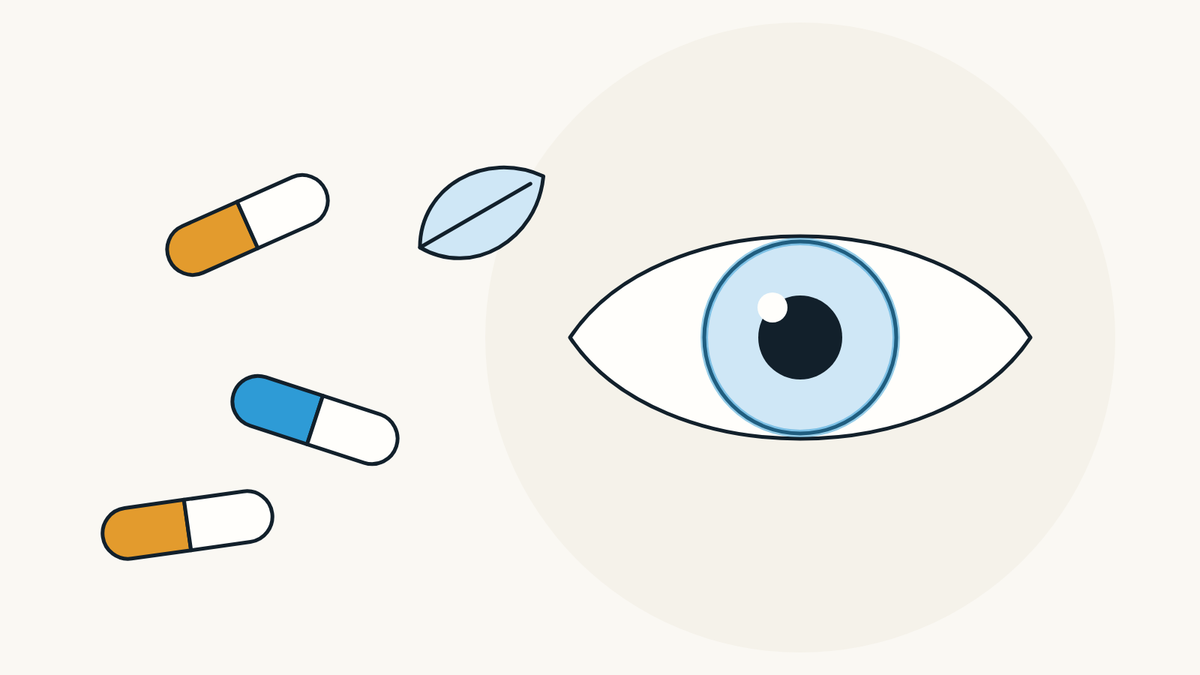
Eye vitamins mainly help one specific group: people with intermediate age-related macular degeneration (AMD). For them, the AREDS2 formula lowers the risk of progressing to advanced AMD by about 25 percent, according to the National Eye Institute. In people with healthy eyes, no supplement has been shown to prevent AMD or cataracts.
Which vitamins matter for eye health?
Vitamins C and E, zinc, lutein and zeaxanthin are the nutrients the American Academy of Ophthalmology (AAO) links most closely to eye health. The AAO adds omega-3 fatty acids, found in oily fish such as salmon, trout and sardines.
According to the AAO, a varied, colourful, vitamin-rich diet helps keep vision healthy for longer. It also points out that vitamins and supplements are not a cure for eye disease and do not bring back vision that is already lost.

What did the AREDS and AREDS2 studies show?
They showed that a specific mix of vitamins and minerals slows AMD in some people. The National Eye Institute (NEI) ran these two large studies to find out whether supplements could prevent or slow AMD and cataracts. The formulas tested are now sold as AREDS and AREDS2.
The AREDS2 formula contains vitamin C (500 mg), vitamin E (400 IU), lutein (10 mg), zeaxanthin (2 mg), zinc (80 mg) and copper (2 mg). The original AREDS formula had beta-carotene (15 mg) instead of lutein and zeaxanthin. These are the study doses, not dosing advice.

Who should consider an AREDS2 formula?
Mainly people who have been found to have intermediate AMD. According to the NEI, taking the AREDS or AREDS2 formula lowers the risk of AMD moving from the intermediate to the advanced stage by about 25 percent. The NEI also says that for people with advanced AMD in one eye only, these supplements may slow the disease in the other eye.
Only an eye exam shows the stage of AMD, and your optometrist or ophthalmologist can tell you whether you are in this group. The AAO advises talking with your eye care professional before you start.

Do supplements protect healthy eyes?
No, nothing shows that they do. According to the NEI, AREDS and AREDS2 supplements do not prevent AMD from starting. The AREDS2 study even left out people without AMD or with early AMD, because the AREDS data showed no benefit for them.
The NEI also notes that there is currently no treatment for early AMD. At that stage, regular eye checks and everyday habits matter more than a bottle of vitamins.

Do vitamins prevent cataracts?
No. According to the NEI, AREDS and AREDS2 supplements have no effect on cataracts, and omega-3 supplements have no effect on either cataracts or AMD.
The AAO notes that some nutrients may help protect vision in people with cataracts or glaucoma, though it is not clear how, and that the Mediterranean diet may have a protective effect against cataracts. It adds that more studies are needed.

Does omega-3 help dry eyes?
No better than a placebo, according to the strongest study on the question. The DREAM study, published in 2018 in the New England Journal of Medicine and funded by the NEI, followed 535 people with moderate to severe dry eye. For 12 months they took either 3,000 mg of fish-derived omega-3 a day or an olive oil placebo.
Symptoms improved in both groups, with no significant difference between omega-3 and placebo. Tests of the eye surface and tears showed no difference either. If your eyes are dry, our article on dry eye treatment explains what helps.

Is a good diet enough to keep your eyes healthy?
For most people, diet and everyday habits are the first lever. The NEI says you may lower your risk of AMD, or slow vision loss from it, by eating healthy foods including leafy green vegetables and fish, getting regular physical activity, keeping blood pressure and cholesterol in a healthy range, and not smoking.
The AAO suggests eating a variety of colours. It also notes that some fish are high in mercury and that pregnant people should ask their doctor how much fish is safe for them.

Are eye supplements risky?
Some are. The NEI asks current and former smokers to take the AREDS2 formula and avoid the AREDS formula, because its beta-carotene increases the risk of lung cancer.
The AAO advises giving your healthcare provider a list of all your supplements and medications, because high-dose supplements can interfere with other drugs. In Canada, vitamins and minerals are natural health products: Health Canada advises looking for the eight-digit Natural Product Number (NPN) on the label, which identifies a licensed product, and talking to a health professional before choosing one.

Who is at higher risk of AMD?
Risk rises mainly with age. According to the NEI, people 55 and older are more likely to have AMD, as are people with a family history of AMD, white people and people who smoke.
If any of these apply to you, regular eye exams matter even more. Our article on why eye exams are important explains what an exam can find before the first symptoms.

When should you talk to your optometrist about vitamins?
Before you buy an eye supplement, and at every exam if you already take one. The NEI explains that eye doctors check for AMD as part of a comprehensive eye exam, and may recommend optical coherence tomography (OCT), an imaging test of the retina.
That exam is what tells you whether a formula like AREDS2 makes sense for you. Bring the list of your supplements and medications: your optometrist, or your doctor, can advise you with your overall health in mind.

Where can you have your eye health checked in Montréal?
At PrimeVision, 9520 Boulevard de l'Acadie, Suite 222, in Montréal (Ahuntsic), optometrists and a licensed optician work under one roof. The adult eye exam includes vision and prescription tests, a check of the health of both retinas and OCT imaging (Canon RS-330): that is where AMD can be found, before any question of supplements. Your optometrist will tell you whether a formula like AREDS2 applies to you. For dry eyes, the clinic offers eye drops. RAMQ covers eye exams for children under 18 and adults 65+.
To book or see what the exam includes, visit our eye exams in Montréal page. People 65 and older will find more detail in our article on eye exams after 65.

Sources
- Age-Related Eye Disease Studies (AREDS/AREDS2): major findings, National Eye Institute, updated October 22, 2025.
- Age-Related Macular Degeneration (AMD), National Eye Institute.
- Diet, Nutrition, and Eye Health Supplements, American Academy of Ophthalmology, April 8, 2025.
- Dry Eye Assessment and Management (DREAM) Study Research Group, "n-3 Fatty Acid Supplementation for the Treatment of Dry Eye Disease", N Engl J Med 2018;378:1681-1690.
- About natural health products, Health Canada.
Find our eye care articles useful? Add PrimeVision as a preferred source in Google.
This article is general information and does not replace an eye exam.