Rimless and Semi-Rimless Glasses: Pros and Cons
What rimless and semi-rimless glasses are, how they hold together, their upsides and downsides, which lenses work in a drilled frame, whether drilling can crack a lens, and whether they suit strong myopia, children and sports.
By Michel Geha, O.O.D.

Rimless glasses have no rim around the lenses: the temples and the bridge are fixed directly to drilled lenses. Semi-rimless frames go around only the top of the lens. Both are light and discreet, but more fragile than a full frame, and less suited to young children and very strong prescriptions.
Full, semi-rimless or rimless: what is the difference?
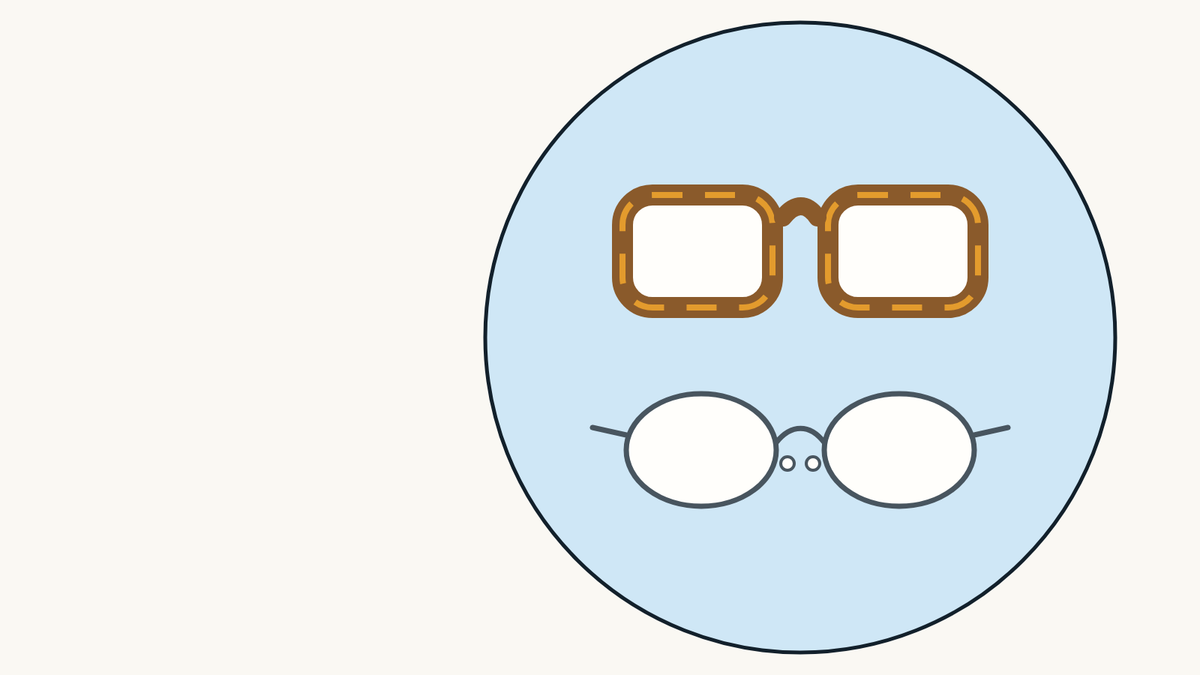
How much of the lens is surrounded. The World Health Organization (WHO) guide on spectacle quality, published in 2025, sets out three styles: the full frame, which goes all the way around the lens; the semi-rimless frame, which goes around about half of it; and rimless glasses, with no rim at all.
The choice changes the weight, the strength, the look of the glasses and how the lens thickness shows. For the material of the frame itself, see our article on titanium, acetate or metal frames.

How do rimless glasses hold together?
The temples are attached directly to the lenses. The WHO describes rimless glasses this way: there is no rim, and the arms are fixed to the lenses themselves. The American Academy of Ophthalmology (AAO) also calls them "drilled" frames, because the lenses are drilled to take the screws or mounts of the bridge and temples.
So the lenses carry the whole structure. That is what makes these glasses so light, and it also explains their limits.

What is a semi-rimless frame?
It is a frame that goes around only part of the lens, usually the top. According to the WHO, a semi-rimless frame goes around about half of the lens, and the lens is held in place by a thin wire.
The bottom of the lens is left open. You get a lighter look than a full frame, with a bar across the top that gives the glasses structure.

What are the upsides of rimless glasses?
Lightness and discretion. The WHO notes that rimless glasses are less noticeable and much lighter, and the AAO also describes them as lightweight.
Less weight on the nose and behind the ears also means more comfort when you wear your glasses all day. And with nothing around the lens, the face looks more open.

What are the downsides?
Mainly fragility. According to the WHO, rimless glasses are often the most costly and most fragile frame style, which is why it does not advise them for young children.
With no rim to protect it, the lens is also more exposed to knocks.

Which lenses work in a rimless frame?
The AAO says Trivex or polycarbonate lenses work with this type of frame. The two materials share another trait: the Canadian Association of Optometrists (CAO) highlights their strong impact resistance.
Choosing between them also depends on your prescription and what you are looking for. Our article on lens materials compares Trivex, polycarbonate and high-index lenses.

Can drilling crack the lens?
Yes, that is the weak point of these glasses. A technical sheet from Vision-Ease, a lens maker, explains that the greater a material's tensile strength, the better it resists cracking and the better it suits drill-mount frames. The same sheet warns that screws that are too tight can put stress on the lens.
It also notes that polycarbonate can be drilled successfully with care: a sharp bit, a low speed and little pressure. Drilling is precision work done in the lab.

Can you wear rimless glasses with strong myopia?
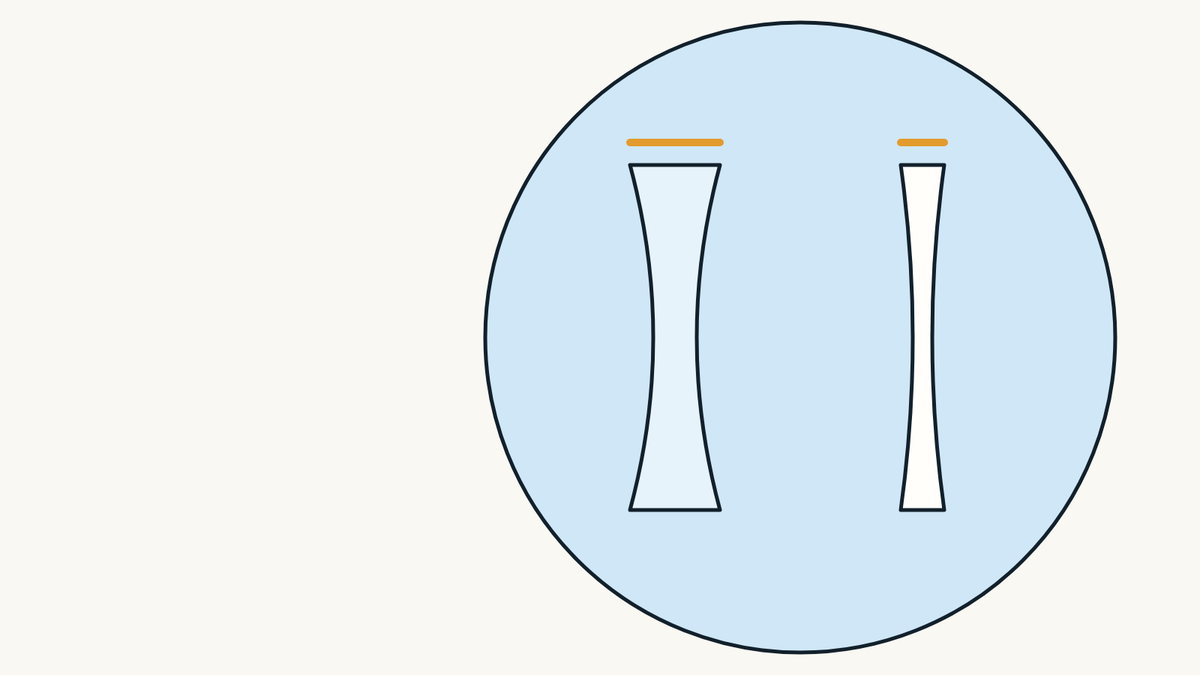
You can, but the lens edge will show. The WHO points out that with myopia, the thickest part of the lens is at the edge, and that a full frame helps hide those thick edges. Without a rim, the edge stays in view.
A high-index lens and a shape that is not too large reduce that thickness. Our article on lens thickness explains what makes it vary.

What about children or sports?
A full frame is usually the better fit. The WHO considers full frames suitable for children and older people because they are more robust, and it does not advise rimless glasses for young children.
The CAO, for its part, says safety is the first priority when choosing a child's lenses, and that a child's frame will inevitably end up bent or broken. See our article on glasses for kids.

How do you take care of rimless glasses?
By checking that the lenses stay firmly in place. The WHO asks that lenses be secured so they do not rotate, loosen or fall out while the glasses are worn. If a lens moves, do not tighten it yourself: the Vision-Ease sheet points out that an over-tightened screw can put the lens under stress.
For cleaning, the same rules apply as for any glasses: see our guide on how to clean your glasses without scratching them. To check the fit, our guide on how to choose frames that fit your face explains what to look at.

Who are rimless glasses for?
Mostly for adults who want light, discreet glasses and take care of them. Based on the sources above, they suit young children less well, as well as activities where glasses may take knocks, and strong myopia if you want to hide the lens edges.
A semi-rimless frame can be a middle ground: lighter than a full frame, with a bar across the top that holds things together.

Where can you try rimless glasses in Montréal?
At PrimeVision, 9520 Boulevard de l'Acadie, Suite 222, in Montréal (Ahuntsic), optometrists and a licensed optician work under one roof. In the shop, the licensed optician, Michel Geha, O.O.D., can show you full, semi-rimless and rimless frames among more than 4,000 frames for every budget, and tell you whether your prescription suits them. RAMQ covers eye exams for children under 18 and adults 65+.
To see the options, visit our prescription glasses in Montréal page, or book from our eye exams in Montréal page.

Sources
- Summary guide on quality standards for spectacles, World Health Organization, 2025.
- How to Choose the Glasses Frame Material That's Right for You, American Academy of Ophthalmology, April 22, 2020.
- Glasses for Children, Canadian Association of Optometrists.
- Polycarbonate vs. Trivex technical tip, Vision-Ease, published on hoyavision.com.
Find our eye care articles useful? Add PrimeVision as a preferred source in Google.
This article is general information and does not replace an eye exam.