How to Choose Glasses Frames That Fit Your Face
A frame that suits your face first has to fit: level, stable, no red marks. How to judge size, bridge and temples, what face shape and your prescription change, and when buying online is not advised.
By Michel Geha, O.O.D.
A frame that suits your face is first of all a frame that fits: it sits level, does not slip when you move your head and leaves no red marks on your nose or behind your ears. Shape and colour then come down to your own taste, and trying frames on in a shop is the way to judge them.
How can you tell if a frame fits you?
Check three things in the mirror and after a few hours of wear. According to the Canadian Association of Optometrists (CAO), a well-fitted frame is level and properly positioned, does not slip out of place when you turn or tilt your head, and leaves no noticeable red marks on your nose or behind your ears.
The CAO also lists the complaints that come up when glasses are poorly chosen or fitted: headaches, fatigue, nausea, dizziness, eye strain, a "pulling" feeling in the eyes, glasses slipping off the nose, and pain or pressure marks on the nose or around the ears.

What size of frame should you choose?
One that is neither too big nor too small for your face. In its page on buying glasses online, the CAO lists selecting the right size and shape of frame among the key decisions for clear, comfortable vision, alongside measuring your pupillary distance.
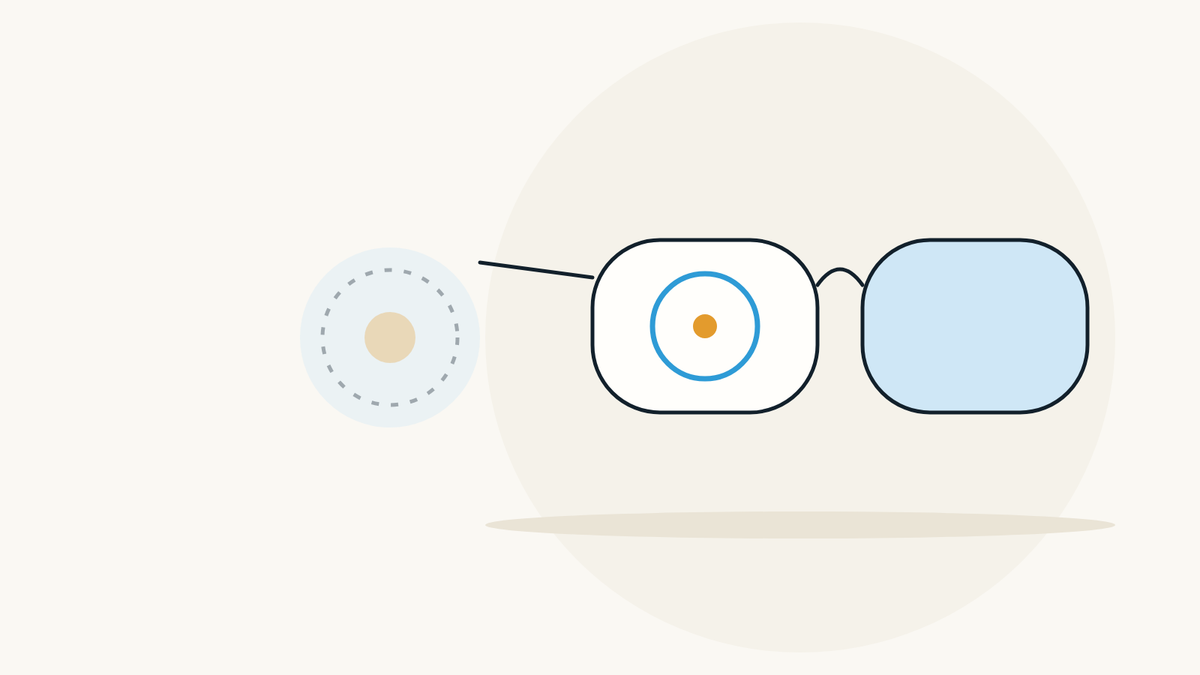
Size is not only about looks. Community Eye Health, a journal for eye care workers, points out that a frame that is too big, too small or poorly adjusted can throw the lenses' optical centres out of line, even when the pupillary distance was measured correctly.

Why does the optical centre of the lens matter?
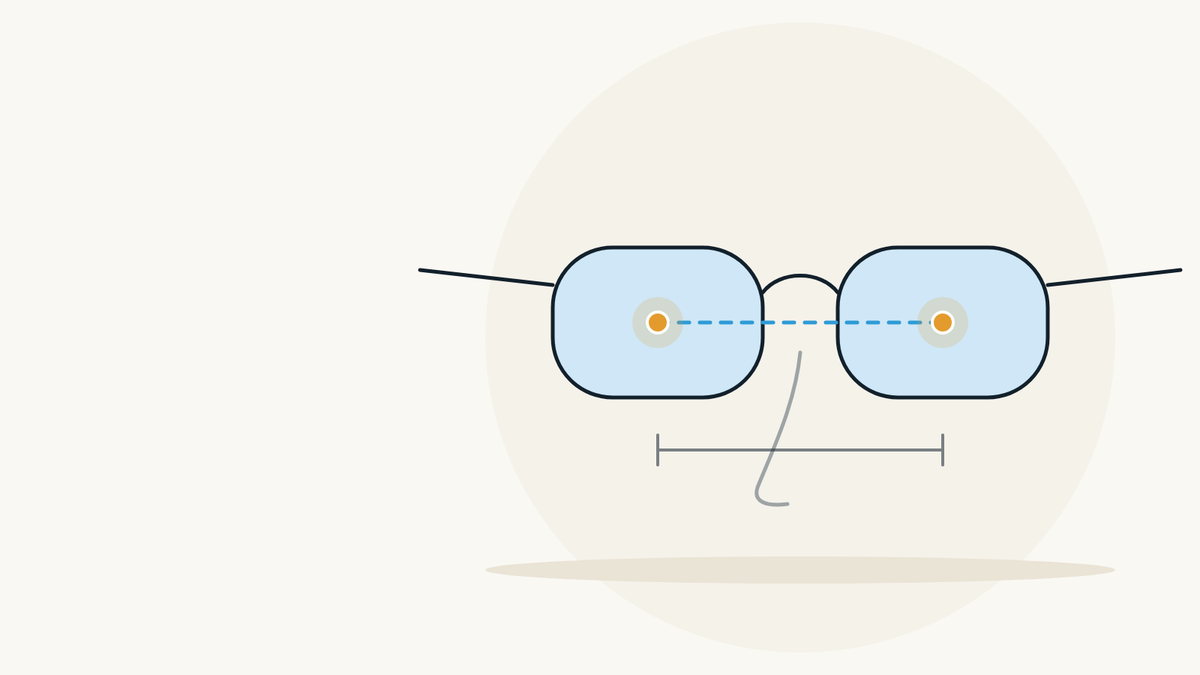
Because it is the point of the lens where vision is clearest. According to Community Eye Health, the optical centre must line up with the pupil; when it is off, light is bent away, which can cause blurred or distorted vision, eye strain, discomfort and headaches.
To place that point correctly, the pupillary distance is measured in millimetres, between the centres of the two pupils, or between each pupil and the centre of the nose. The same journal recommends measuring each eye separately for strong prescriptions, asymmetrical faces and progressive lenses. To understand the other numbers on your prescription, read our guide on how to read your glasses prescription.

Bridge and nose pads: why does your nose matter so much?
Because your nose carries most of the weight of your glasses. The American Academy of Ophthalmology (AAO) describes the bridge as the centre of the frame that rests on your nose and joins the two rims. The nose pads under the bridge make the fit more comfortable and secure, and their pad arms are adjustable to follow the shape of your face.
A bridge that is too narrow pinches and leaves marks; one that is too wide lets the glasses slide down. If your nose bridge is small or flat, a frame with adjustable nose pads is often easier to fit than a one-piece plastic frame.

Should the temples be tight behind your ears?
They should hold without squeezing. According to the AAO, the temples are the long arms on the sides of the frame that fit over your ears for a snug fit. If they are too short or too tight, they hurt; too loose, and the glasses slide to the tip of your nose.
After a working day or an evening of reading, you should feel no pain or pressure around your ears. If you do, have your glasses adjusted rather than getting used to it.

Should you choose frames for your face shape?
It is a good starting point, not a rule. In optical shops, people often suggest contrast, for example a more angular frame for a round face and a rounder frame for a square face, but this is a matter of taste, not health. For children, the CAO advises starting with a style and colour the child likes, because they will be more willing to wear glasses they are happy with.
The simplest approach is to try several shapes and keep the one you like that also passes the fit checks: level, stable and comfortable.

Does your prescription change which frame you should choose?
Yes, especially if it is strong or if you wear progressive lenses. The CAO lists several decisions that depend on the prescription: frame size and shape, lens material, which affects thickness, lens curvature, the height of the optical centre in the frame and the height of bifocal or progressive lenses.
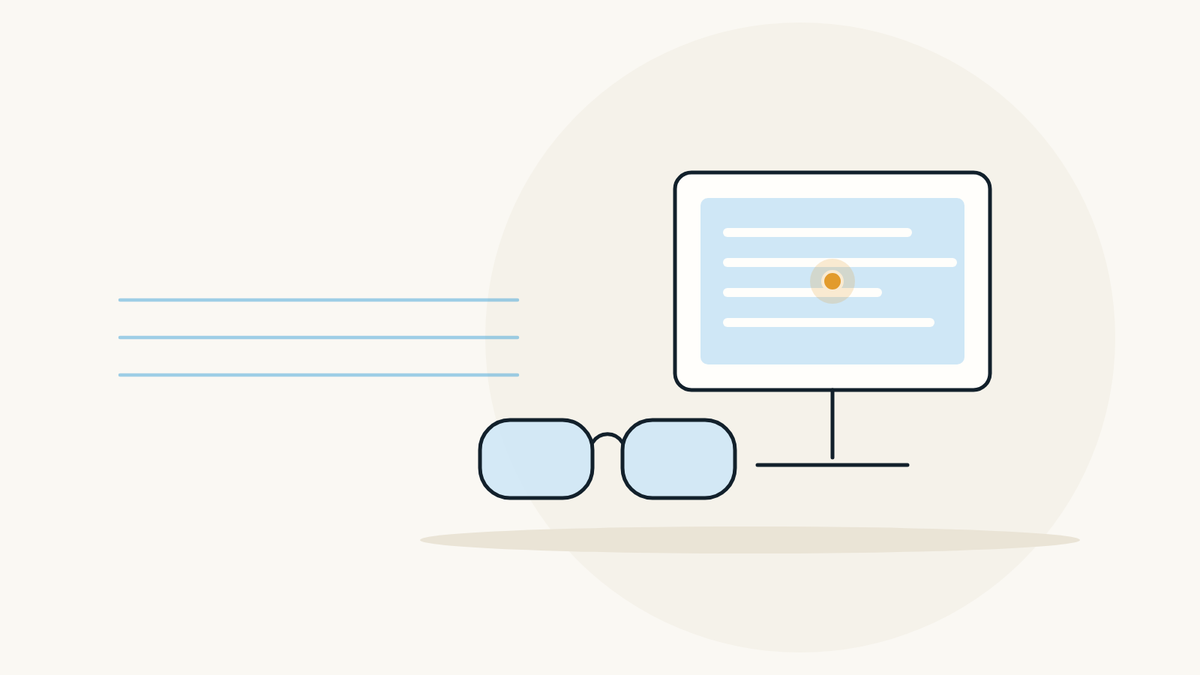
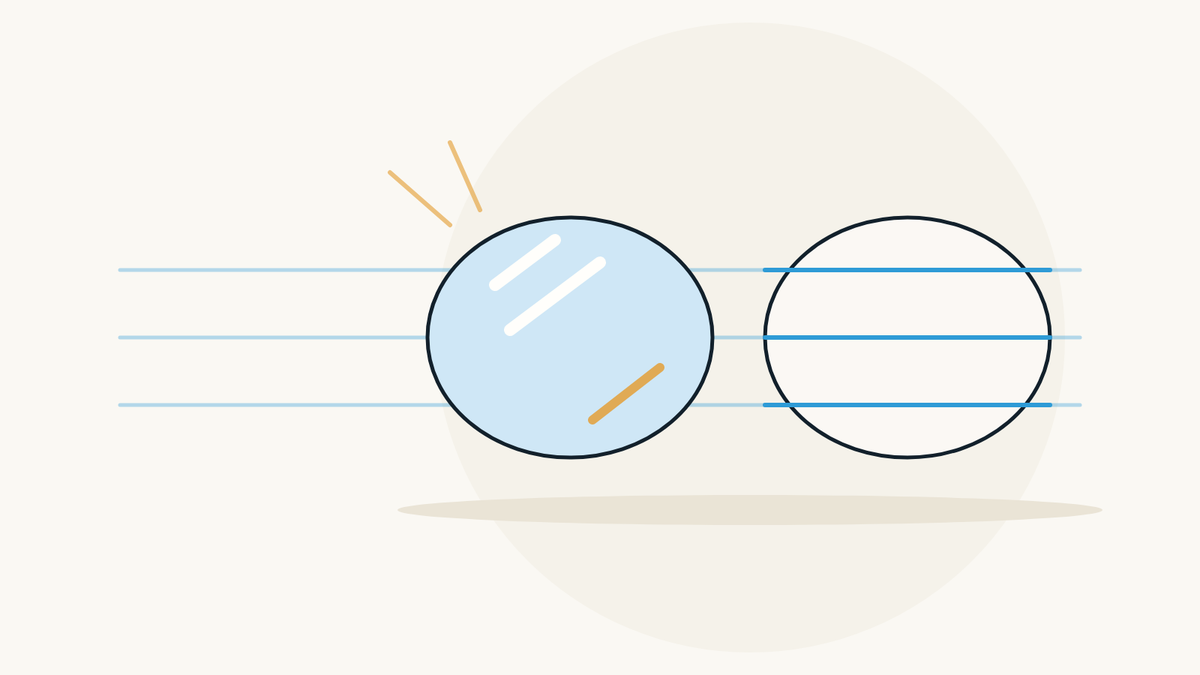
For a strong prescription, the AAO describes high-index lenses as thin, lightweight lenses that reduce the "coke bottle" look. Our article on choosing a lens material explains the options. For progressives, Community Eye Health recommends marking the pupil position on the chosen frame, worn the way it will be worn every day.

Can you choose frames online?
You can, but the CAO advises against it in some cases: for children, and for people with a strong, complicated or multifocal prescription, or a face that is hard to fit. When you order online, it explains, you are in effect taking on the role of a trained optical dispenser: taking the measurements and choosing the frame, lens and material.
The CAO recommends getting an eye exam for an up-to-date prescription first, then having an optometrist or optician do the final fitting. Our article on seven signs you need new glasses helps you tell when it is time for a new pair.

How do you choose glasses for a child?
Start with a style they like, then check the fit. According to the CAO, children often have small, flat nose bridges; since much of the frame's weight rests there, frames with adjustable nose pads are often recommended. Children's skin can be sensitive, so large areas of frame contact should be avoided, especially with a metal sensitivity.
The CAO also advises a good-quality frame backed by a manufacturer's warranty, because a child's frame will almost always end up bent or broken. At PrimeVision, children's eye exams start from age 4; our page on children's eye exams explains how they work.

Does a more expensive frame make better glasses?
Not necessarily. The AAO points out that spending more on frames does not mean you will end up with better-quality eyeglasses, and that you do not need designer frames to have a good pair. It does advise not skimping on lenses, especially bifocal, trifocal and progressive lenses.
Our article do you need to spend a lot on glasses? explains what really changes the result.

Where can you choose frames in Montréal?
At PrimeVision, 9520 Boulevard de l'Acadie, Suite 222, in Montréal (Ahuntsic), optometrists and a licensed optician work under one roof. The shop carries more than 4,000 frames, across a wide range of prices and not only luxury brands. The licensed optician, Michel Geha, O.O.D., helps you choose a frame in the right size for your face, your prescription and how you will use your glasses. RAMQ covers eye exams for children under 18 and adults 65+.
To see the frame and lens options, visit our page on prescription glasses in Montréal or browse our frames.

Sources
- Glasses for Children, Canadian Association of Optometrists, updated March 14, 2023.
- Buying Glasses Online, Canadian Association of Optometrists, updated March 27, 2023.
- Learn the Nine Essential Parts of Eyeglasses, American Academy of Ophthalmology, November 29, 2017.
- Eyeglasses: How to Choose Glasses for Vision Correction, American Academy of Ophthalmology, June 14, 2023.
- Mehta M, Onyegbule S. Prescribing and fitting spectacles: the role of pupillary distance and the optical centre, Community Eye Health, 2024;37(122):18-19.
Find our eye care articles useful? Add PrimeVision as a preferred source in Google.
This article is general information and does not replace an eye exam.