Red Eyes and a Red Spot on the White of the Eye: Common Causes and When to Get Checked
The common causes of red eyes, what a red spot on the white of the eye is and how long it lasts, red eyes with discharge or contact lenses, what helps at home, redness-relief drops, the emergency signs and when to book a visit.
By Michel Geha, O.O.D.
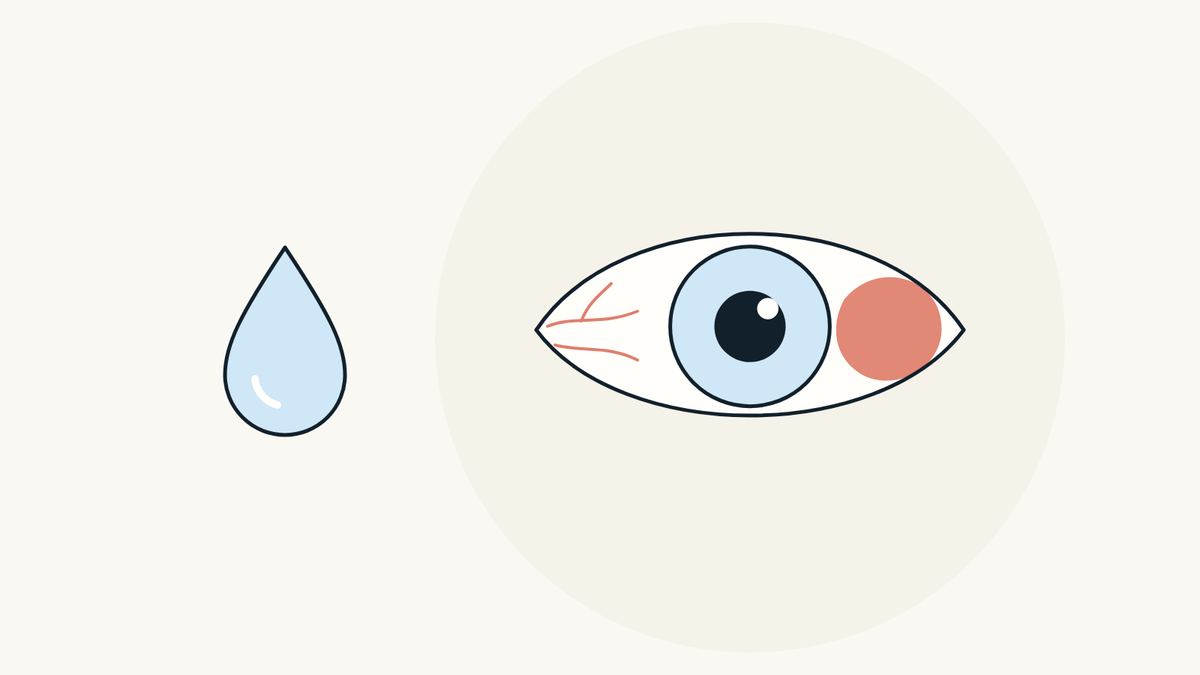
Red eyes often come from irritation: dry eyes, allergies, smoke, chlorine or contact lenses worn too long. A red patch on the white of the eye, with no pain, is usually a small broken blood vessel that clears on its own within a few days or a few weeks. Pain, worse vision or light that hurts: get care right away.
Why are my eyes red?
Because the small blood vessels on the surface of the eye widen. The Mayo Clinic explains that red eye is common, can affect one or both eyes, and happens when these vessels expand because of irritation or disease.
According to the American Academy of Ophthalmology (AAO), the most common cause is an outside irritant. The eye releases histamine, which widens and inflames the tiny vessels; itching, tearing and burning often come with the redness.

What are the most common causes of a red eye?
Dry eyes, allergies and irritants. The AAO names dry eye, allergies, blepharitis and wearing contact lenses too long among the common, mostly harmless causes. Its list of irritants includes pollen, pool chlorine, pets, dust, mould, cigarette smoke and perfumes.
The Mayo Clinic adds, among others, pink eye, styes and chalazia, something in the eye, and the side effect of some eye drops. If your eyes burn or feel gritty, read our article on dry eye treatment. For a bump on the eyelid, see styes and chalazia.

What is a red spot on the white of the eye?
Most often, a subconjunctival hemorrhage. The AAO explains it this way: the conjunctiva, the thin clear tissue over the white of the eye, holds many tiny blood vessels; when one breaks, blood spreads between it and the white of the eye and forms a bright red patch.
According to the Mayo Clinic, the patch looks worse than it is. It should cause no discharge, no pain and no change in vision; at most a mild irritation. The AAO notes that people often only find it by looking in the mirror.

What causes a broken blood vessel in the eye?
Mostly coughing, sneezing and straining. The AAO explains that these briefly raise the pressure in the veins, which can break a small vessel. A blow to the eye, or even rubbing it too hard, can also cause one; the Mayo Clinic adds vomiting.
Less often, according to the AAO and the Mayo Clinic, diabetes, high blood pressure and medicines that make you bleed more easily, such as aspirin and blood thinners, play a part. Never stop a medicine without talking to the person who prescribed it.

How long does a subconjunctival hemorrhage last?
A few days to a few weeks. The AAO says it heals on its own, without treatment, in a time that depends on the size of the spot. The Mayo Clinic says the same: it usually disappears within a few days to a few weeks.
If the eye feels a little scratchy, the AAO says artificial tears can help. To avoid another one, the Mayo Clinic advises not rubbing your eyes.

What if the red spot keeps coming back?
Have it checked. The Mayo Clinic advises seeing a professional if these spots happen often, if you bruise or bleed easily, after an eye injury, or if the spot comes with pain or a change in vision.
The AAO notes that if they keep happening, your eye doctor will talk with you about further tests. If a medicine or a health condition is the likely cause, the Mayo Clinic suggests asking how to lower the chance of it happening again.

Red eye with discharge: is it pink eye?
It may be. The Canadian Association of Optometrists (CAO) describes conjunctivitis as a red eye, often with a watery or sticky discharge. It can be infectious (viral or bacterial), allergic or chemical, and only the infectious kind is contagious.
To tell an infection from an allergy, read our article on pink eye or allergies. The CAO points out that a red eye can signal many other problems, some of which can damage vision.

What should you do if your eye turns red with contact lenses?
Take the lenses out. The AAO explains that lenses worn too long make the eyes red, scratchy and watery. If the eye stays red and painful once the lenses are out, it may be an infection: the AAO advises seeing your eye doctor right away.
The AAO adds that keratitis, an infection of the cornea, must be treated as soon as possible, and that it is even more urgent for someone who wears contact lenses. The steps are set out in our article on red eye with contact lenses.

How can you soothe red eyes at home?
For a red eye with no warning signs, the AAO describes a few simple steps: over-the-counter artificial tears, cool compresses on closed eyes a couple of times a day, and staying away from smoke, pollen, dust, chlorine and pet dander.
The AAO also advises washing your hands often, touching your eyes only with clean hands, and using clean towels and pillowcases every day. For allergy itch, it mentions over-the-counter antihistamine drops.

Are redness-relief eye drops a good idea?
Not for more than three days. The AAO explains that decongestant drops, the kind that "get the red out", should not be used for more than three days, because longer use causes rebound redness. It notes that a newer brimonidine drop does not cause this, but that children should not use it.
The Mayo Clinic adds that over-the-counter drops can themselves make an eye red; if you think that is the case, try a different brand or take a break from them.

When is a red eye an emergency?
When it hurts, when your vision changes or when light hurts. The Mayo Clinic advises immediate care if your eyesight changes suddenly, if the red eye comes with a bad headache, eye pain or fever, if light hurts your eyes, if you feel sick to your stomach or are vomiting, if an object or a chemical got into the eye, if you suddenly see halos around lights, or if you cannot keep the eye open.
The AAO describes an angle-closure glaucoma attack (red eye, severe pain, blurry vision, nausea, halos, a very bad headache) as a serious emergency, and notes that uveitis (red eye, light sensitivity, blurry vision) can cause vision loss if it is not treated. Our urgent eye care page explains what to do first.

When should you book a visit for red eyes?
When the redness does not clear. The Mayo Clinic advises calling if a red eye does not improve after several days, especially with a thick discharge. The AAO advises seeing a doctor if the redness lasts more than a week despite home care, or if the eyes ooze or crust with yellow, brown or green mucus.
The CAO goes further: a red eye with pain or sensitivity to light should be seen by an optometrist right away. The Mayo Clinic adds to contact your eye care professional for any redness with pain, or if you have had eye surgery or an eye injection.

Where can you have a red eye checked in Montréal?
At PrimeVision, 9520 Boulevard de l'Acadie, Suite 222, in Montréal (Ahuntsic), optometrists and a licensed optician work under one roof. An optometrist can examine a red eye, look for the cause and tell you whether it needs treatment. An urgent problem is seen when there is availability; otherwise, depending on how serious it is, the clinic recommends the hospital emergency department. If a specialist needs to see the eye, the clinic writes the referral, sends it directly and gives you a copy. RAMQ covers eye exams for children under 18 and adults 65+, and we see children from age 4.
For a problem that is not urgent, book through our page to see an optometrist in Montréal: book online, the times shown are the open ones.

Sources
- What is a Subconjunctival Hemorrhage?, American Academy of Ophthalmology, September 8, 2026.
- Subconjunctival hemorrhage (broken blood vessel in eye), Mayo Clinic, September 19, 2025.
- Red eye, Mayo Clinic, February 19, 2025.
- Home Remedies for Bloodshot Eyes, American Academy of Ophthalmology, April 7, 2023.
- Is It Pink Eye or Something Else?, American Academy of Ophthalmology, December 3, 2024.
- Conjunctivitis (Pink Eye), Canadian Association of Optometrists.
- Anterior Uveitis, Canadian Association of Optometrists.
Find our eye care articles useful? Add PrimeVision as a preferred source in Google.
This article is general information and does not replace an eye exam.