Headaches and Your Eyes: When Vision Is the Cause and When It Is Urgent
Which vision problems can cause headaches, screens and the 20-20-20 rule, what an ocular migraine and a visual aura are, why one eye matters, the warning signs of angle-closure glaucoma and giant cell arteritis, and what the eye exam checks.
By Michel Geha, O.O.D.
Yes, vision can cause headaches, mainly when a correction is missing or out of date, or after long close-up work such as at a screen. But most headaches have other causes. A migraine with aura can also blur your vision. A sudden loss of vision needs help right away.
Can vision problems cause headaches?
Yes, sometimes. The American Academy of Ophthalmology (AAO) explains that eye strain is more of a symptom than a condition, and that some people blame their eyes for headaches that have another cause. It also notes that some people squint and tire their facial muscles because they are not wearing the right glasses.
The AAO's headache page names several eye problems that can be linked to headaches: nearsightedness, farsightedness, astigmatism, migraine, eye allergies and, more rarely, conditions such as angle-closure glaucoma or giant cell arteritis.

Which vision problems can cause headaches?
Mostly the ones that are not corrected. The AAO lists headaches among the symptoms of astigmatism, along with blurry vision, squinting and eye discomfort, while noting that these symptoms do not always mean you have it. The Canadian Association of Optometrists (CAO) describes fatigue and headaches after close work with farsightedness, because the eyes have to work harder to focus.
A prescription that is no longer right matters too: according to the AAO, an incorrect prescription blurs your vision and makes eye strain feel worse. The CAO names uncorrected presbyopia among the problems that make screen work less comfortable. If your glasses seem less sharp, see our signs you need new glasses.

Can screens give you a headache?
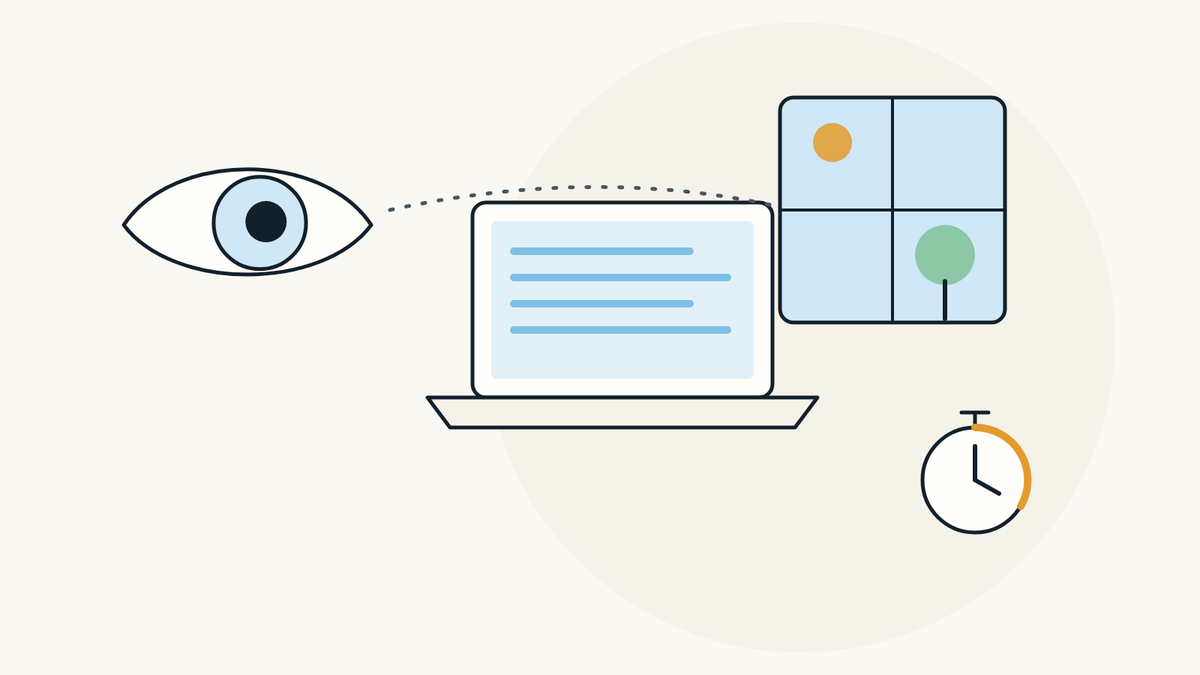
Yes, through digital eye strain. The CAO describes headaches, blurry vision, double vision and dry eyes: at a screen, the eyes focus and turn inward up close for a long time, and their muscles get tired. You also blink much less often, which dries the eyes.
The AAO is reassuring on one point: screen eye strain does not cause permanent damage, and it is no different from the strain of reading. Glasses designed for screen distance can help; see our article on computer glasses.

How does the 20-20-20 rule work?
Every 20 minutes, look at something at least 20 feet (about 6 metres) away for at least 20 seconds. The AAO and the CAO both recommend it to rest your eyes during screen work.
The break interrupts the close-up focusing effort the CAO describes. If the headaches come back despite the breaks, an exam can check, as the AAO explains, whether you need a new prescription.

What is an "ocular migraine"?
The term most often means a migraine with aura. The Mayo Clinic explains that headache specialists no longer use it, because it was used for two different conditions: migraine with aura, the most common and usually not serious, and retinal migraine, which is very rare.
In migraine with aura, the aura comes from a wave of electrical activity that moves across the part of the brain that processes vision, according to the Mayo Clinic. The eye itself is not the cause.

What does a visual aura look like?
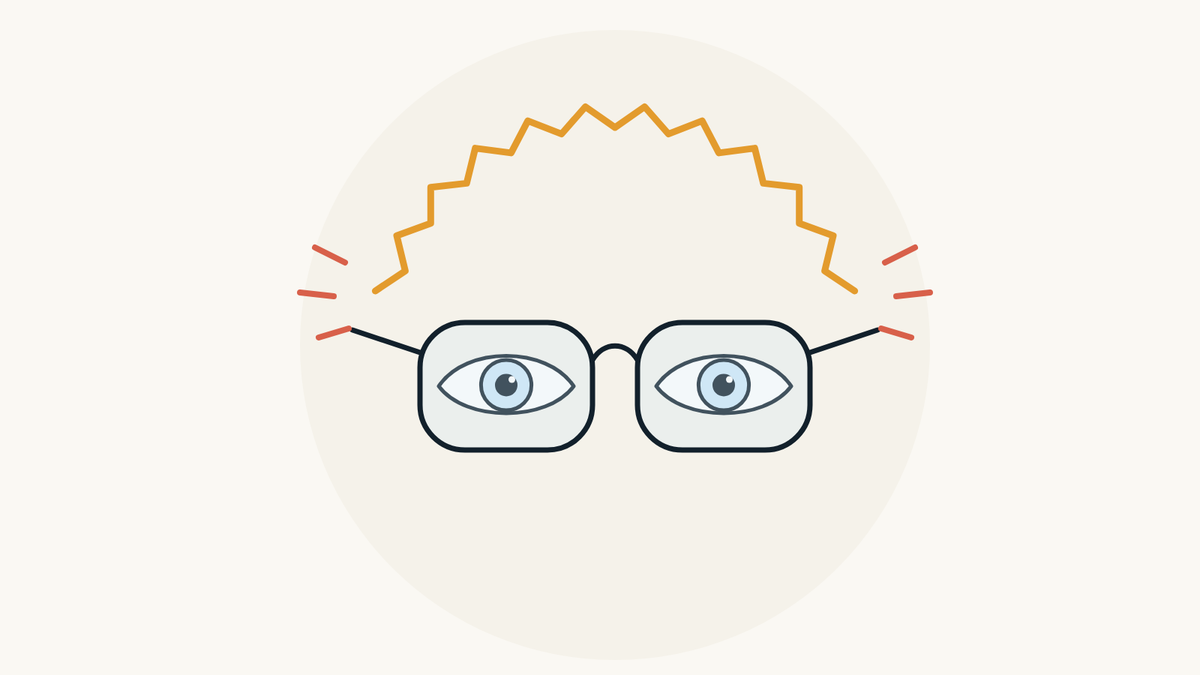
Zigzags, flashes or a blind spot that grows. The Mayo Clinic describes flashes of light, zigzag patterns, blind spots and shimmering spots, and says an aura usually lasts less than an hour. The CAO also describes flickering lights and blind spots that grow.
An aura can happen without a headache, according to the AAO and the Mayo Clinic. The CAO advises that if you are driving, you pull over until the vision changes pass.

Is a problem in only one eye a migraine?
Rarely. The Mayo Clinic explains that a migraine aura affects both eyes. Retinal migraine, which affects one eye, is very rare, and most vision changes limited to one eye are not caused by it.
That is why the Mayo Clinic says to get care right away for a vision change in only one eye, rather than assume it is a migraine.

Headache and vision changes: when is it an emergency?
When vision drops suddenly or other signs come with it. The Mayo Clinic says to get medical help right away for vision changes in only one eye, an aura shorter than 5 minutes or longer than 60 minutes, vision changes without a headache, new symptoms, symptoms that start after age 50, or weakness on one side of the body or changes in speech.
The AAO adds that dimming or loss of vision during a migraine, even briefly, should be seen promptly to rule out a transient ischemic attack (a mini-stroke). To know what to do when an eye problem cannot wait, see our urgent eye care page.

Can glaucoma cause a headache?
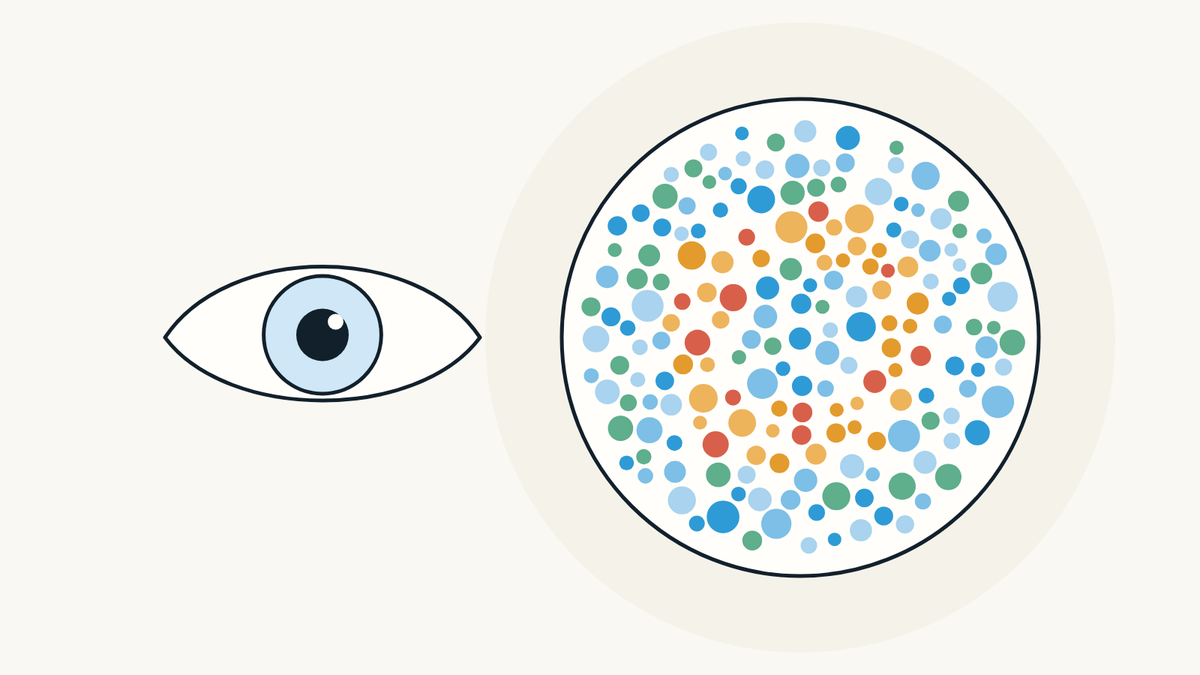
Yes, an acute angle-closure glaucoma attack. The AAO calls it a true eye emergency: vision suddenly becomes blurry, the eye hurts badly, with a headache, nausea or vomiting, and rainbow-coloured halos around lights. Without prompt treatment, vision loss can be permanent.
If these signs appear together, go to the emergency department rather than waiting for an appointment.

Headaches after 50 and vision: what is giant cell arteritis?
It is an inflammation of the arteries that mostly affects people over 50. The AAO describes a severe headache, a tender scalp especially at the temples (pain when combing your hair), jaw pain when chewing, and sudden vision loss or double vision.
According to the AAO, vision loss usually affects one eye first, and it is very important to be examined right away if you have these symptoms.

What does an eye exam check when you have headaches?
Your prescription, how your eyes work together and their health. The AAO says the eye doctor checks for dry eye, examines the eye muscles and looks at whether you need a new prescription.
The CAO notes that farsightedness can go unnoticed in a vision screening or an automated measurement, and advises seeing your optometrist as soon as possible when unusual vision symptoms appear, to rule out problems that threaten sight. To see why the exam matters even when you see well, read why eye exams are important.

Where can you have your eyes checked for headaches in Montréal?
At PrimeVision, 9520 Boulevard de l'Acadie, Suite 222, in Montréal (Ahuntsic), optometrists and a licensed optician work under one roof. The eye exam checks your prescription for distance and near and the health of your eyes, and the optician then fits your glasses to your face. An urgent problem is seen when there is availability; otherwise, depending on how serious it is, the clinic may direct you to the emergency department. RAMQ covers eye exams for children under 18 and adults 65+, and we see children from age 4.
To book, see our page on a comprehensive eye exam in Montréal: book online, the times shown are the open ones.

Sources
- Headache, American Academy of Ophthalmology, November 26, 2019.
- Eye Strain and Sleepy Eyes: How to Prevent Eye Discomfort, American Academy of Ophthalmology, May 5, 2023.
- Computers, Digital Devices, and Eye Strain, American Academy of Ophthalmology, June 27, 2024.
- What Is Astigmatism?, American Academy of Ophthalmology, January 20, 2025.
- What Is Migraine?, American Academy of Ophthalmology, June 26, 2026.
- What Is Chronic Angle-Closure Glaucoma?, American Academy of Ophthalmology, October 20, 2026.
- What Is Giant Cell Arteritis?, American Academy of Ophthalmology, January 5, 2026.
- Ocular migraine: When to seek help, Mayo Clinic, August 1, 2024.
- Migraine with aura, Mayo Clinic.
- Ocular Migraines, Canadian Association of Optometrists, April 5, 2024.
- Hyperopie (hypermétropie), Canadian Association of Optometrists (page in French).
- Syndrome de vision informatique (fatigue oculaire numérique), Canadian Association of Optometrists, March 27, 2023 (page in French).
Find our eye care articles useful? Add PrimeVision as a preferred source in Google.
This article is general information and does not replace an eye exam.