Glasses for Night Driving: What Helps With Glare and What Does Not
Do yellow night driving glasses work? What a simulator study found, why tinted lenses do not belong on the road at night, what anti-reflective coating does, why you see halos around headlights, and when night vision needs an eye exam.
By Michel Geha, O.O.D.
Yellow glasses sold for night driving do not help you see better: in a simulator study summarized by the American Academy of Ophthalmology, they did not help drivers spot pedestrians any faster. At night, wear clear lenses with an up-to-date prescription, keep them clean, ideally with anti-reflective coating, and have your eyes checked.
Do yellow night driving glasses work?
The research does not show it. These glasses are marketed to reduce headlight glare and eye strain. A study published in JAMA Ophthalmology in 2019 and summarized by the American Academy of Ophthalmology (AAO) tested them in a night-driving simulator, with a system that reproduces the headlights of oncoming cars.
Twenty-two adults with normal vision drove with three commercially available yellow-lens glasses, then with clear lenses. The researchers found no difference in response time for spotting a pedestrian, and no benefit compared with clear lenses. According to the AAO summary, the yellow lenses did not reduce problems with headlight glare either.

Why do yellow lenses feel like they help?
Because things look brighter. In the study, participants said, like many online reviews, that things looked brighter with the yellow lenses. An ophthalmologist who reviewed the study for the AAO concludes that these lenses may make night driving more comfortable, but they do not change your ability to detect what is on the road.
In other words, feeling comfortable and actually seeing well do not always go together. The second one is what counts when a pedestrian steps out.

Can you wear sunglasses or tinted lenses at night?
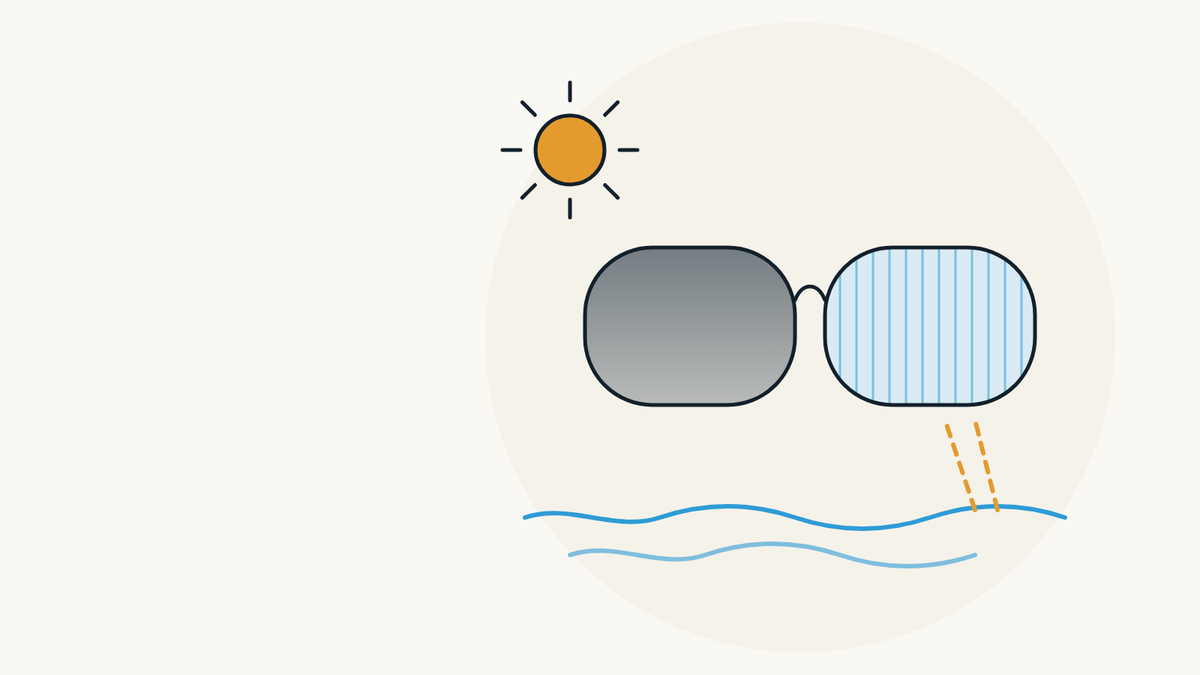
No. According to the AAO, the tinted or polarized lenses in "night" glasses are designed to reduce the amount of light reaching the eye, and anything that does that at night makes it harder to see, not easier. Another AAO page puts it plainly: tinted glasses should not be worn at night or in low lighting.
In daylight, dark or polarized lenses help with glare, behind the wheel and outdoors. At night, your eyes need all the light they can get. Our article on tinted lenses explains what each colour does.

Does anti-reflective coating help with night driving?
It cuts reflections without cutting light. According to the AAO, anti-reflective coating reduces glare and distracting reflections on the surface of your glasses. It goes on clear lenses: it does not tint them.
It is especially helpful with high-index lenses, which produce more glare, the AAO adds. Our article on anti-reflective coating explains what it does and who notices it most.

Why do you see halos around headlights at night?
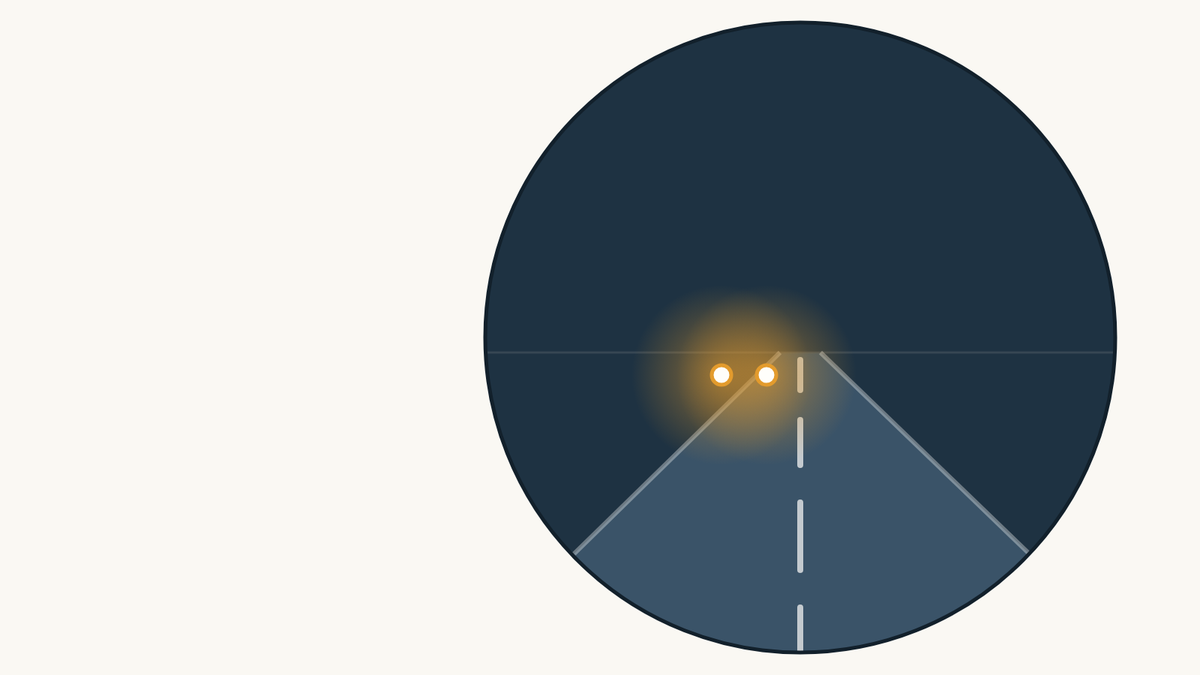
There are several possible causes. According to the AAO, a cataract can make vision blurry or dim and increase glare, halos or streaks around headlights and streetlights. Changes in the shape of the cornea affect how light is bent and can cause more glare or halos at night.
Dry eye can too, an AAO ophthalmologist answers: the glare can come from the dry, irregular surface of the cornea. The ophthalmologist adds that cataracts and other problems can cause the same symptom, which is why an exam should come before any conclusion. Our article on dry eye treatment covers what helps.

Can you need a different correction at night?
Yes, some people do. The AAO explains that in the dark the pupil gets bigger, and some people then become more nearsighted than in daylight. This night myopia makes distant objects look fuzzy.
According to the AAO, it can be a sign that you need glasses or a new prescription. And if your glasses are out of date, your night vision will be blurry just like your daytime vision. Our article on seven signs you need new glasses helps you spot it.

What should you check before driving at night?
The windshield, the headlights and your glasses. An ophthalmologist interviewed by the AAO suggests simple checks that, in this doctor's experience, address most night vision concerns behind the wheel:
- The windshield. Clean outside and inside; people often forget the inside, which smudges easily.
- The wipers. In good condition, replaced as needed.
- The headlights. Cleaned, since road grime coats them.
- Your glasses. Clean, with a prescription checked regularly.

Can scratched lenses make night driving harder?
Yes. The lens maker Hoya explains that fine scratches do more than dull your vision: they add glare and reflections at night while driving. You may not notice it right away.
Most scratches come from cleaning habits, such as wiping lenses dry with a shirt or a tissue. Our article on how to clean your glasses without scratching them gives the recommended method.

Is worsening night vision a sign to watch?
Yes, it is worth an exam. According to the AAO, declining night vision can be a sign of an eye condition, a temporary side effect of another condition, or a natural part of aging. Trouble seeing or driving at night can be one of the first symptoms of a cataract; glaucoma, dry eye and retinal disease are among the other possible causes.
The AAO notes that no home treatment or exercise improves night vision. When a condition is the cause, the right treatment can sometimes improve it, which is why it is worth getting checked.

Should you stop driving at night if you have a cataract?
The AAO advises limiting night driving once night vision, halos or glare become a problem. Among cataract symptoms, it lists extra sensitivity to light, especially oncoming headlights at night.
According to the AAO, surgery is often recommended when cataracts start to interfere with everyday tasks such as driving, reading or seeing well at night. It is a decision to make with your optometrist and the ophthalmologist, based on what you experience behind the wheel.

How often should you have your eyes checked?
Every two years from age 20 to 64, and every year from 65, for healthy adults, according to the Canadian Association of Optometrists (CAO). It points out that vision and eye health problems do not always cause noticeable symptoms.
If you notice a change at night (more halos, more glare, a blurrier road), do not wait for your scheduled exam: it is a good reason to book sooner.

Where can you have your night vision checked in Montréal?
At PrimeVision, 9520 Boulevard de l'Acadie, Suite 222, in Montréal (Ahuntsic), optometrists and a licensed optician work under one roof. The adult eye exam includes vision and prescription tests, a check of the health of both retinas and OCT imaging: it is the moment to mention that you see less well at night. In the shop, the licensed optician, Michel Geha, O.O.D., makes your glasses from your prescription and can walk you through lens options, including anti-reflective coating, with frames for every budget among more than 4,000 in store. RAMQ covers eye exams for children under 18 and adults 65+.
To see the options, visit our page on prescription glasses in Montréal, or book from our page on eye exams in Montréal.

Sources
- Driving at Night: Do Yellow-Tinted Lenses Improve Vision? (summary of Hwang et al., JAMA Ophthalmology, 2019), American Academy of Ophthalmology, November 1, 2019.
- No evidence to support benefits of yellow lens night-driving glasses, American Academy of Ophthalmology, August 29, 2019.
- Night Driving Glasses May Hurt, Not Help, American Academy of Ophthalmology, January 30, 2018.
- Night Vision, American Academy of Ophthalmology.
- Can Dry Eye Cause Nighttime Glare?, American Academy of Ophthalmology, September 12, 2014.
- What Are Cataracts?, American Academy of Ophthalmology.
- Glasses for Age-Related Macular Degeneration (AMD), American Academy of Ophthalmology.
- Tips for Choosing the Right Reading Glasses, American Academy of Ophthalmology, October 30, 2017.
- Everyday Habits That Ruin Your Glasses, Hoya Vision Care (lens maker).
- Recommended Frequency of the Comprehensive Eye Examination (position statement), Canadian Association of Optometrists, reviewed July 2024.
Find our eye care articles useful? Add PrimeVision as a preferred source in Google.
This article is general information and does not replace an eye exam.