Autorefraction and Keratometry: What These Eye Exam Readings Measure
The instrument you look into at the start of many eye exams, explained: what autorefraction and keratometry measure, how the readings are taken, why they are a starting point for your prescription, how keratometry differs from corneal topography, and why they do not check eye health.
By Michel Geha, O.O.D.
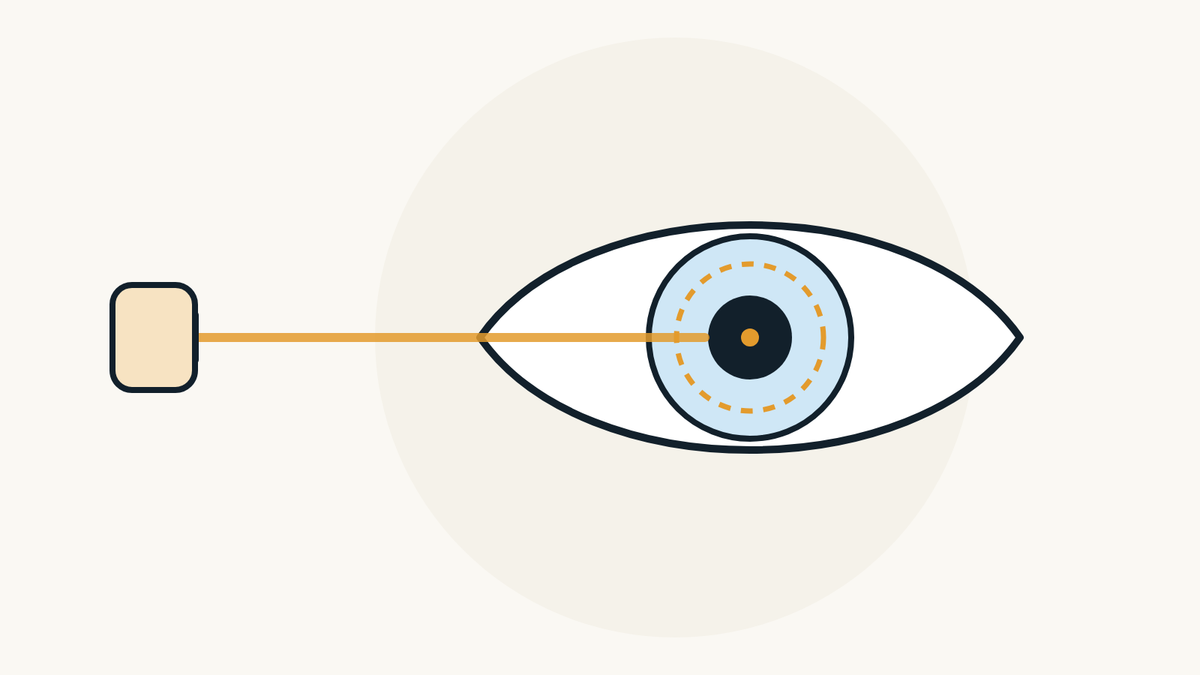
Autorefraction and keratometry are two readings taken by an instrument you look into during your eye exam. The first estimates the correction your eyes need, the second measures the curve of your cornea. Nothing touches the eye, and the result gives your optometrist a starting point for the rest of the exam.
What is autorefraction?
It is an automatic measurement of refractive error, meaning how your eye focuses light. According to the American Academy of Ophthalmology (AAO), the autorefractor shines a light into the eye and measures how it changes as it bounces off the back of the eye. This helps measure astigmatism and other refractive errors.
The most common refractive errors are nearsightedness, farsightedness and astigmatism.

What is keratometry?
It is the measurement of the curve of the cornea. The AAO describes the keratometer as the instrument that measures the curve of your cornea, the clear window at the front of the eye.
According to the AAO, astigmatism comes from a cornea or lens that is not evenly round. When the cornea is the cause, keratometry helps show it and tells which direction it lies in.

How are these readings taken?
You rest your chin, look into the instrument and keep your eye as still as you can while it lines up and takes its readings, one eye after the other. It does not hurt and nothing touches the eye.
The maker Nidek notes that alignment can be harder in children or in people whose eyes move a lot, and that its instrument has a quicker mode for them, whose results vary more.

Does autorefraction give me my prescription?
No, it gives a starting point. The AAO practice guideline on refractive errors explains that refraction can be measured objectively, for example with an autorefractor, or subjectively, and that in people who can respond, refining the result with a phoropter or trial lenses is preferred.
That is when you are asked "1 or 2?". According to the AAO, the prescription is written based on your answers. To understand the numbers that come out of it, see our article How to read your glasses prescription.

Why is the curve of the cornea useful?
Because it feeds several decisions. It helps measure astigmatism that comes from the cornea (AAO). The AAO guideline also recommends, in contact lens wearers suspected of corneal warpage, comparing keratometry with the starting readings.
The same guideline recommends keeping the keratometry readings taken before laser refractive surgery, because they can be needed later, for example before cataract surgery. Our article Contact lens prescription explains the other measurements in a fitting.

Keratometry or corneal topography: what is the difference?
Keratometry measures the curve of the cornea, while topography makes a full map of it. The AAO compares topography to a relief map: it shows distortions on the surface of the cornea, helps find early keratoconus and is used to plan some surgeries.
According to the AAO, topography is painless because nothing touches the eye. Your optometrist will tell you whether your case calls for such a map.

Why can the reading vary, especially in young people?
Because the eye can keep focusing during the reading. The AAO guideline says refraction should be done with this focusing relaxed, and that in some cases, especially in younger patients, a refraction after drops that relax it (cycloplegic refraction) can be useful.
The maker Nidek notes that its instrument can also measure this focusing, called accommodation. Drops that widen the pupil are explained in our article on pupil dilation.

Does autorefraction check the health of my eyes?
No. It measures correction, not eye health. According to the AAO, a complete exam also includes how the pupils respond, side vision, eye movements, eye pressure, a microscope exam of the front of the eye and an exam of the retina and optic nerve.
The maker Nidek mentions that its instrument also produces an image that helps assess an opacity inside the eye, but your optometrist makes the diagnosis, with the rest of the exam. Our article Why eye exams are important explains what a complete exam can find.

What about children?
The same readings exist, but they are often harder to take: the child moves, and their focusing works hard. That is why the instrument's result is confirmed with other tests.
At PrimeVision, children's eye exams start from age 4. Our page on children's eye exams explains what happens during the visit.

Which instrument takes these readings at PrimeVision?
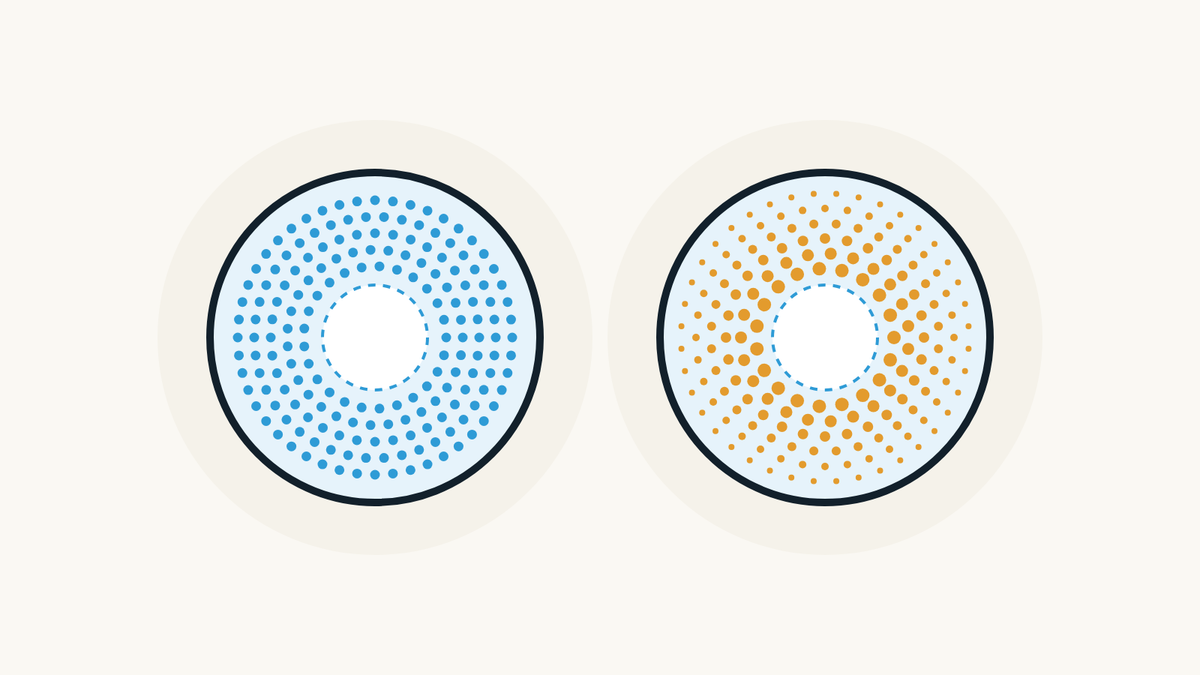
A Nidek Tonoref III. According to its maker's product page, this instrument combines an autorefractor, a keratometer, a non-contact tonometer and a non-contact pachymeter. Nidek states that its keratometry uses rings of light projected on the cornea, measured at diameters of 3.3 mm and 2.4 mm.
At PrimeVision, it is used for autorefraction, keratometry and the eye pressure reading. The rest of the visit is described on our page about the eye exam in Montréal.

Where can you have an eye exam with autorefraction in Montréal?
At PrimeVision, 9520 Boulevard de l'Acadie, Suite 222, in Montréal (Ahuntsic), optometrists and a licensed optician work under one roof. Autorefraction, keratometry and the eye pressure reading there are done with a Nidek Tonoref III. The adult eye exam includes vision and prescription tests, the health of both retinas and OCT imaging (Canon RS-330). Children's eye exams start from age 4. RAMQ covers eye exams for children under 18 and adults 65+.
Autorefraction and keratometry are part of the eye exam. To book, book ahead online: the times shown are the open ones.

Sources
- What Is Astigmatism? Causes, Symptoms, Treatments, American Academy of Ophthalmology, accessed November 4, 2026.
- Eye Exam and Vision Testing Basics, American Academy of Ophthalmology, accessed November 4, 2026.
- Refractive Errors & Refractive Surgery Preferred Practice Pattern, American Academy of Ophthalmology, 2017, accessed November 4, 2026.
- What Is Corneal Topography?, American Academy of Ophthalmology, accessed November 4, 2026.
- Auto Ref/Kerato/Tono/Pachymeter TONOREF III, Nidek, maker's product page, accessed November 4, 2026.
Find our eye care articles useful? Add PrimeVision as a preferred source in Google.
This article is general information and does not replace an eye exam.