The Refraction Test ("Which Is Clearer, 1 or 2?") Explained
The "1 or 2?" part of the eye exam explained: what a refraction test is, how the phoropter works, what to say when two lenses look the same, why each eye is tested on its own, how near vision is checked after 40, why drops are sometimes used for children, and why refraction alone is not a complete eye exam.
By Michel Geha, O.O.D.
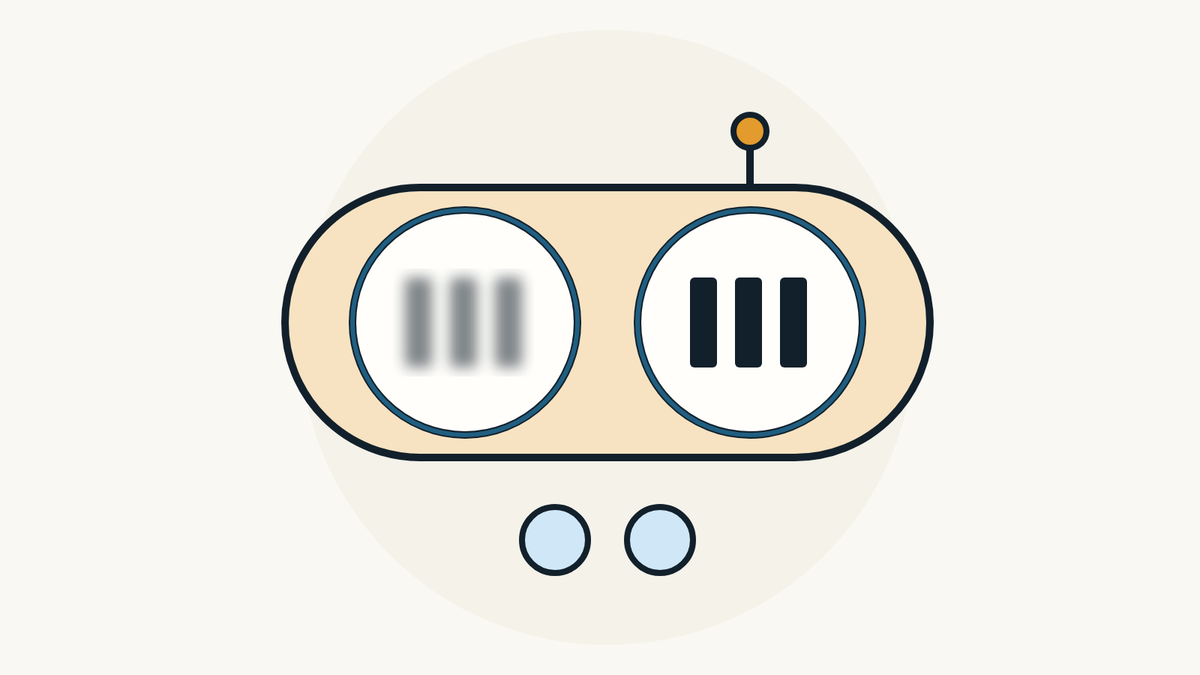
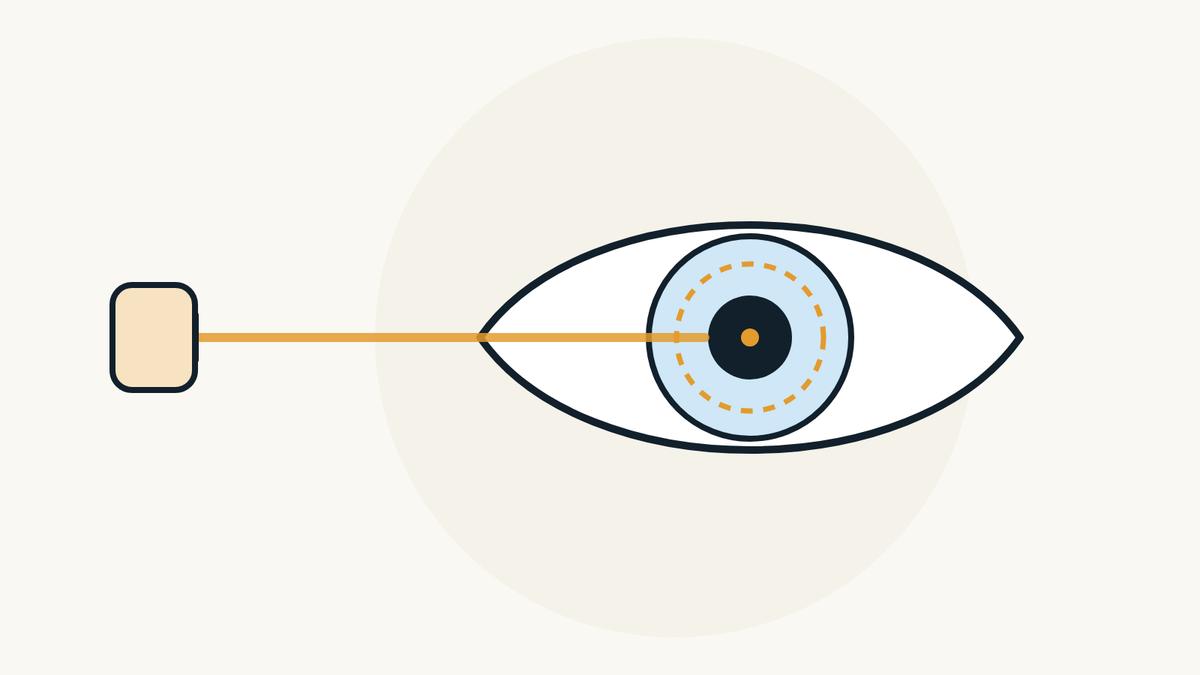
The refraction test is the part of the eye exam where you look at letters through an instrument and are asked: "1 or 2?". By comparing lenses, your optometrist finds the ones that make your vision clearest, and your answers become the numbers on your glasses or contact lens prescription.
What is a refraction test?
It is the test that sets your glasses or contact lens prescription. According to the American Academy of Ophthalmology (AAO), you look at an eye chart through a device that holds different lenses, and the test helps find the right correction for you.
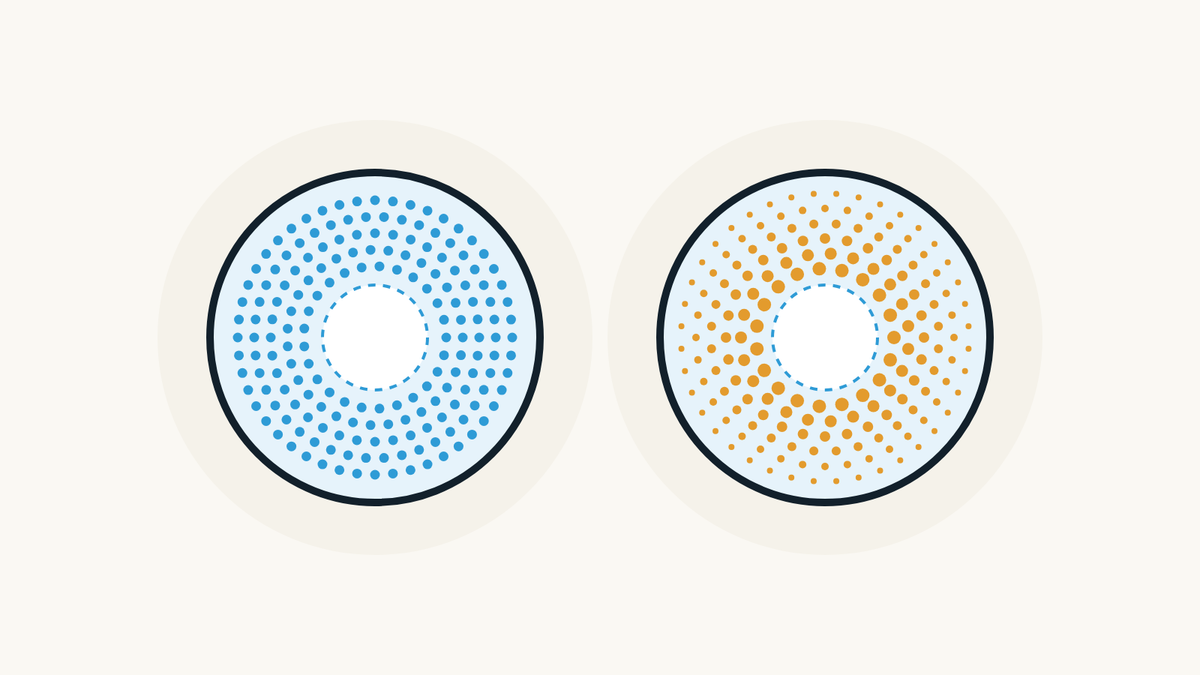
It measures refractive errors. The National Eye Institute (NEI) names four common ones: nearsightedness, farsightedness, astigmatism and presbyopia. The NEI notes that many people could be seeing better without knowing it.

What is a phoropter?
It is the large instrument placed in front of your face during the test. The AAO describes it as a large binocular-like device holding different lenses that the optometrist moves in front of your eyes.
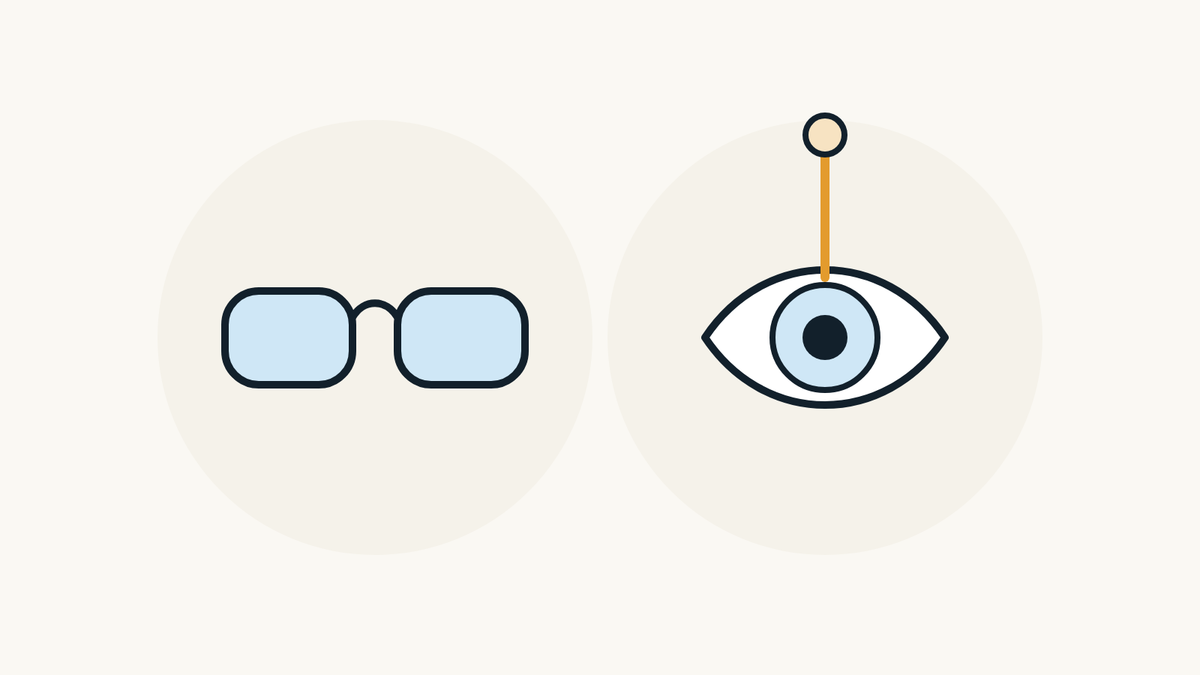
The AAO practice guideline on refractive errors also mentions another way to do it: trial lenses placed in a trial frame.

Why are you asked "1 or 2?"?
To compare two lenses and keep the one that makes the letters sharper. The AAO explains that you look through the phoropter and tell your doctor which letter you can see better, and that the prescription is written based on your answers.
Each comparison brings your optometrist closer to the correction that gives you the clearest vision, step by step.

What if the two lenses look the same?
Say so: it is a useful answer. The closer you get to the final result, the smaller the differences between two lenses become. The AAO guideline notes that when a refraction is repeated, results agree within 0.50 diopter, which shows that a small gap between two choices is normal.
There is no wrong answer. Take your time, and ask to see both lenses again if you are unsure.

Is each eye tested separately?
Yes. The AAO guideline states that each eye should be evaluated independently. For the chart reading, the AAO explains that you cover one eye while the other is tested.
The two eyes often need a different correction, and your prescription gives a value for each. The chart result is often written as 20/20 (6/6), explained in our article What 20/20 vision means.

Why not rely on the machine alone?
Because the machine gives an estimate, and your answers refine it. The AAO guideline explains that refraction can be measured objectively, for example with an autorefractor, or subjectively, and that in people who can respond, refining the result with a phoropter or trial lenses is preferred.
The automatic reading is explained in our article on autorefraction and keratometry.

How is near vision tested after 40?
With a reading card held at reading distance. The AAO guideline says near vision is usually measured on a well-lit reading card at about 36 cm (14 inches). In a person with presbyopia, the reading add is set at the distance they prefer for reading or work.
It helps to bring your current glasses and say at what distance you read or work on a screen. Our article on presbyopia explains why near vision changes with age.

Why are drops sometimes used for children?
Because a child's eye can focus hard during the test and throw off the result. The AAO guideline says refraction should be done with this focusing relaxed, that a refraction after drops (cycloplegic refraction) can be useful, especially in younger patients, and that a large difference between the two readings is often seen in children.
At PrimeVision, children's eye exams start from age 4. Drops that widen the pupil are explained in our article on pupil dilation.

What do my answers become on the prescription?
They become numbers. Sphere corrects nearsightedness (minus sign) or farsightedness (plus sign), cylinder and axis correct astigmatism, and the add gives extra power for near vision. These values come in steps of 0.25 diopter.
According to the AAO, the axis is given in degrees, from 0 to 180, and shows where the astigmatism lies. Our article How to read your glasses prescription explains each box.

Is refraction enough as an eye exam?
No. In an AAO article on online vision tests, an ophthalmologist points out that a refraction cannot replace a complete exam, because it cannot detect early stage eye disease.
According to the AAO, a complete exam also checks the pupils, side vision, eye movements, eye pressure, the front of the eye under a microscope, and the retina and optic nerve. See also our article Online eye test vs eye exam.

Where can you have an eye exam with a refraction in Montréal?
At PrimeVision, 9520 Boulevard de l'Acadie, Suite 222, in Montréal (Ahuntsic), optometrists and a licensed optician work under one roof. The adult eye exam there includes vision and prescription tests, the health of both retinas and OCT imaging (Canon RS-330); autorefraction is done with a Nidek Tonoref III. Children's eye exams start from age 4. With your prescription, the licensed optician takes the measurements for your glasses in the frame you choose. RAMQ covers eye exams for children under 18 and adults 65+.
Refraction is part of the eye exam in Montréal. To book, book ahead online: the times shown are the open ones.

Sources
- Eye Exam and Vision Testing Basics, American Academy of Ophthalmology, accessed November 4, 2026.
- What Is Astigmatism? Causes, Symptoms, Treatments, American Academy of Ophthalmology, accessed November 4, 2026.
- Refractive Errors & Refractive Surgery Preferred Practice Pattern, American Academy of Ophthalmology, 2017, accessed November 4, 2026.
- Vision Correction Goes Online, EyeNet, American Academy of Ophthalmology, accessed November 4, 2026.
- Refractive Errors, National Eye Institute, accessed November 4, 2026.
Find our eye care articles useful? Add PrimeVision as a preferred source in Google.
This article is general information and does not replace an eye exam.