Presbyopia: Why Close-Up Reading Gets Harder After 40
What presbyopia is, when it starts, its symptoms and cause, how it differs from farsightedness, whether it can be prevented, drugstore readers, glasses and contact lens options, drops and surgery, how often to update glasses and when a change in vision is urgent.
By Michel Geha, O.O.D.
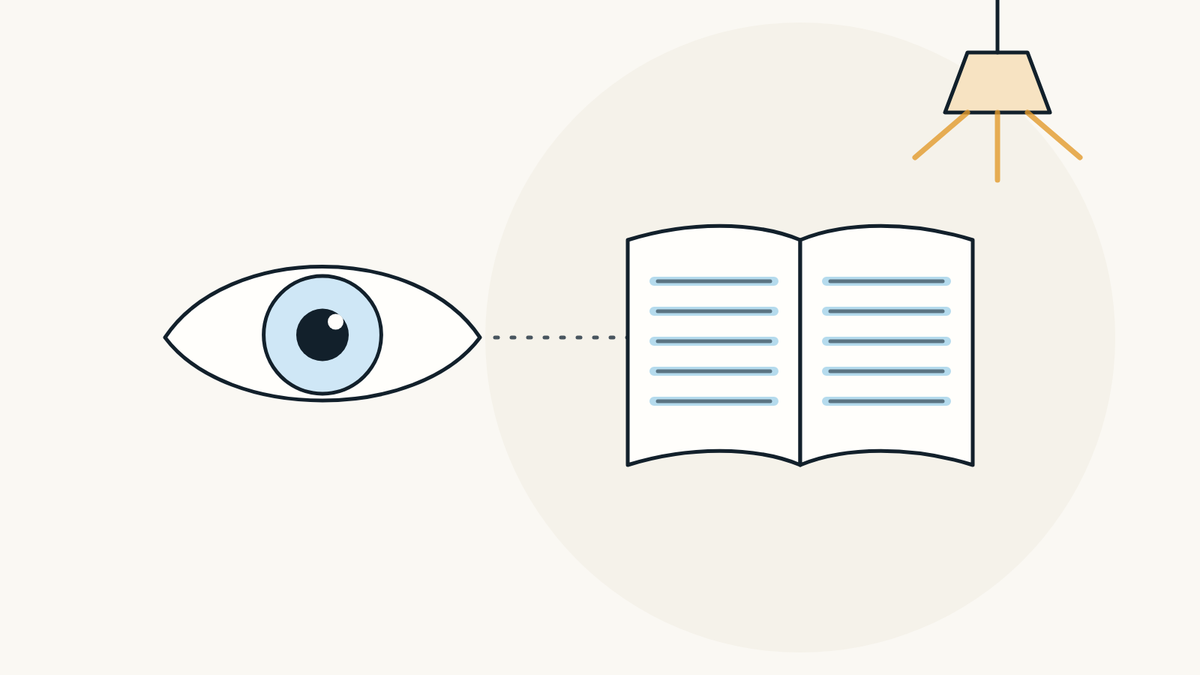
Presbyopia is the gradual loss of close-up vision that comes with age: the eye's lens loses its flexibility and focuses less well up close. It is usually noticed between 40 and 45. It cannot be prevented, but reading glasses, progressive lenses or contact lenses correct it.
What is presbyopia?
It is the gradual loss of the ability to see clearly up close. The American Academy of Ophthalmology (AAO) explains that it is part of normal aging: the lens, the eye's natural lens behind the iris, becomes more rigid after 40 and cannot change shape as easily.
The Canadian Association of Optometrists (CAO) describes it the same way: the lens loses its elasticity and flexibility. Reading, threading a needle or looking at a screen up close becomes harder.

At what age does presbyopia start?
Around 40 to 45. According to the CAO, it usually becomes noticeable between 40 and 45 and progresses until the late 40s or early 50s. The AAO says shortly after 40, and the National Eye Institute (NEI) usually after 45.
The NEI adds that presbyopia gets worse over time but usually stops getting worse after 65. The Mayo Clinic notes that nearly everyone develops blurry near vision sometime after 40.

What are the symptoms of presbyopia?
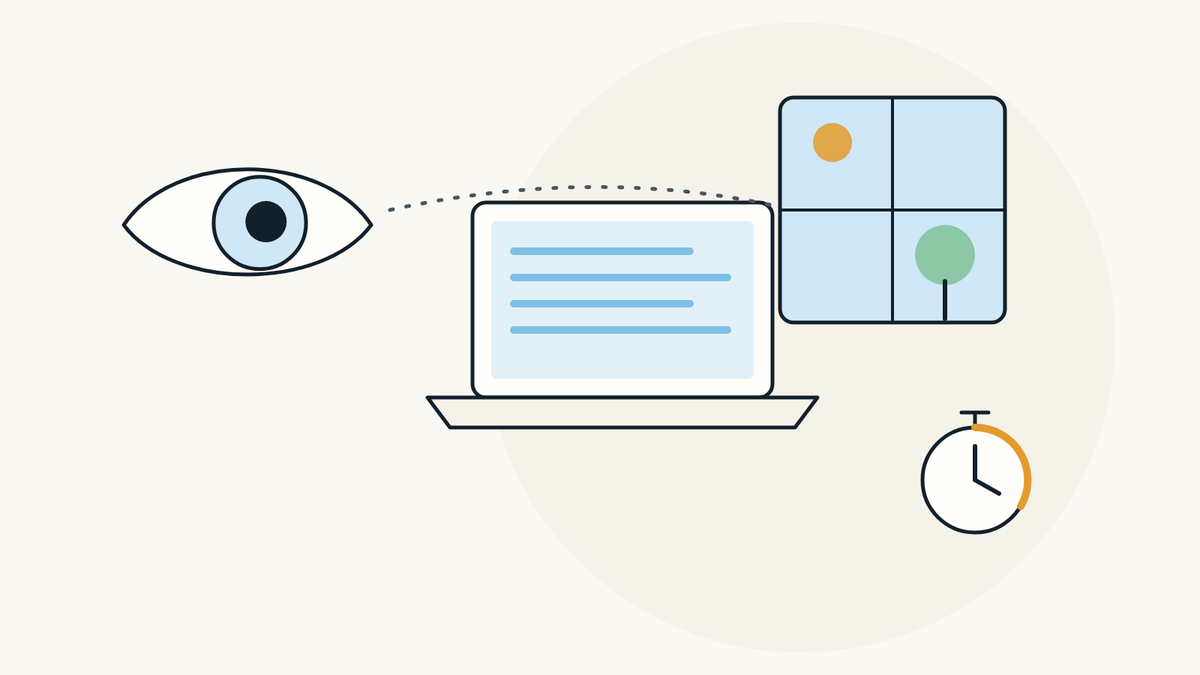
Most often, holding things farther away. The CAO lists holding reading material at arm's length, blurred vision at a normal reading distance, difficulty reading in dim light, and eye fatigue or headaches during close work.
The Mayo Clinic describes the same signs. If headaches keep coming back after reading or screen time, our article on headaches and vision explains when the eyes are the cause.

Why does close-up vision get worse with age?
Because the lens bends less easily. The Mayo Clinic explains that a small circular muscle surrounds the lens and makes it rounder to focus up close. With age, the lens becomes less flexible: it no longer rounds enough, and near things blur.
The Mayo Clinic adds that some factors can bring presbyopia on before 40: farsightedness, long-term conditions such as diabetes or heart and blood vessel disease, and some medicines, including antidepressants, antihistamines and diuretics.

Presbyopia or farsightedness: what is the difference?
They are two different problems. The NEI notes that presbyopia is not farsightedness, another refractive error that also makes close-up vision hard. The NEI adds that many people with presbyopia also have another refractive error.
The CAO notes that presbyopia can make nearsightedness, farsightedness and astigmatism more challenging. To understand farsightedness, read our article on hyperopia.

Can you prevent or slow presbyopia?
No. The AAO says there is no way to stop or reverse the normal aging that causes presbyopia, and the Mayo Clinic also says it cannot be prevented.
Until it is corrected, the NEI and the Mayo Clinic advise good light for reading, and the NEI suggests larger print. The Mayo Clinic also recommends regular eye exams, and the 20-20-20 rule during close work: every 20 minutes, look at something about 20 feet (6 metres) away for 20 seconds.

Are drugstore reading glasses enough?
Sometimes. The AAO says that if presbyopia is your only vision problem, reading glasses may be all you need, and that they are sold without a prescription, but that the power you need should be determined by an eye exam.
The Mayo Clinic adds that prescription glasses usually become necessary if you need a stronger lens, or if you already have a prescription for nearsightedness, farsightedness or astigmatism. Our article on drugstore reading glasses covers their limits.

Bifocals, progressives or office lenses: which glasses for presbyopia?
It depends on what you do during the day. The Mayo Clinic describes reading-only glasses, bifocals (a visible line separates the top for distance from the bottom for near), trifocals, progressives with no visible line, and office progressives for screen distance and reading, which do not correct distance vision for driving.
The CAO notes that if you switch between distances often during the day, multifocal or progressive lenses may suit you. Our article on single vision, bifocal or progressive lenses compares the options, and getting used to progressive lenses covers the first weeks.

Can contact lenses correct presbyopia?
Yes, in two ways. With monovision, the AAO explains, one eye is corrected for distance and the other for near; it takes getting used to, and you may lose some ability to judge distance or speed.
Multifocal contact lenses have several zones of power, and the brain learns to pick the right one. The AAO notes that vision may be a little less sharp than with a single-power lens, and the Mayo Clinic that some people find it not as good as with progressive glasses. Your optometrist can tell you what suits your eyes.

Are there eye drops or surgery for presbyopia?
Yes, with limits. The Mayo Clinic and the AAO describe prescription drops that shrink the pupil for a few hours and are used every day. Both sources describe approval in the United States; the Mayo Clinic says they are approved for adults aged 40 to 55 and that pilocarpine may increase the risk of retinal detachment. Ask your optometrist what is available in Canada.
For surgery, the AAO and the Mayo Clinic list monovision by laser, lens replacement with an implant, and corneal inlays. The Mayo Clinic notes that even after surgery, readers may still be needed, and advises trying monovision or multifocal contact lenses first.

How often do you need new glasses with presbyopia?
Usually every two to three years between 40 and 55. The CAO explains that the loss of near focus typically happens over about ten years, and that to keep clear vision between 40 and 55, eyewear usually needs updating every two to three years.
If you already hold your phone farther away than before, our article on signs you need new glasses can help you decide.

When does a change in vision need prompt care?
When it is sudden. Presbyopia comes on slowly; the Mayo Clinic advises immediate care for a sudden loss of vision in one eye, with or without pain, sudden hazy or blurred vision, flashes of light, black spots or halos around lights, or double vision.
These signs may point to a more serious eye or health problem. Our urgent eye care page explains what to do first.

Where can you have your near vision checked in Montréal?
At PrimeVision, 9520 Boulevard de l'Acadie, Suite 222, in Montréal (Ahuntsic), optometrists and a licensed optician work under one roof. The optometrist measures your distance and near vision and checks the health of your eyes. For reading glasses, bifocals or progressives, the optician measures your pupillary distance with a pupillometer and a ruler, and the clinic works with Essilor, Hoya and Nikon lenses as an authorized dealer of all three. RAMQ covers eye exams for children under 18 and adults 65+, and we see children from age 4.
To book, go through our page on an eye exam for near and distance vision: book online, the times shown are the open ones.

Sources
- Presbyopia, Canadian Association of Optometrists.
- What Is Presbyopia?, American Academy of Ophthalmology, May 21, 2026.
- Could Presbyopia Eyedrops Replace Reading Glasses for Aging Eyes?, American Academy of Ophthalmology, October 28, 2025.
- Presbyopia: Symptoms and causes, Mayo Clinic, July 1, 2026.
- Presbyopia: Diagnosis and treatment, Mayo Clinic, July 1, 2026.
- Presbyopia, National Eye Institute, December 4, 2024.
Find our eye care articles useful? Add PrimeVision as a preferred source in Google.
This article is general information and does not replace an eye exam.