Double Vision: One Eye or Both, Common Causes and When to Get Checked Fast
What double vision is, the close-one-eye check, causes in one eye and in both eyes, double vision when reading, stroke signs, when to get seen fast, children, the tests used, treatments and prism lenses.
By Michel Geha, O.O.D.
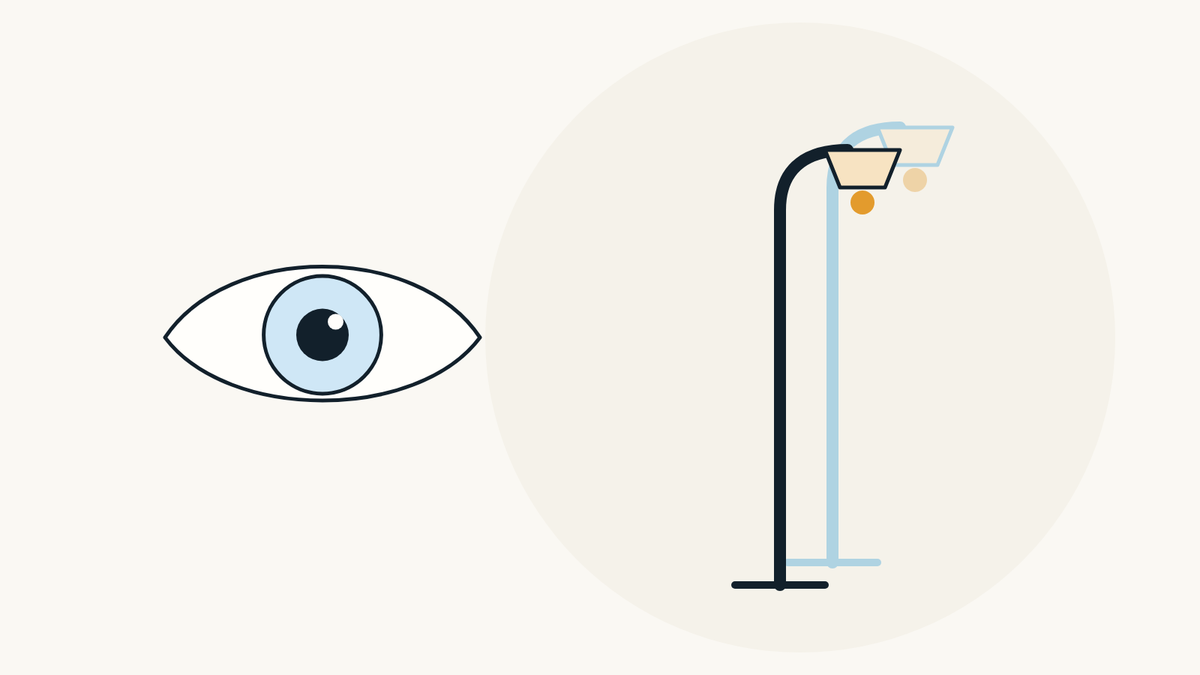
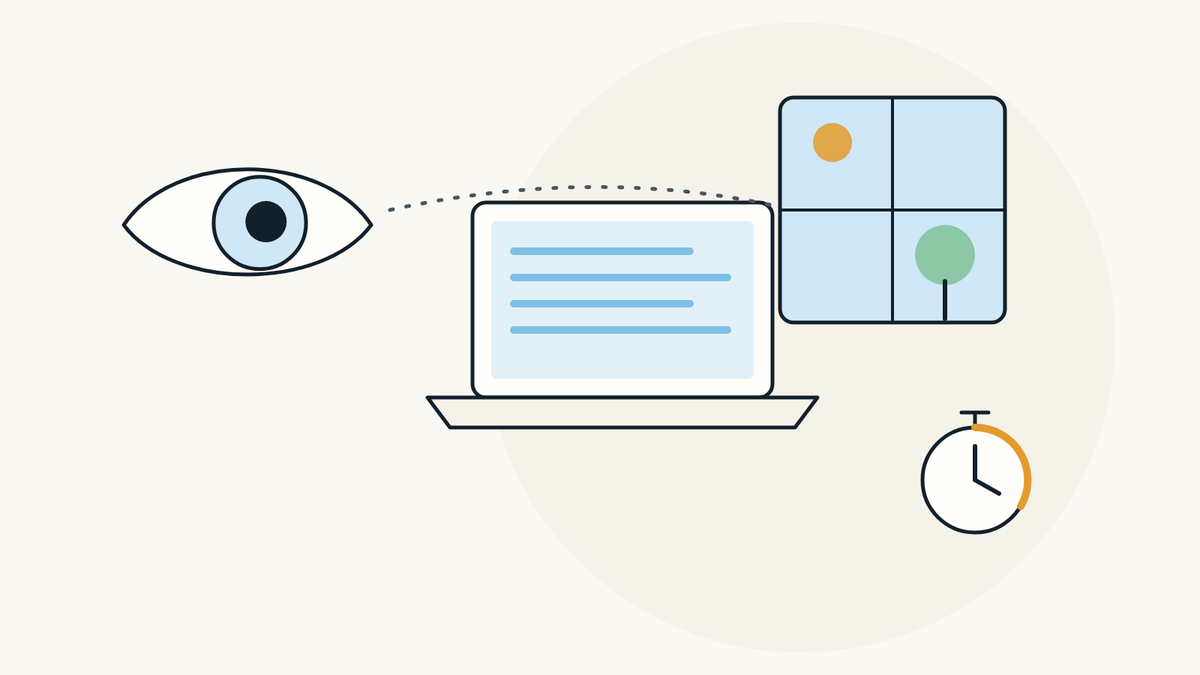
Double vision, or diplopia, means seeing two images of one object. If the second image goes away when you close either eye, the two eyes are no longer lined up; if it stays on one side, the cause is in one eye. New double vision always deserves a prompt assessment.
What is double vision?
It is seeing two images, often overlapping, of a single object. The American Academy of Ophthalmology (AAO) defines it this way, and the Canadian Association of Optometrists (CAO) notes that double vision is not the same as blurred vision.
The medical term is diplopia. EyeWiki, the AAO's medical encyclopedia, distinguishes horizontal double vision, where the extra image sits beside the real one, from vertical double vision, where it sits above it.

Double vision in one eye or both: how can you tell?
By closing one eye, then the other. EyeWiki explains that the right question is: does the double vision go away when you close either eye? If so, it is binocular: it comes from the eyes being out of alignment.
If the double image stays when you close the good eye, and only goes away when you close the affected eye, it is monocular: the cause is in that eye. Note what you see; it is useful information for the optometrist.

What causes double vision in one eye?
Most often, an optical problem. EyeWiki lists uncorrected astigmatism, an irregular cornea, tear film problems and cataract. The CAO also names cataract, uncorrected astigmatism and keratoconus, which split one image into two.
These causes have known solutions: glasses or contact lenses for astigmatism, surgery for a cataract. Our article on astigmatism explains this vision problem and how it is corrected.

What causes double vision in both eyes?
Eyes that no longer line up. The CAO explains that when the eyes do not point in the same direction (strabismus), the brain cannot merge the two images. The AAO notes that strabismus comes from problems with the eye muscles, the nerves that control them, or both.
In adults, the AAO lists diabetes, thyroid eye disease, myasthenia gravis, a brain tumour, stroke, head injury and damage to an eye muscle during surgery among the causes. That is why double vision in both eyes should be assessed promptly.

Why do you see double mostly when reading?
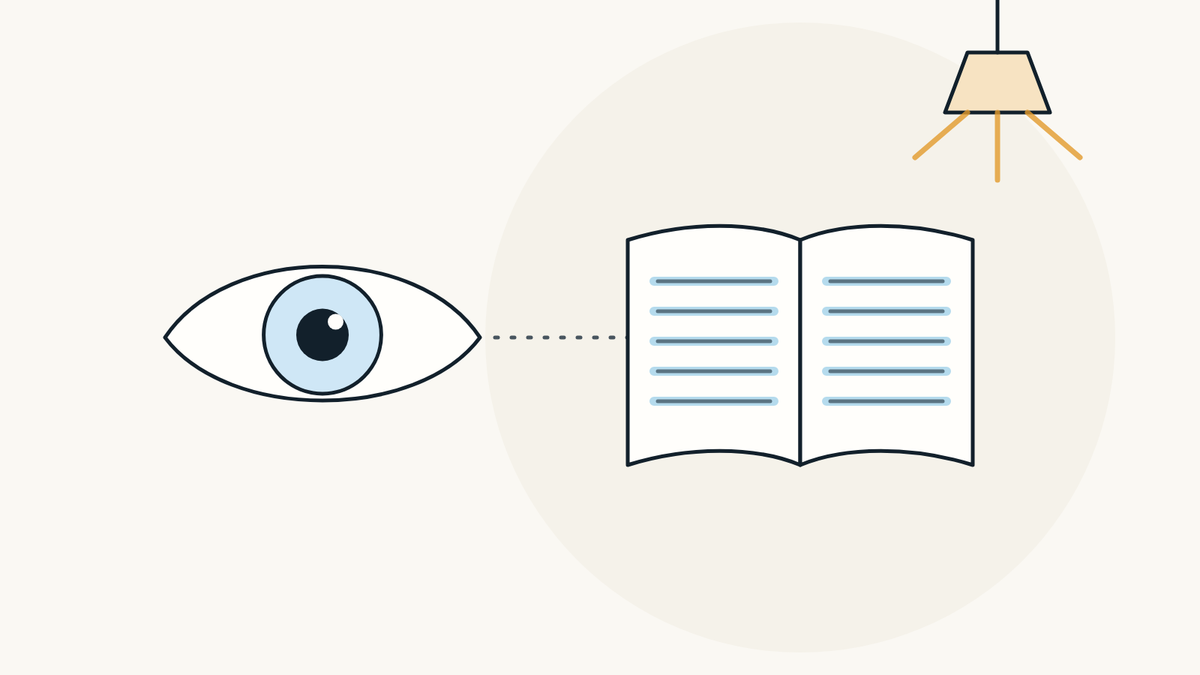
Sometimes it is convergence insufficiency. The AAO explains that in this condition the eyes do not turn inward enough for close work. It is most common in children and young adults.
During reading, the AAO describes double vision, headaches, blur, words that seem to move and eye fatigue, and notes that school screenings often miss it. If headaches follow reading, our article on headaches and vision can help.

Double vision and stroke: when should you call 911?
When other stroke signs come with it. The Mayo Clinic says a stroke can cause double vision, and lists other signs: trouble speaking or understanding, numbness or weakness of the face, arm or leg, often on one side, a sudden severe headache, and loss of balance.
The Mayo Clinic recalls the FAST check: face drooping, arm drifting down, speech slurred, time to call 911. It advises calling 911 right away, even if symptoms come and go.

When does double vision need a prompt visit?
As soon as it is new. EyeWiki notes that pain in or behind the eye may point to a problem in the eye socket, that a headache may point to a cause inside the head, and that a sudden, very severe headache can signal bleeding around the brain.
EyeWiki adds that a drooping eyelid with a larger pupil can point to a problem with one of the eye's nerves. The AAO also lists a black eye among the problems linked to double vision: after a blow to the head or eye, get checked promptly. Our urgent eye care page explains what to do first.

Do children see double?
Often not, even when an eye turns. The AAO explains that in children, the brain learns to ignore the image from the turned eye: the child loses some depth perception but often does not see double. Adults whose strabismus starts later tend to see double, because they cannot ignore the second image.
The CAO notes that in young children, long suppression can lead to amblyopia (lazy eye), which is harder to treat than a refractive problem. At PrimeVision, children's exams start from age 4; our article on your child's first eye exam explains what is checked.

How does the optometrist find the cause?
With a series of simple tests. EyeWiki describes the pinhole test: if double vision in one eye improves when looking through a small hole, the cause is most often optical. The cover test, where one eye and then the other is covered, reveals misalignment, and prisms are used to measure it.
The exam also checks eye movements in every direction and how the pupils react. For convergence insufficiency, the AAO mentions testing for double vision, measuring the misalignment with prisms and checking vision and the eye muscles.

How is double vision treated?
By treating the cause. The CAO says astigmatism is corrected with lenses, a cataract leads to a referral for surgery, and strabismus is treated with exercises, surgery or both, avoiding surgery where possible.
For adult strabismus, the AAO describes prism glasses for mild double vision, exercises for convergence insufficiency, surgery, the most common treatment, and botulinum toxin injections. When the cause is a disease such as diabetes or thyroid disease, its treatment is up to the physician.

What is a prism lens?
It is a lens that shifts the image one eye sees. The AAO explains that prism glasses can help some people with mild double vision, and that for convergence insufficiency they can reduce double vision.
The prism is prescribed by the optometrist or physician and written on the glasses prescription. Our article on how to read your glasses prescription explains the other numbers on it.

Where can you have double vision assessed in Montréal?
At PrimeVision, 9520 Boulevard de l'Acadie, Suite 222, in Montréal (Ahuntsic), optometrists and a licensed optician work under one roof. New double vision should be assessed by an optometrist. Urgent problems are seen when there is availability; otherwise, depending on severity, the clinic recommends going to the emergency department. If an ophthalmologist needs to see you, the clinic sends the referral directly and gives you a copy; the wait depends on the hospital or clinic receiving it. RAMQ covers eye exams for children under 18 and adults 65+.
To book, go through our see an optometrist in Montréal page: book online, the times shown are the open ones. With stroke signs, call 911.

Sources
- Double Vision, Canadian Association of Optometrists, March 11, 2023.
- Double Vision, American Academy of Ophthalmology, July 26, 2023.
- What Is Adult Strabismus?, American Academy of Ophthalmology, June 24, 2026.
- Convergence Insufficiency, American Academy of Ophthalmology, May 18, 2021.
- Basic Approach to Diplopia, EyeWiki, American Academy of Ophthalmology, accessed November 1, 2026.
- Stroke: Symptoms and causes, Mayo Clinic.
Find our eye care articles useful? Add PrimeVision as a preferred source in Google.
This article is general information and does not replace an eye exam.