Online Glasses or an Optician: What Changes for Your Eyes
Can you buy prescription glasses online, what Québec law says, what you need to order, what an optician does, what studies found on accuracy, impact and fit, pupillary distance and height, progressives, who should avoid it, signs of poorly made glasses, price, the eye exam and what to do if your glasses bother you.
By Michel Geha, O.O.D.
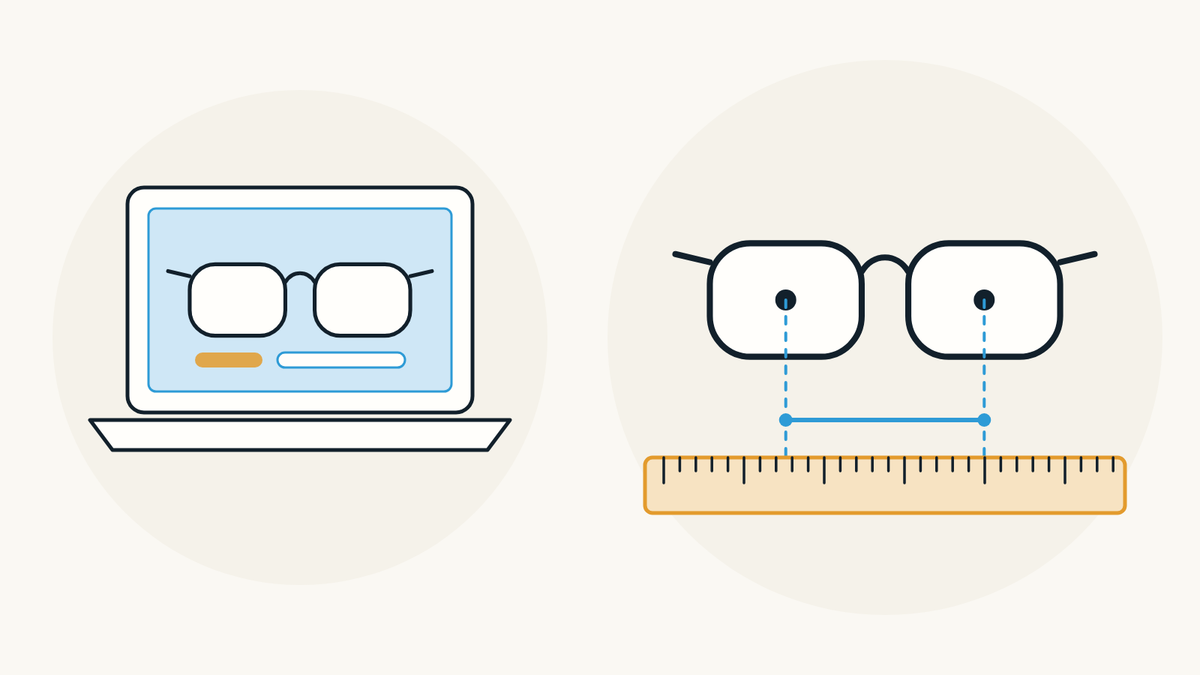
Yes, you can buy prescription glasses online, but you then do the optician's job yourself: you supply your pupillary distance, pick the frame size and, for progressives, the lens height. The Canadian Association of Optometrists advises against it for children, strong or complex prescriptions and multifocal lenses.
Can you buy prescription glasses online?
Yes, but ordering glasses online is not like buying an ordinary item. The Canadian Association of Optometrists (CAO) writes that when you order glasses online, you take on the role of a trained optical dispenser: you take the measurements and decide on the frame, the lenses and the material.
The CAO stresses one point: the prescription from your optometrist is only one part of what decides how well you will see with your new glasses. The rest is the measurements, the frame and the lenses chosen for you.

What does the law say in Québec?
In Québec, the Dispensing Opticians Act (Loi sur les opticiens d'ordonnances) defines the profession as fitting, adjusting, replacing or selling an ophthalmic lens, and reserves those acts to licensed opticians, subject to the rights of other professionals such as optometrists. The optician works from a physician's or an optometrist's prescription. These sections are quoted by the Ordre des opticiens d'ordonnances du Québec in its telepractice directive.
The law makes one exception: anyone may sell ready-to-wear single vision reading glasses whose power is spherical only, the same in both lenses, and between +0.50 and +3.25 dioptres.

What do you need to order glasses online?
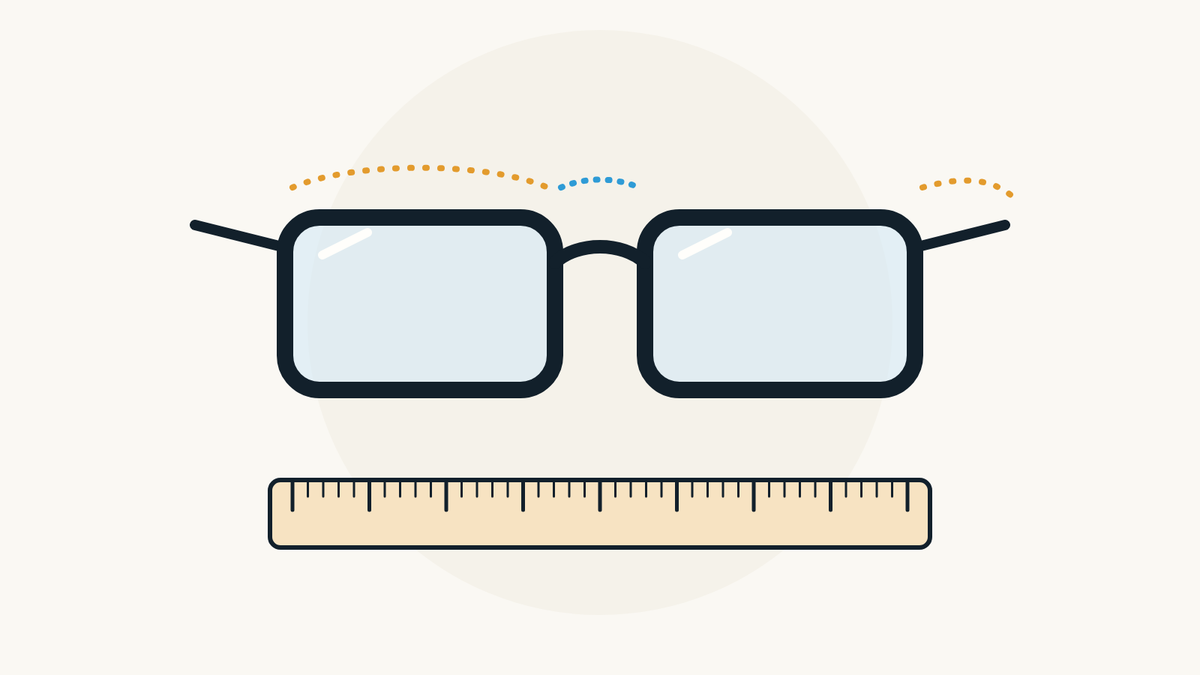
You need an up-to-date prescription from a complete eye exam, plus several measurements the website will ask for. The CAO names pupillary distance, the size and shape of the frame, and the height of the optical centre in the frame. For bifocal or progressive lenses, you also need the height of the segment or of the progressive corridor.
Your prescription gives the power of the lenses. To read it, see our article on how to read a glasses prescription.

What does an optician do that an online order does not?
The optician takes the measurements on you, in the frame you chose, then adjusts the frame to your face. The CAO lists ten decisions for clear, comfortable glasses: pupillary distance, frame size and shape, lens design, lens material (which affects thickness and safety), coatings, lens curvature, the height of the optical centre, the height of the bifocal or progressive, and adjusting the frame.
Online, most of those choices are yours. In a shop, the optician makes them with you, from your prescription and from what you do all day.

Are glasses bought online accurate?
Often, but not always. Three studies measured glasses ordered online, in the United States and the United Kingdom; we found no Canadian study.
- In 2011, in the United States, out of 154 pairs received, at least one lens missed an optical tolerance in 28.6% of cases (Citek et al., Optometry). Some pairs were also made wrong: single vision lenses instead of multifocals, or a coating added or left out.
- In 2021, another US study ordered 300 pairs from three sellers: almost 1 prescription in 10 did not meet the standards (Gordon et al., Optometry and Vision Science). The authors see a clear improvement, but they did not check where the lenses sat in front of the eyes or how the frame fit.
- In 2016, in the United Kingdom, lens quality and prescription accuracy were similar online and in practices (Alderson et al., Optometry and Vision Science). The difference came from elsewhere, as shown below.

Do lenses ordered online pass impact tests?
The results depend on the study. In 2011, at least one lens failed impact testing in 22.7% of the pairs ordered online. In 2021, no lens failed that test. The 2016 UK study did not measure it.
Material matters: the American Academy of Ophthalmology (AAO) notes that polycarbonate is highly impact resistant and is often recommended for sports. Our article on lens materials compares the options.

Why does frame fit matter so much?
Because that is where glasses bought online were most often found lacking. In the UK study, 33 people bought 154 pairs online and 154 in practices. They judged 43 online pairs unacceptable against 15 from practices, and 14 online pairs unsafe against 5 from practices.
The authors put the gap down to poor frame fit, poor appearance and an optical centre in the wrong place. For half of the pairs judged unsafe, the problem was the frame fit, not the lens power. Participants also preferred the glasses from practices. The authors note, however, that almost all of them had bought their glasses in practices before the study, which may have swayed their choice.

What about pupillary distance and fitting height?
These are the measurements that place the centre of each lens in front of your pupil, and online they are often approximate. The UK study notes that websites often used an average value or asked customers to measure their own pupillary distance, in a mirror or with a friend's help, and these measurements are often inaccurate.
For progressives, seven websites out of ten did not mention fitting height. The six pairs whose height was beyond the 4 mm tolerance all came from online sellers that gave no information about this measurement. Our article on pupillary distance and fitting height explains how they are taken.

Can you order progressive lenses online?
You can, but the CAO advises against buying online for any multifocal prescription. In the UK study, participants ranked progressives from practices 2nd on average out of ten pairs, against 6.5th for those bought online.
A progressive lens already brings some blur in the lower field of vision and distortion toward the sides of the lens. If the height or pupillary distance is wrong, that blur and distortion can increase, the authors write, and they recall that progressives are a risk factor for falls in older people. To understand the lens types, see single vision, bifocal or progressive lenses.

Who should not buy glasses online?
The CAO advises against buying glasses online for children and for people with a high prescription, a complicated prescription, a multifocal prescription or a face that is hard to fit. In those cases, a small measuring error is felt more.
For children, the frame has to stay on during play and grow with them: our article on glasses for kids covers it.

What are the signs that glasses were made poorly?
According to the CAO, poorly chosen glasses can cause headaches, fatigue, nausea, dizziness, eyestrain or a pulling feeling in the eyes. They can also slip down the nose or leave sore marks on the nose or behind the ears.
These problems can show up right away or after a while. A short adjustment period is normal with new glasses, especially when the prescription changed: our article on why new glasses feel strange helps tell the difference.

What can you buy online without an optician?
A frame on its own, non-prescription sunglasses and ready-to-wear reading glasses. Those are the products the Ordre des opticiens d'ordonnances du Québec names as sellable this way, and reading glasses must fit the exception set by law (same spherical power in both lenses, from +0.50 to +3.25).
Ready-made readers suit some people, not everyone. Our article on drugstore reading glasses explains when they are enough.

Are glasses cheaper online?
Often, yes: in the UK study, glasses bought online cost less, and frame quality rose with price. The AAO notes that designer frames are not needed for good glasses, but that you should not skimp on the lenses, especially bifocals, trifocals and progressives.
At PrimeVision, more than 4,000 frames are in store, not only luxury ones, across a wide range of prices. That is our view: as an independent clinic, it is easier for us to compete with the large chains on price.

Do you still need an eye exam?
Yes. The CAO advises a complete eye exam first, for an up-to-date prescription, then the final fitting by your optometrist or optician. A vision test on a website or an app does not replace that exam: our article on the online eye test explains why.
To book, see our eye exam page for Montréal: book online, the times shown are the open ones.

What should you do if glasses ordered online bother you?
Have the lenses and measurements checked, then the prescription if needed. An optician can measure the power of the lenses and see whether their optical centre sits in front of your eyes. If the glasses match the prescription and the symptoms stay, see your optometrist: your vision may have changed.
Do not get used to headaches or dizziness thinking they will pass. According to the CAO, they are common complaints with poorly chosen glasses.

Online glasses or an optician in Montréal: what does PrimeVision do?
At PrimeVision, 9520 Boulevard de l'Acadie, Suite 222, in Montréal (Ahuntsic), optometrists and a licensed optician work under one roof. The licensed optician, Michel Geha, O.O.D., measures pupillary distance with a pupillometer and a ruler, then takes the measurements in the frame you chose, among more than 4,000 frames in store across a wide range of prices. PrimeVision is an authorized dealer of Essilor, Hoya and Nikon lenses, and adjustments and minor repairs are done in the shop. RAMQ covers eye exams for children under 18 and adults 65+.
Here is what we see in the shop: an online order has no optician to measure in the frame you chose. The optician also makes suggestions, listens to your needs, both the measured ones and the ones you describe, and adapts the measurements to how you use your glasses. The optician never changes the prescription: if it needs adjusting, the optician works with the optometrist or physician who wrote it. The clinic is also developing its own face-based measuring technology; it is in development. To see our frames and lenses, visit our page on prescription glasses in Montréal.

When should you see an optometrist?
See one when headaches, eyestrain or dizziness last with your glasses, even after having them checked, or when your last exam was a long time ago.

Sources
- Buying Glasses Online, Canadian Association of Optometrists, updated March 27, 2023.
- Acheter des lunettes en ligne, Canadian Association of Optometrists, updated March 27, 2023 (in French).
- Directive concernant la télépratique, Ordre des opticiens d'ordonnances du Québec, April 7, 2020 (quotes sections 8, 9 and 15 of the Dispensing Opticians Act; in French).
- Citek K et al., Safety and compliance of prescription spectacles ordered by the public via the Internet, Optometry, 2011;82(9):549-555.
- Gordon A et al., Accuracy and Repeatability of Internet-ordered Spectacle Lenses, Optometry and Vision Science, 2021.
- Alderson AJ et al., A Comparison of Spectacles Purchased Online and in UK Optometry Practice, Optometry and Vision Science, 2016;93(10):1196-1202.
- Eyeglasses: How to Choose Glasses for Vision Correction, American Academy of Ophthalmology, June 14, 2023.
Find our eye care articles useful? Add PrimeVision as a preferred source in Google.
This article is general information and does not replace an eye exam.