How Often Should You Have an Eye Exam? A Schedule by Age
How often to have an eye exam at every age, according to the Ordre des optométristes du Québec and the Canadian Association of Optometrists: children, adults 18 to 39 and 40 to 64, 65 and over, contact lens wearers, diabetes, other risks, and what RAMQ covers each year.
By Michel Geha, O.O.D.
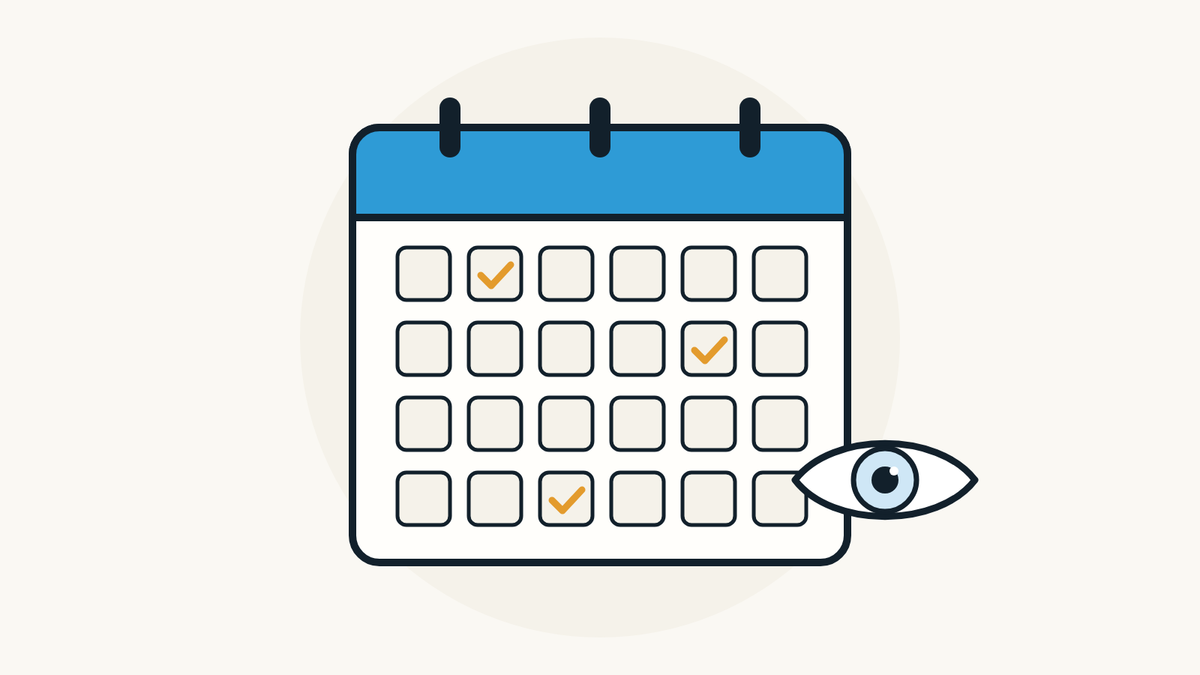
In Québec, the Ordre des optométristes recommends an eye exam every year during the school years, every 2 to 3 years from 18 to 39, every 2 years from 40 to 64 and every year from 65. Diabetes, contact lenses or eye disease in the family can call for more frequent exams.
How often should you have an eye exam?
It depends mostly on your age and your risk factors. For someone with no symptoms and no particular risk, the Ordre des optométristes du Québec (OOQ) recommends an exam every 2 to 3 years from 18 to 39, every 2 years from 40 to 64 and every year from 65. For children, it recommends an exam around age 3, another before starting school, then one every year through the school years.
The Canadian Association of Optometrists (CAO) gives a very similar schedule: every year from 6 to 19, every 2 years from 20 to 64, and every year or as your optometrist recommends from 65. Both say that only the professional who examines you can set the time of your next visit, based on your health and family history.

At what age should a child have a first eye exam?
The OOQ recommends a first exam around age 3, then another before starting school. The CAO recommends at least one exam between 2 and 5. A child does not always complain about seeing poorly: they often think everyone sees the way they do, and the exam is how you find out.
At PrimeVision, children's eye exams are done from age 4. Our article on a child's first eye exam explains how the visit goes and how to prepare for it.

Should a school-age child see the optometrist every year?
Yes, according to the OOQ and the CAO: one exam a year through the school years. A child's vision changes quickly while they grow, and nearsightedness that appears or increases can call for new lenses from one year to the next.
A screening at school or at the doctor's does not replace this exam. The American Optometric Association (AOA) points out that a screening can miss vision problems and does not give the same results as a comprehensive exam. For signs to watch at home, see our article on myopia.

From 18 to 39: how often?
Every 2 to 3 years, according to the OOQ, if you have no symptoms and no risk factors. The CAO recommends every 2 years from age 20, and the AOA at least every 2 years. At this age, the exam checks your prescription, and also the health of the eye, from the front to the retina.
If you wear glasses or contact lenses, work long hours at a screen or notice your vision has changed, do not wait for the planned date. Our article on signs you need new glasses helps you decide when to come in sooner.

Why an exam every 2 years from age 40?
Because the eye changes more from that age on. The OOQ recommends an exam every 2 years from 40 to 64, and the CAO makes the same recommendation for adults from 20 to 64. Around 40, close-up vision often becomes harder: that is presbyopia.
It is also the age when eye pressure and the optic nerve are watched. Glaucoma, for example, usually gives no symptoms at first: it is found at the exam, not at home.

After 65, do you need an eye exam every year?
Yes. The OOQ recommends a yearly exam from age 65, and the CAO an exam every year or as your optometrist recommends. At this age, the exam looks in particular for signs of cataracts, glaucoma and macular degeneration.
In Québec, RAMQ covers one exam per calendar year from age 65. Our article on eye exams after 65 details what is covered and what the optometrist checks.

Do contact lens wearers need more frequent exams?
Often, yes. The OOQ recommends that contact lens wearers have an exam every 1 to 2 years, depending on how they wear them. The AOA also counts contact lens wear among the situations that call for closer follow-up, since the lens sits right on the cornea.
A contact lens prescription is not the same as a glasses prescription: our article on the contact lens prescription explains what it contains and why it has an expiry date.

With diabetes, how often should you have your eyes examined?
More often than average, according to Diabetes Canada's guidelines. With type 2 diabetes, the eye exam is done at diagnosis, then every 1 to 2 years if there is no retinopathy. With type 1 diabetes, it is done every year from age 15, starting 5 years after diagnosis.
If retinopathy is present, the interval is one year or less, depending on how severe it is. Diabetes Canada notes that the exam can be done by an optometrist or an ophthalmologist. Our article Diabetes and your eyes explains what the exam looks for.

Who should have eye exams more often?
People with a higher risk of eye problems. The AOA names, among others, a personal or family history of eye disease, general health conditions that can affect the eyes (such as diabetes or high blood pressure), medicines with eye side effects, good vision in only one eye, eye surgery or an eye injury, and a strong or increasing prescription.
For these people, the AOA recommends at least one exam a year, or as the optometrist recommends. It adds that after refractive surgery (such as LASIK), an exam every 1 to 2 years is still useful to follow the health of the eye.

I see well: do I still need an eye exam?
Yes. The CAO explains that vision and eye health problems are not always accompanied by symptoms you would notice, and that waiting for obvious signs carries an unnecessary risk. The OOQ also reminds readers that an exam is still needed when you see well.
The exam is not only about measuring your vision: the optometrist also looks at the retina, the optic nerve and the pressure of the eye. Our article Why eye exams are important details what it can find.

How many eye exams does RAMQ cover?
For people under 18 and 65 and over, RAMQ covers one exam per calendar year, from January 1 to December 31, when you show your health insurance card. Some people aged 18 to 64 who have received financial assistance with a claim slip for at least 12 consecutive months are also covered, for one exam every two calendar years.
For adults aged 18 to 64, the exam is often reimbursed by private insurance. Our page on eye exam coverage sums up what is covered.

Where can you have your eye exam in Montréal?
At PrimeVision, 9520 Boulevard de l'Acadie, Suite 222, in Montréal (Ahuntsic), optometrists and a licensed optician work under one roof. The adult eye exam there includes vision and prescription tests, the health of both retinas and OCT imaging. Children's eye exams are done from age 4. For contact lenses, the clinic fits soft silicone hydrogel lenses. RAMQ covers eye exams for children under 18 and adults 65+.
To book, book ahead online: the times shown are the open ones. To see what the visit includes, see our page on the comprehensive eye exam in Montréal.

Sources
- Informations sur votre santé oculaire: recommended frequency of eye exams, Ordre des optométristes du Québec, accessed November 4, 2026 (page in French).
- Recommended Frequency of the Comprehensive Eye Examination, Canadian Association of Optometrists, reviewed July 2024.
- Comprehensive eye exams, American Optometric Association, accessed November 4, 2026.
- Optometric services, Régie de l'assurance maladie du Québec, accessed November 4, 2026.
- Retinopathy (chapter 30, 2018 guidelines), Diabetes Canada, accessed November 4, 2026.
Find our eye care articles useful? Add PrimeVision as a preferred source in Google.
This article is general information and does not replace an eye exam.